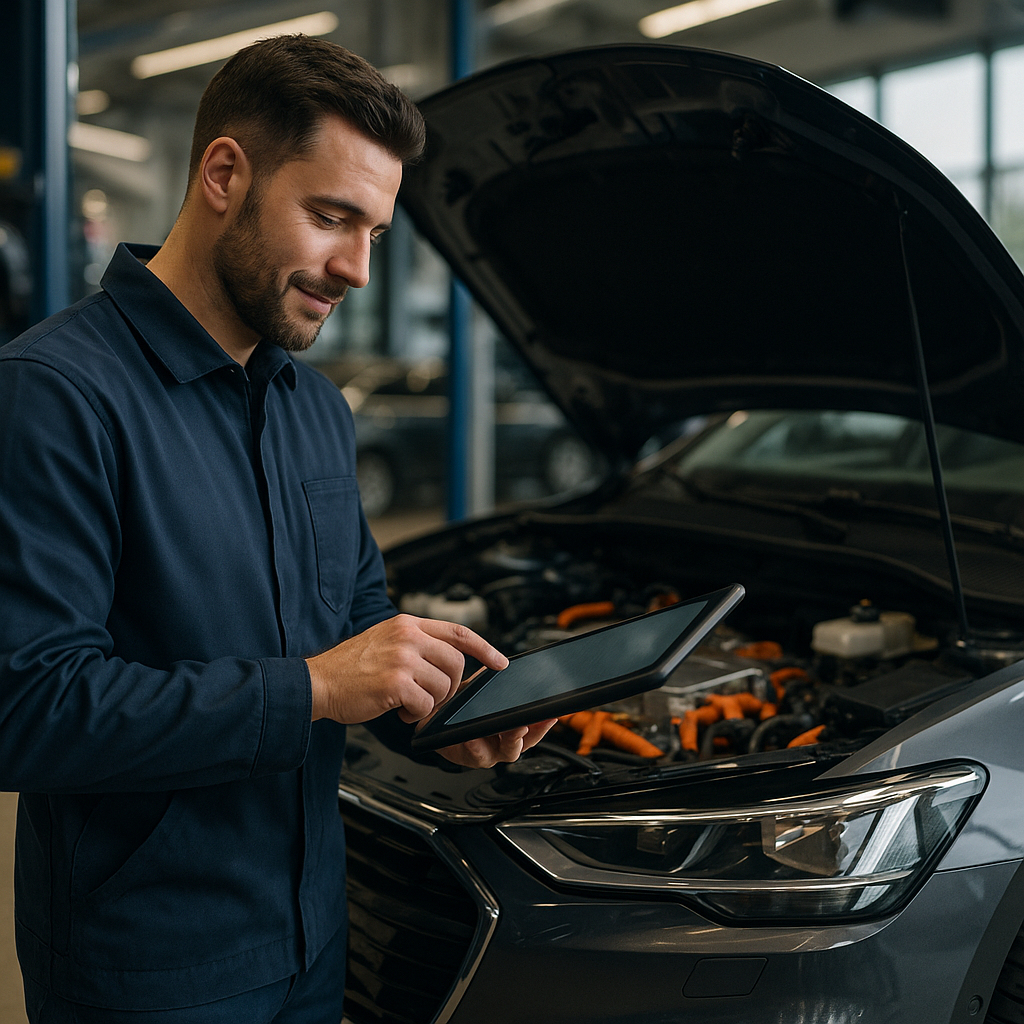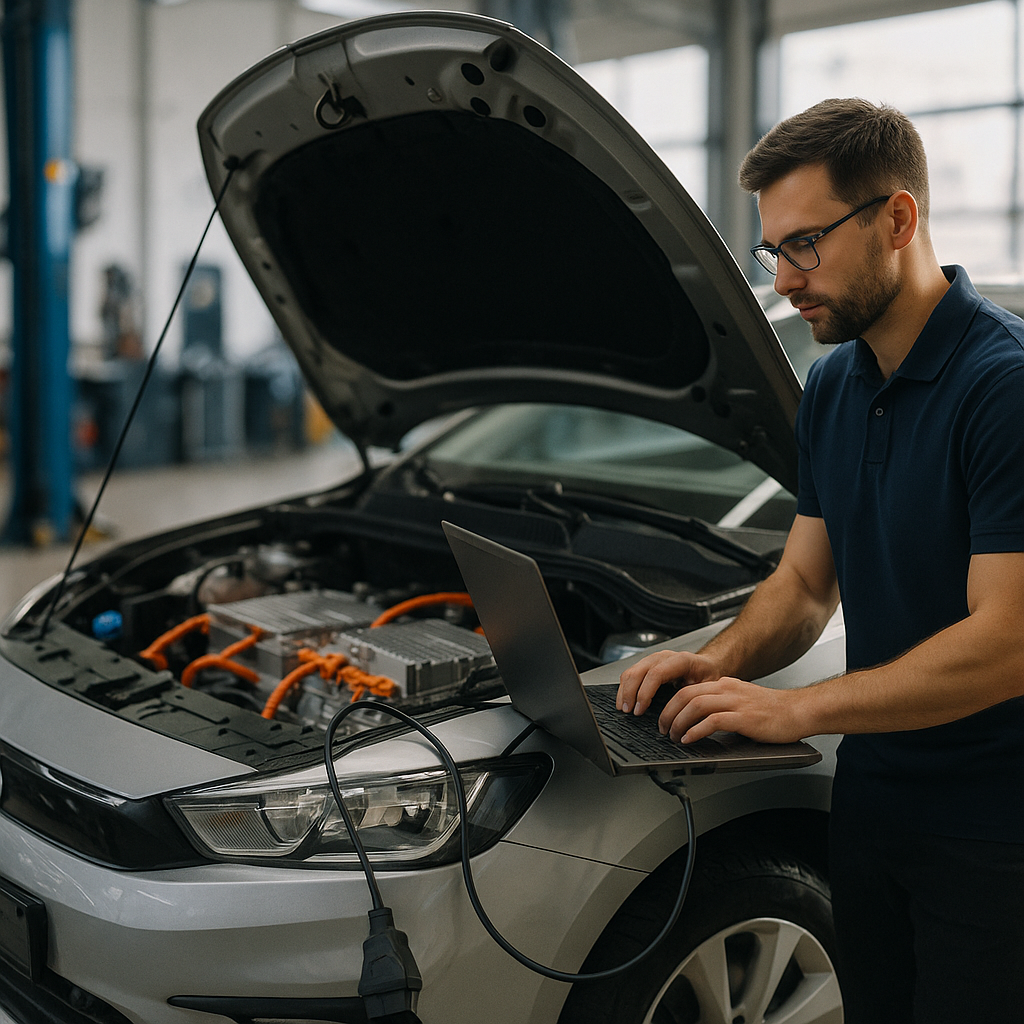
Over-the-air software updates are no longer a curiosity reserved for Tesla enthusiasts – they are a fundamental shift in how manufacturers manage, fix, and communicate with their vehicles. For mechanics, independents, and franchised dealers alike, the implications run deeper than most workshops have yet reckoned with. Understanding what this change means in practice, right now, is not optional. It is essential.
What Are Over-the-Air Software Updates and How Do They Work?
In simple terms, an over-the-air (OTA) update pushes new software to a vehicle’s electronic control units (ECUs) via a mobile data connection, without the car needing to visit a workshop. Think of it like a smartphone receiving a security patch overnight. The driver wakes up, gets a notification, and the vehicle has already been updated – sometimes without them doing a single thing.
Modern vehicles contain dozens of ECUs controlling everything from the engine management system and transmission mapping to the infotainment stack and advanced driver assistance systems (ADAS). All of these are now, in principle, updatable remotely. Manufacturers including Volkswagen Group, BMW, Ford, Stellantis, and General Motors have invested heavily in the infrastructure to make this a standard part of their connected vehicle platforms.
Which Types of Fixes Are Now Handled Remotely?
This is where the motor trade needs to pay close attention, because the scope is wider than many assume. Manufacturers are now resolving the following types of issues entirely via over-the-air software updates, without a single workshop visit:
- Software-defined recalls: Issues caused by faulty calibration, incorrect threshold settings, or buggy logic in safety systems. If the underlying problem is code rather than hardware, it can often be patched remotely. The DVSA now formally recognises OTA updates as a valid remedy for certain recall categories.
- Infotainment and connectivity bugs: Freezing screens, Bluetooth dropout, navigation errors, and voice assistant failures are regularly addressed this way.
- ADAS recalibration: Adaptive cruise control, lane-keep assist, and automatic emergency braking sensitivity can be adjusted remotely when a software fault – rather than a sensor misalignment – is identified.
- Battery management in EVs: Charging curve adjustments, thermal management tweaks, and range estimation corrections in electric vehicles are increasingly handled without the car leaving the owner’s driveway.
- Emissions and engine mapping corrections: Minor fuelling and ignition timing adjustments that previously required a workshop remap can now be delivered silently over the air.
How Are Remote Recalls Changing the Traditional Service Model?
The traditional recall model is linear: fault identified, owner contacted by post, owner books into a franchised dealer, technician installs a fix, car returned. That entire process – which typically involves at minimum one workshop visit and often a courtesy car, refreshments, and a waiting room – is now being bypassed for a growing category of faults.
This has measurable consequences for workshop footfall. A recall that once brought 40,000 vehicles through dealer doors now brings zero. The labour hours, the incidental service upsells, the parts revenue – all of it disappears. Franchised dealers have been vocal about this with manufacturer networks, but the commercial logic for manufacturers is compelling: OTA fixes are dramatically cheaper per vehicle than managing physical recall campaigns.
The downstream effect on independent workshops is more nuanced. Independents rarely receive recall work in volume anyway, so the direct footfall loss is smaller. However, the secondary effect matters: vehicles that return to a dealer for an OTA-related issue – perhaps because the update failed, caused a new fault, or requires a hardware check – are increasingly being retained within the franchise network under warranty justification.
Where Do Independent Workshops Still Have the Advantage?
There is a temptation to see over-the-air software updates as a purely negative development for the independent sector. That reading is too simplistic. Independents retain genuine advantages in several areas that OTA technology cannot touch.
First, hardware will always require hands. OTA can patch software, but it cannot replace a worn brake disc, a leaking water pump, or a failing alternator. Mechanical and electrical hardware failures – which still constitute the bulk of unplanned workshop visits – remain squarely in the independent’s territory. Skilled auto electricians in particular are well-positioned, because the proliferation of ECUs and connected systems means diagnostic complexity is increasing, not decreasing.
Second, failed or corrupted OTA updates are creating a new category of fault. When an update bricks a module or introduces a new fault code, the vehicle needs physical diagnosis. Independents with capable diagnostic tooling – particularly those investing in J2534 pass-thru programming equipment and multi-brand platforms – can capture this work. This is not a niche. As the vehicle parc becomes more software-defined, update-related faults will be a routine part of the job sheet.
Third, customer trust remains local. Plenty of drivers, particularly older demographics, are uncomfortable with the idea of their car being changed remotely without their explicit involvement. Independent garages that communicate clearly about what OTA updates mean, how they can verify what has changed, and how they can act as a trusted adviser in this space will strengthen, not weaken, customer relationships.
What Should Motor Trade Businesses Do Right Now?
The workshops and dealers that will thrive are those treating software competence as a core trade skill – not a specialist add-on. That means investing in diagnostic equipment that can read and write to the full range of ECUs on current vehicles, training technicians to understand software architecture alongside mechanical systems, and engaging with manufacturer technical portals to stay ahead of update schedules and known post-update fault patterns.
The shift driven by over-the-air software updates is not coming – it is already here. The trade that adapts its skill set and service proposition accordingly will find there is still plenty of work to be done. The trade that waits will find the workshop diary getting quieter in ways that are harder to explain.

Over-the-air software updates FAQs
Can manufacturers really fix a recall without me bringing my car to a garage?
Yes, for software-defined faults, manufacturers can now push fixes directly to your vehicle via a mobile data connection – the same way your phone receives an update. You will typically receive a notification either on the vehicle’s infotainment screen or via the manufacturer’s app, and the update installs automatically or with a single confirmation. Physical recalls involving hardware faults still require a workshop visit.
Do over-the-air updates affect my car’s warranty or service history?
Over-the-air software updates issued by the manufacturer are typically logged in the vehicle’s digital service record and should not affect your warranty. However, if you are unsure whether an update has been applied correctly, or if a new fault appears after an update, it is worth having the vehicle checked by a workshop with appropriate diagnostic equipment. Independent garages can read the ECU logs to confirm what has changed.
Are over-the-air vehicle updates safe and secure?
Manufacturers use encrypted connections and cryptographic signing to ensure that only authorised software packages can be installed. The risk of a malicious third party pushing a rogue update is very low. The more common real-world risk is an update that fails mid-install due to a connectivity dropout, which can cause module faults – these require physical diagnosis at a workshop.
Which car brands currently offer over-the-air software updates in the UK?
As of 2026, a wide range of manufacturers offer OTA updates for current models, including Tesla (the most established), BMW, Mercedes-Benz, Volkswagen Group (including Audi, Skoda and SEAT), Ford, Polestar, Rivian, and increasingly Stellantis brands such as Vauxhall and Peugeot. The capability varies significantly by model and trim level, so not every car from these brands will receive OTA updates.
How does this affect independent garages and local mechanics?
Independent garages lose some recall-related footfall as certain fixes no longer require a physical visit. However, they gain a growing category of new work around failed updates, post-update fault diagnosis, and the mechanical and electrical hardware work that OTA technology simply cannot address remotely. Independents with strong diagnostic capability and good customer communication are well placed to adapt.