
Variable valve timing failures have quietly become one of the most common fault categories landing in UK workshop booking diaries right now. If you’re seeing a spike in rough idle complaints, rattly cold starts and check engine lights pointing at camshaft position sensors or oil control valves, you’re not imagining it. The three platforms causing the most headaches are the Ford EcoBoost family, Vauxhall’s 1.4 and 1.6 turbos, and BMW’s N-series engines. Between them, they cover an enormous chunk of the used car parc on British roads, so this is a fault set every independent garage needs to have thoroughly dialled in.

Why Variable Valve Timing Systems Fail So Often
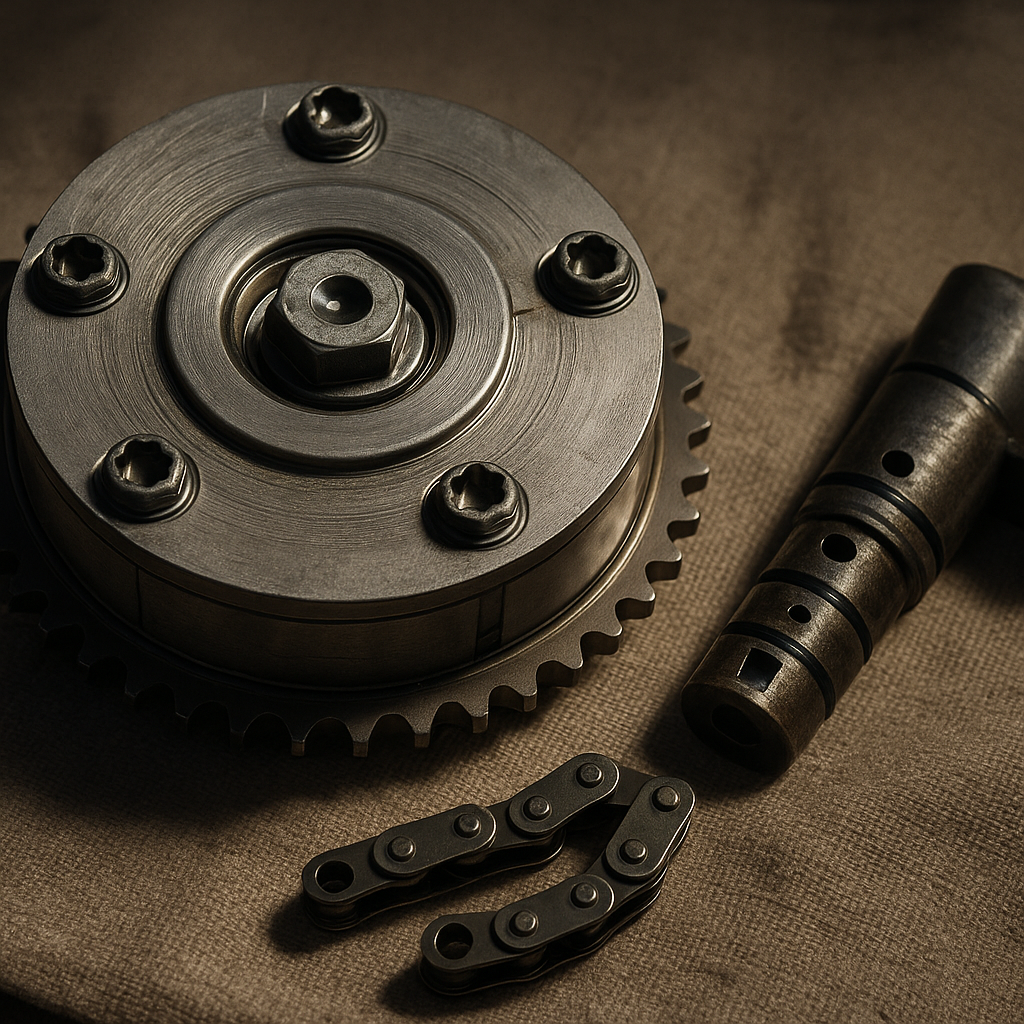
VVT systems are fundamentally oil pressure-dependent. The cam phaser (or vanos unit on BMW) relies on a steady, clean supply of oil at the right viscosity to hold position and respond to ECU commands. When oil maintenance lapses, as it regularly does on higher-mileage used cars, the system starts to degrade. Sludge builds up in oil control valve galleries, phaser actuators wear, and timing chains stretch. The result is a system that can no longer accurately advance or retard cam timing on demand.
There is also a design factor at play. Many of these engines were engineered for extended service intervals during a period when fuel economy and emissions targets dominated everything else. Tighter tolerances and narrower oil passages made them more sensitive to oil quality than older, simpler engines. A car that skipped one oil change too many at 50,000 miles can be paying the price by 80,000.
Ford EcoBoost Variable Valve Timing Problems: What to Expect
The 1.0-litre three-cylinder EcoBoost and the 1.5 and 2.0-litre four-cylinder units are all VVT-equipped and all capable of generating significant workshop work. The 1.0 EcoBoost in particular has developed a reputation for timing chain stretch on earlier units, which directly affects cam phaser behaviour because a worn chain cannot hold the accurate position the phaser needs. You will typically see P0011 or P0012 codes (camshaft position timing over-advanced or over-retarded for bank 1), alongside a rough idle that smooths out once the engine warms up.
On the 1.5 and 2.0 variants, the oil control solenoid valves are a common culprit. Before condemning the phaser itself, always flush and refill with the correct Ford-specified oil, clear the codes, and retest. A surprising number of these will resolve, or at least improve significantly, with fresh oil. If it persists, remove the solenoid valve and inspect the screen filter, they block with debris and starve the phaser of oil pressure without triggering a sensor fault.
Vauxhall 1.4 Turbo and 1.6 CDTI VVT Faults
Vauxhall’s 1.4 turbocharged petrol, found in the Astra J and Mokka among others, shares its architecture with various PSA and GM units from the same era. The VVT actuator on the exhaust cam is a known weak point. Symptoms include a harsh rattle on cold start that lasts between five and fifteen seconds, P0017 (camshaft position correlation fault) and occasionally a slightly raised idle. The rattle is the phaser vanes loose within the actuator body before oil pressure builds.
On the 1.6 CDTI diesel units, VVT interaction with the high-pressure fuel pump cam lobe wear is worth checking simultaneously. These engines can present with multiple overlapping faults and it pays to do a full cam timing check rather than just replacing components on the basis of codes alone. Timing chain tensioner condition is also worth inspecting whilst you have the cover off.
BMW N-Series Vanos: The N47, N55 and N20 Explained
BMW’s double vanos system on the N-series engines is more sophisticated and, when it fails, more expensive to sort. The N47 diesel suffered heavily from timing chain failures on earlier examples, a fault BMW eventually acknowledged, but the petrol N55 and N20 units have their own VVT-related issues. The most common presentation on these is a P0014 or P0024 code combined with an intake rattle and slightly elevated fuel consumption.
On N20 and N55 units, the vanos solenoid seals are a well-documented failure point. The seals harden with age and heat cycling, allowing oil to bypass rather than actuate the phaser. Replacement seal kits are available and the job, whilst fiddly, is far more cost-effective than fitting a new vanos unit. Always torque the solenoid to spec; overtightening cracks the housing and creates a fresh problem.
Cam chain tensioner wear on the N47 has been widely reported and should always be part of the conversation with any customer bringing in a pre-2013 BMW diesel. The timing chain noise at cold start is often mistaken for a VVT fault, so a proper cam timing check with a timing kit rather than relying solely on code data is the correct approach.
Diagnostic Approach: Get the Method Right Before Touching Parts
Variable valve timing failures are a category where parts swapping without proper diagnosis costs customers money and damages workshop reputation. The basic diagnostic sequence should be: scan and record all codes, check live data for cam and crank position correlation, verify oil level and condition, check oil pressure at idle if there is any doubt, and inspect the solenoid valve and its screen filter before ordering a phaser assembly.
A cam timing kit appropriate to the vehicle is essential if you suspect mechanical timing deviation rather than a solenoid or electrical fault. Relying on OBD data alone will not tell you whether the chain has physically stretched beyond tolerance. On EcoBoost engines specifically, Ford’s FDRS software gives far more granular cam timing data than generic OBD tools, and access to manufacturer-level diagnostics makes a real difference on this fault family.
Oil viscosity matters enormously. Many of these engines specify 0W-20 or 5W-30 fully synthetic. Fitting a heavier oil to try to buy extra oil pressure on a worn engine tends to slow phaser response and can worsen the fault. Stick to the specification and document what was in the engine when the car arrived.
Parts Sourcing for VVT Repairs
Cam phasers, solenoid valves and timing chain kits are widely available through the main motor factor networks in the UK. For the Ford EcoBoost range, Gates and Febi both supply quality chain kits. For BMW N-series, Rein Automotive and INA are solid choices for tensioners and chain guides. Vauxhall actuator assemblies are reasonably priced through standard channels including Euro Car Parts and GSF.
If you’re sourcing parts for a wider commercial vehicle or fleet application that involves diesel engines outside the standard passenger car range, it’s worth knowing that specialist suppliers exist for larger units too; outfits supplying Cummins engine parts serve a different market but the principle of sourcing from engine-specialist suppliers rather than generic aggregators applies equally to VVT component quality.
Talking to Customers About VVT Repairs
Variable valve timing repairs can range from a £40 solenoid and a service to a £600-plus timing chain job. Customers often arrive having Googled their fault code and found horror stories about engine replacement. The key is to explain the diagnostic process clearly before quoting, confirm what is actually worn rather than speculating, and give them a tiered quote if there are multiple possible outcomes depending on what the investigation reveals.
Showing a customer the blocked solenoid screen filter or the worn phaser vanes on a camera is far more effective than describing it. It builds trust, justifies the diagnosis charge, and makes an authorisation decision much simpler for the customer. Workshops that communicate this kind of detail professionally tend to retain VVT repair work rather than lose it to main dealers on the back of a customer who didn’t understand what they were being charged for.
The Retail Motor Industry Federation publishes guidance on transparent quoting practices that are worth reviewing if your workshop is formalising its customer communication process.
VVT faults are not going away. The engines generating them are in peak mid-life now, sitting in the price range most private buyers and small fleets are shopping in. Get the diagnostic process right, have the right tooling, and this is a solid, repeatable revenue stream for any independent workshop that takes the time to specialise in it.
Frequently Asked Questions
What are the most common symptoms of variable valve timing failure?
The most typical signs are a rattling noise on cold start that fades as the engine warms, a rough or lumpy idle, and a check engine light with camshaft position or timing correlation fault codes such as P0011, P0014 or P0017. Fuel economy can also drop noticeably as cam timing becomes erratic.
How much does it cost to fix a variable valve timing fault in the UK?
Costs vary significantly depending on the fault found. A blocked solenoid valve clean or replacement can cost as little as £80-£150 including labour. A full timing chain and phaser replacement on a BMW N-series or Ford EcoBoost can reach £500-£900 at an independent garage. Always insist on a proper diagnostic before authorising any parts replacement.
Can I drive with a variable valve timing fault?
Short distances may be possible, but it is not advisable. A failing VVT system can cause engine damage if the timing becomes significantly out of specification, particularly on higher-revving petrol engines. If the fault is accompanied by knocking or significant power loss, stop driving and get the vehicle inspected promptly.
Will an oil change fix a variable valve timing problem?
Sometimes, yes. If the fault is caused by oil sludge restricting the solenoid valve or phaser, a fresh oil and filter change with the correct specification lubricant can resolve or substantially improve the problem. It is always worth trying this first on a high-mileage car before ordering mechanical components.
Which Ford EcoBoost engines are most prone to VVT and timing chain issues?
The 1.0-litre three-cylinder EcoBoost built before 2018 has the strongest track record for timing chain stretch affecting VVT performance. The 1.5 and 2.0-litre four-cylinder units are more prone to solenoid valve and oil control issues than chain problems. Regular servicing with the correct 0W-20 or 5W-30 fully synthetic oil significantly reduces the risk on all variants.