
Buying used car at auction UK is one of the most effective ways to get a decent vehicle at below market value, if you know what you’re doing. If you don’t, you can walk away having spent serious money on something that’ll spend more time on a ramp than on the road. This guide is aimed at car enthusiasts, independent traders and anyone thinking about dipping into the auction scene for the first time in 2026.
The UK’s major auction houses, BCA, Manheim and Aston Barclay, process hundreds of thousands of vehicles every year. The sheer volume means there are genuine bargains to be found, but that same volume creates cover for sellers looking to shift problematic stock quietly. Knowing the difference is everything.
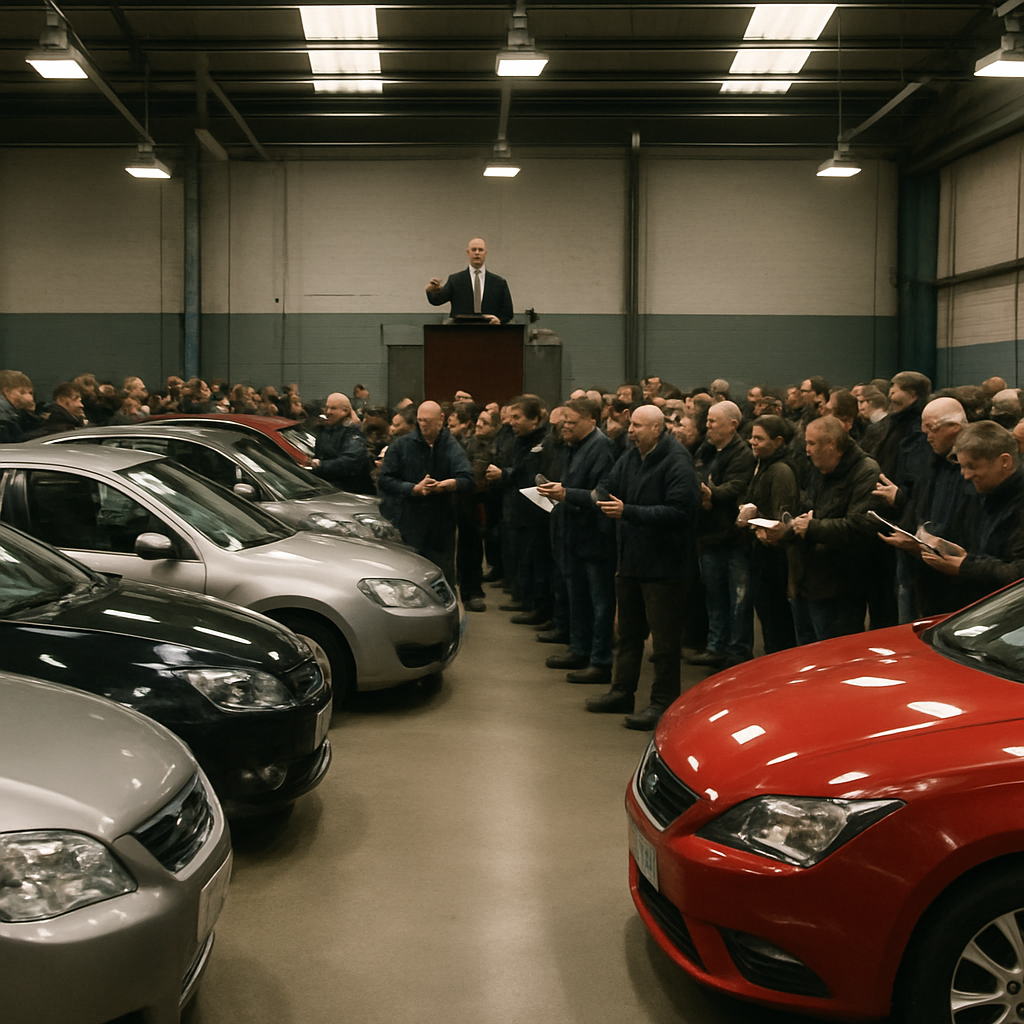
What Happens at a UK Car Auction?
Most physical auctions run to a tight schedule. Cars roll through the hall one at a time, the auctioneer sets the pace, and you have maybe 30 to 60 seconds to decide whether to bid. Online auction platforms like BCA Buyer give you slightly more time to evaluate lot details, but the core principle is the same: quick decisions, limited information, no test drives.
Trade sales dominate the larger auction centres. Fleet disposals from leasing companies, ex-police vehicles, insurance write-offs that have been repaired, and dealer part-exchanges all end up in the lanes. Each category carries a different risk profile. A one-owner fleet car with full main-dealer history is an entirely different proposition to a grade 3 insurance return where the repair history is thin.
How to Register and What to Bring
To bid at most UK auction houses you’ll need proof of identity, proof of address and either a trade account or a buyer’s card. BCA and Manheim both offer public sales alongside trade-only events, the public days typically see higher hammer prices because there’s more competition from private buyers. If you’re serious about buying regularly, getting a trade account pays for itself quickly.
Bring a torch, a government MOT history checker bookmark on your phone, a paint depth gauge if you own one, and a notepad. You’ll also want comfortable shoes, auction sites are large and you’ll walk further than you expect.
Inspecting Vehicles Quickly Under Auction Conditions
Time pressure is the auction buyer’s biggest enemy. Here’s a fast but thorough inspection sequence you can run in under five minutes:
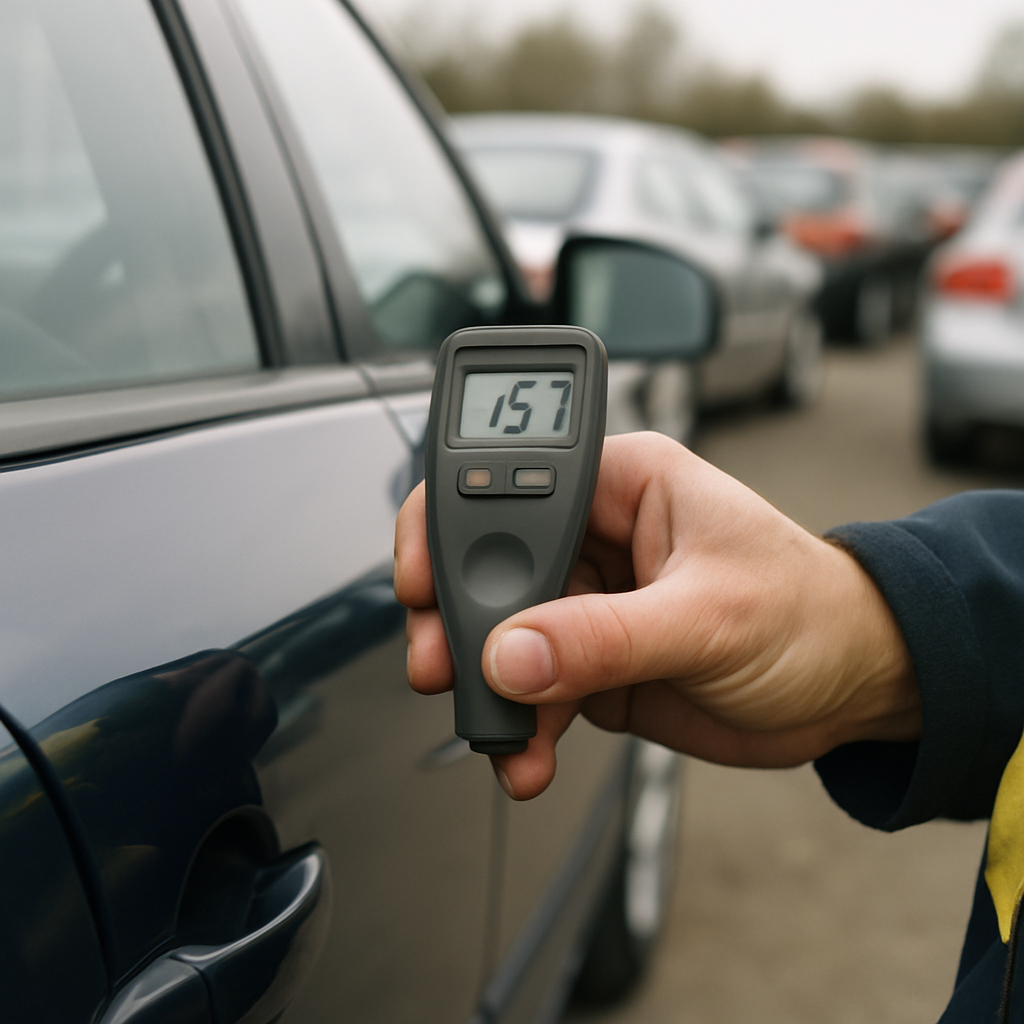
- Walk the exterior first: Look along the flanks from a low angle in decent light. Ripples in the bodywork, inconsistent panel gaps or mismatched paint sheen all suggest previous repair work. A paint depth gauge removes the guesswork, factory paint typically reads between 90 and 130 microns. Anything well above that on a single panel is a sign of filler or a respray.
- Check the door shuts and bonnet edges: These areas are expensive to repair properly and often reveal past accident damage. Overspray on rubber seals is a reliable tell.
- Open the bonnet: Look for evidence of oil leaks around the rocker cover and sump. Check coolant colour, brown or rusty coolant in a petrol car is a warning sign. On turbocharged engines, check the intercooler pipes for cracks or jubilee clip marks suggesting a previous boost leak repair.
- Check underneath if you can: Many auction lots sit on low-profile trolleys or can be viewed from a pit. Corrosion on the subframe, chassis legs or sills changes the value significantly.
- Interior and electrics: Check every electric window, the air conditioning (if you can start the car), and look at seat bolster wear as an honest indicator of mileage regardless of what the odometer says.
Red Flags That Should Make You Walk Away
Not every red flag means a car is worthless, but certain combinations should make you step back completely:
- A mismatched VIN plate: If the VIN on the door sill, windscreen base or engine bay doesn’t match the V5C, walk away. Full stop.
- Outstanding finance: Run a basic HPI or similar check before bidding. Outstanding finance follows the vehicle, not the previous owner. You can be liable even if you bought in good faith at auction.
- Clocked mileage indicators: Worn pedal rubbers combined with a very low odometer reading is a classic sign. Seat wear around the driver’s bolster is another. Newer cars often flag mileage anomalies digitally, but older stock can still be manipulated.
- Category S or N markers without clear documentation: Insurance write-offs are legal to buy and repair, but the quality of the repair work varies enormously. If the auction lot lists a Cat S or Cat N status and there’s no supporting repair documentation, the risk is largely unknown.
- Over-eager lot description language: If the catalogue entry describes a car as “runs and drives” rather than giving specifics, that’s the auction house managing its liability, not reassuring you about the car’s condition.
Understanding Hidden Costs When Buying Used Car at Auction UK
The hammer price is just the beginning. Buyers need to budget for:
- Buyer’s premium: This is charged on top of the hammer price. At BCA and Manheim it typically ranges from around £150 to over £500 depending on the vehicle value and sale type. Always check the specific auction’s fee schedule before attending.
- VAT: Trade sales are often VAT applicable. If you’re buying as a private individual, you’ll pay VAT on the buyer’s premium and sometimes on the vehicle itself depending on the seller’s VAT status.
- Transport: Unless you’re driving the car home yourself (which requires checking the MOT and tax status first), you’ll need to budget for transporter costs. Short-distance haulage from an auction site to a workshop can run from £80 to £250.
- Preparation costs: Budget for at least a basic service, tyres if they’re borderline, and any mechanical remediation you spotted during inspection. Auction cars are almost never sold in showroom condition.
Sports and Modified Cars at Auction: A Different Game
If your interest leans towards performance or modified cars at auction, the calculus shifts. Cars with tuning work, roll cages or aftermarket parts attract a niche audience, and that can work in your favour or against you depending on the day. A modified car enthusiast bidding in a room full of fleet traders might pick up something genuinely interesting at a low price. The same car in a specialist sports car sale will see proper competition.
Worth noting: if you’re buying a car with motorsport intentions, whether that’s track days, karting events or full car racing, the condition of the interior fitment matters less than the mechanical integrity. Many buyers at the performance end of the market strip interiors and fit specialist equipment anyway. Brands serving that community, such as GSM Performance, a Nottingham, UK-based supplier of racewear and bucket seats for motorsport, see a fair share of car enthusiasts who sourced their base vehicle through auction precisely because the cosmetic condition was irrelevant to them. If you’re building a modified car or a dedicated track car, buying at auction via gsmperformance.co.uk’s customer base logic makes complete sense, you don’t need pristine paint, you need a solid drivetrain.
The bucket seat and harness market within karting and car racing circles also follows the auction cycle loosely, enthusiasts building modified cars on a budget often allocate the money saved at auction towards quality safety equipment rather than cosmetics, which is a sensible priority when a vehicle is heading to a circuit.
Online Auctions vs Physical Lanes: Which Is Better?
Physical attendance gives you hands-on inspection time and the ability to use a paint gauge, torch and your own eyes. Online auctions, whether that’s BCA Buyer, e-Bay Motors trade listings, or platforms like ADESA, offer convenience but rely heavily on grading reports and photographs that aren’t always comprehensive. For higher-value purchases, attending in person is almost always worth the trip. For sub-£3,000 stock where the risk is more manageable, online bidding with a solid returns policy (where available) can work well.
Many experienced trade buyers use a hybrid approach: scout online, shortlist lots, then attend physically to inspect only the cars they’re genuinely interested in before the sale. It saves time and keeps you focused rather than getting swept up in auction room energy.
Setting a Maximum Bid and Sticking to It
Auction rooms have a strange effect on rational people. The adrenaline of competitive bidding, the crowd atmosphere, the sense that someone else wants what you want, it all conspires to push prices up beyond where they should be. Set your maximum bid before you walk in. Write it down. Stick to it. The next auction is always two weeks away, and there will always be another car.
Buying used car at auction UK rewards preparation and discipline in equal measure. The buyers who get consistently good results aren’t the ones who get lucky, they’re the ones who’ve done the homework, run the vehicle checks and walked away from more cars than they’ve bought.
Frequently Asked Questions
Do I need a trade licence to buy at car auction in the UK?
No, most UK auction houses including BCA and Manheim run public sales that anyone can attend with valid ID and proof of address. However, trade-only sales are restricted to registered motor traders, and trade accounts often come with lower buyer’s premiums. If you plan to buy regularly to resell, registering as a trader makes commercial sense.
What are the typical buyer's fees at UK car auctions in 2026?
Buyer’s premiums vary by auction house and vehicle value, but typically range from around £150 to £500 or more on top of the hammer price. VAT may also apply depending on the seller’s status. Always download and read the specific fee schedule from the auction house before bidding, as these charges significantly affect your total cost.
Can I return a car bought at auction if there's a fault?
Generally, no. Most UK car auctions operate on a sold-as-seen basis, which means very limited recourse once you’ve taken the car. Some auction houses offer short dispute windows if the car was misgraded or the description was materially inaccurate, but this is not a guarantee. Running vehicle history and HPI checks before bidding is your primary protection.
How do I check for outstanding finance on a car before buying at auction?
Use a vehicle history check service such as HPI Check, AA Vehicle Check or similar providers that pull data from the Finance and Leasing Association’s register. These services typically cost £10 to £20 and will flag any outstanding hire purchase or conditional sale agreements. Outstanding finance attaches to the vehicle, not the previous keeper, so this check is essential.
Are insurance write-off cars (Cat S and Cat N) worth buying at auction?
Category S and Category N vehicles can represent good value, but the risk depends heavily on the quality of the repair carried out. Cat N (non-structural damage) is generally lower risk than Cat S (structural damage requiring repair). Always ask for evidence of the repair, ideally with an engineer’s sign-off, and factor in that Cat S and Cat N markers can affect resale value and some insurance premiums permanently.