
A cracked windscreen used to be one of the cheaper fixes in motoring. Ring your insurer, a glazing van turns up within 48 hours, job done, maybe a small excess to pay. That world is largely gone. Windscreen replacement cost UK 2026 is a genuinely different proposition to what it was even five years ago, and if you work in the trade, understanding why matters for how you price part-exchanges, advise customers and manage workshop jobs.
The short answer is that the windscreen is no longer just a piece of glass. It is a load-bearing sensor platform, a heating element, an acoustic barrier and, in some vehicles, part of the structural integrity calculation for ADAS systems. Every one of those functions adds cost when things go wrong.
What Is Actually Inside a Modern Windscreen?
Traditional laminated glass was two panes bonded by a polyvinyl butyral (PVB) interlayer. That is still the foundation, but manufacturers have been layering in extra functionality for years and it has accelerated sharply since around 2020.
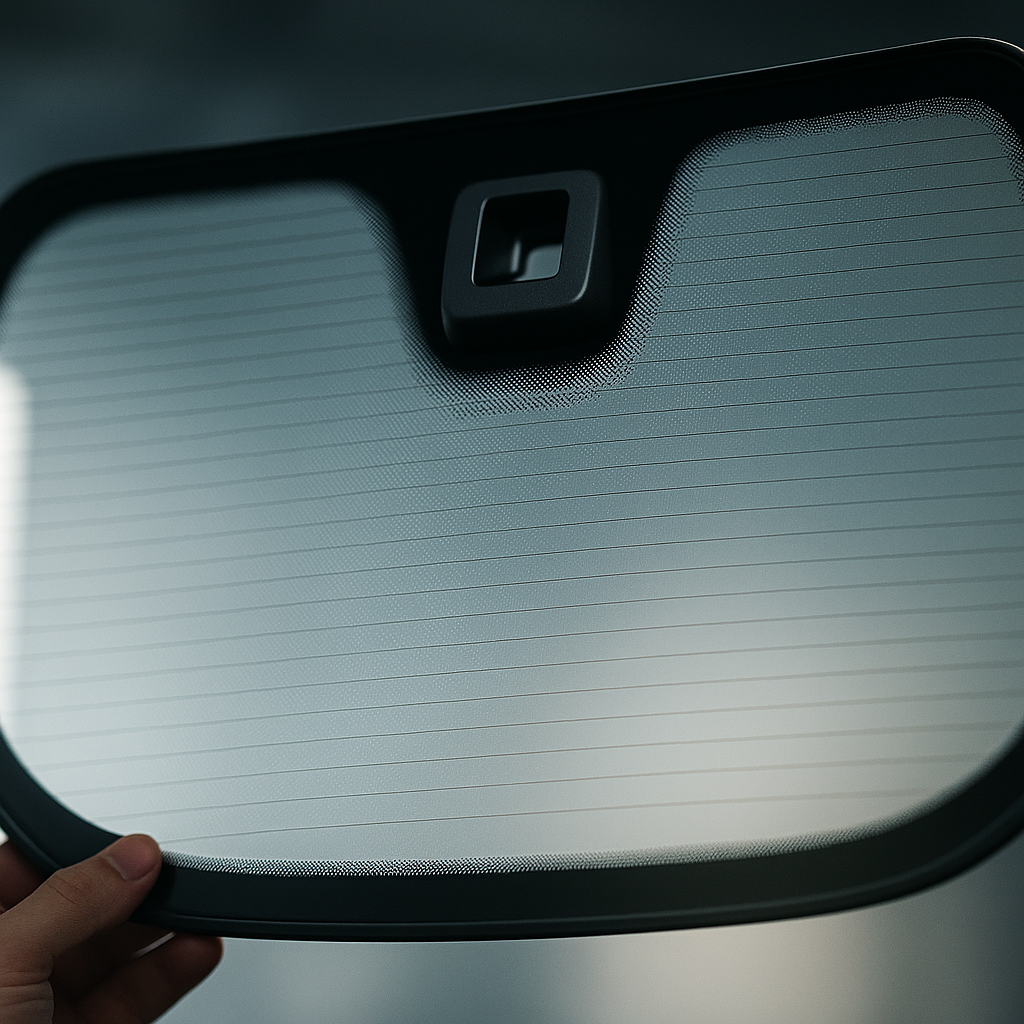
Heated windscreens, once a premium feature on Ford and Land Rover models, are now common across mid-range family cars. The heating elements are either printed directly onto the glass or embedded in the interlayer. Either way, they cannot survive a standard replacement. You need the OEM-specified unit, and those are not cheap from the supply chain.
Acoustic laminate glass uses a thicker or differently formulated interlayer to dampen road and wind noise. You will find it standard on most EVs and hybrids because cabin noise is more noticeable without an engine to mask it. Again, fitting a non-acoustic pane to a vehicle specced with one changes the cabin environment and can affect trim alignment.
Then there is the camera and sensor bracket situation. Most vehicles built in the last four or five years carry a forward-facing camera mounted behind the windscreen, often bonded to a bracket that is either glued directly to the glass or clipped to a specific demount zone. Lane keep assist, automatic emergency braking and adaptive cruise control all depend on that camera being correctly positioned. A replacement screen must have the bracket mount in precisely the right location, which means it must be a vehicle-specific part, not a generic fit.
Why ADAS Calibration Is the Hidden Cost Nobody Warns Drivers About
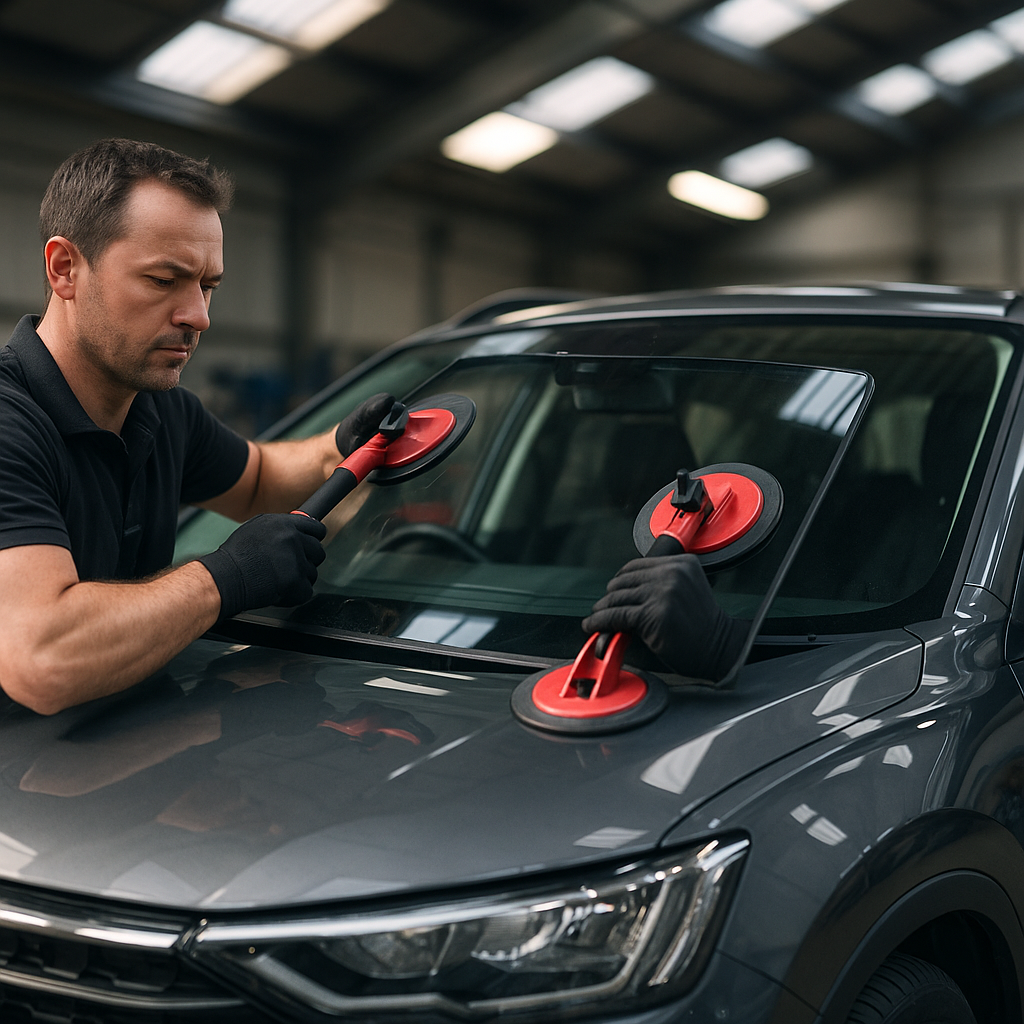
This is where the real money is. Once a windscreen carrying a forward-facing ADAS camera is replaced, the system must be recalibrated. There is no getting around this. The Society of Motor Manufacturers and Traders (SMMT) and the major OEMs are unambiguous on the point: a new screen means a fresh calibration, full stop.
Static calibration requires a flat floor, a specific target board placed at an exact distance and angle from the vehicle, and either OEM software or a compatible aftermarket system such as Autel or Texa. Dynamic calibration means driving the vehicle at a set speed on a road with clear lane markings while the system resets itself. Some vehicles need both. A calibration job from an independent garage typically runs between £150 and £350 depending on the vehicle and whether static or dynamic procedures apply. Dealer rates are higher.
For insurers paying out on windscreen claims, this adds a meaningful chunk to the bill. Many policies written before 2022 did not anticipate calibration costs at all, which is causing friction between policyholders, insurers and glazing networks right now.
How Much Is Windscreen Replacement Cost UK 2026 Actually Running To?
It varies enormously by vehicle, but the ranges are instructive. A replacement screen for a basic Ford Fiesta or Vauxhall Corsa without camera brackets or heating elements can still be done through a glazing network for £100 to £200 all-in. Move to a mid-range Tesla Model 3, and you are looking at £900 to £1,400 for the glass alone, before calibration. A BMW 5 Series or Mercedes E-Class with full sensor stack and acoustic laminate? Expect £600 to £1,100 for the screen, plus calibration on top.
Premium SUVs from manufacturers like Porsche and Volvo regularly clock in above £1,500 for a full windscreen replacement when all associated costs are included. Some HGV-derived SUVs and electric pickups are even higher. The Association of British Insurers has flagged rising repair costs, including glass, as a key driver of motor insurance premium increases in recent years, and it is easy to see why when you look at the numbers.
What This Means When Pricing Part-Exchange Vehicles
For motor traders, a cracked or chipped windscreen on a part-exchange is no longer a straightforward deduction from offer price. You need to identify exactly what specification that screen is. Is there a camera bracket? Is it heated? Does the vehicle have acoustic laminate as standard? A chipped windscreen on a 2023 Honda CR-V e:HEV is a fundamentally different financial situation to the same chip on a 2016 Nissan Micra.
The sensible approach is to build a proper assessment into your part-exchange process. Run the VIN to confirm the exact specification, price the replacement through your glass supplier before you make an offer, and factor calibration into that cost. Getting this wrong eats into margins quickly, especially on lower-value stock where the repair cost becomes a disproportionate percentage of the sale price.
It is also worth knowing your suppliers. Not every aftermarket screen meets the optical clarity standards required for ADAS cameras to function correctly. Using an inferior pane can result in calibration failures, or worse, a system that calibrates but performs poorly in real-world conditions. Stick to OEM or OEM-equivalent glass from reputable distributors.
Consumers Challenging Insurer Decisions on Windscreen Claims
There is a growing disconnect between what modern windscreen replacement actually costs and what some insurers are willing to authorise. Several glazing networks are reporting cases where insurers are pushing back on calibration costs or specifying non-OEM glass to keep claims down, only for the fitment to cause ADAS faults that then become a separate dispute.
Consumers who find themselves in this position have recourse. If an insurer refuses to cover a calibration that the vehicle manufacturer specifies as mandatory, that is arguably a breach of the policy obligation to restore the vehicle to its pre-loss condition. The Financial Ombudsman Service handles disputes of this kind, and there is a reasonable argument to make if you have documented evidence from the manufacturer or a qualified workshop that calibration is required.
From a trade perspective, if a customer comes to you with an insurer-directed repair that you believe is inadequate, document your concerns in writing. It protects you, and it helps the customer if they need to escalate.
Is the Trend Going to Reverse?
Not in any meaningful way. Vehicle manufacturers are adding more sensors to windscreens, not fewer. The next generation of ADAS systems will rely on multiple cameras and potentially lidar integration at the top of the screen. As more vehicles reach three to five years old with this technology standard, the volume of expensive replacement jobs in the trade will increase substantially.
Garages that have already invested in calibration equipment are in a strong position. Those that have not are increasingly dependent on passing work to a dealer or specialist, which compresses the return on every glazing job they handle. Windscreen replacement cost UK 2026 is a snapshot of a trend that will only intensify as the fleet modernises.
Frequently Asked Questions
Why is windscreen replacement so expensive now in the UK?
Modern windscreens contain heating elements, acoustic interlayers and mounting brackets for ADAS cameras, all of which require vehicle-specific glass rather than a generic fit. On top of the glass cost, most vehicles now require ADAS calibration after replacement, which adds £150 to £350 or more to the final bill.
Does my insurer have to cover ADAS calibration after a windscreen replacement?
Most comprehensive policies include a requirement to restore the vehicle to its pre-loss condition, which means calibration should be covered if the manufacturer specifies it as mandatory. If your insurer refuses, you can raise the matter with the Financial Ombudsman Service, particularly if you have written evidence from the manufacturer or a qualified garage.
How much does windscreen replacement cost for an electric car in the UK in 2026?
EVs almost universally use acoustic laminate glass, and most carry forward-facing cameras, making replacement significantly more expensive than older vehicles. A Tesla Model 3, for example, can cost between £900 and £1,400 for the glass alone, with calibration charges on top of that.
Can any garage replace a windscreen with an ADAS camera, or does it have to be a dealer?
Independent garages can carry out ADAS windscreen replacements provided they have calibration equipment and the correct software for the vehicle in question. Many well-equipped independents offer this service at lower rates than franchised dealers, but you should confirm they are using OEM-quality or OEM-equivalent glass to avoid calibration failures.
How should motor traders account for windscreen damage when pricing a part-exchange?
You need to check the vehicle’s exact specification via the VIN before estimating the cost of replacement. A cracked screen on a camera-equipped or heated windscreen vehicle is considerably more expensive to rectify than a basic unit, and calibration costs must be included in your calculation to avoid margin erosion.