
Tag: ford ecoboost timing chain

  • Timing Chain Failures on Popular UK Family Cars: The Engine Codes Every Mechanic Should Know

    Timing Chain Failures on Popular UK Family Cars: The Engine Codes Every Mechanic Should Know

    Timing chain failure UK cars is not a new problem, but the volume of work landing in independent workshops right now tells its own story. I’ve spoken to mechanics across the Midlands and the North this year who are seeing the same engine families come through the doors repeatedly, often with owners who had no idea anything was wrong until a rattle started and the engine management light came on simultaneously. Some of those jobs are salvageable. Others are heading straight for a remanufactured unit. Knowing which is which before you strip anything down is the difference between a profitable repair and a nightmare.

    This article runs through the specific engine codes presenting most often with chain stretch, tensioner collapse and guide disintegration, what the diagnostics actually show, and how to have an honest conversation with the customer about cost.
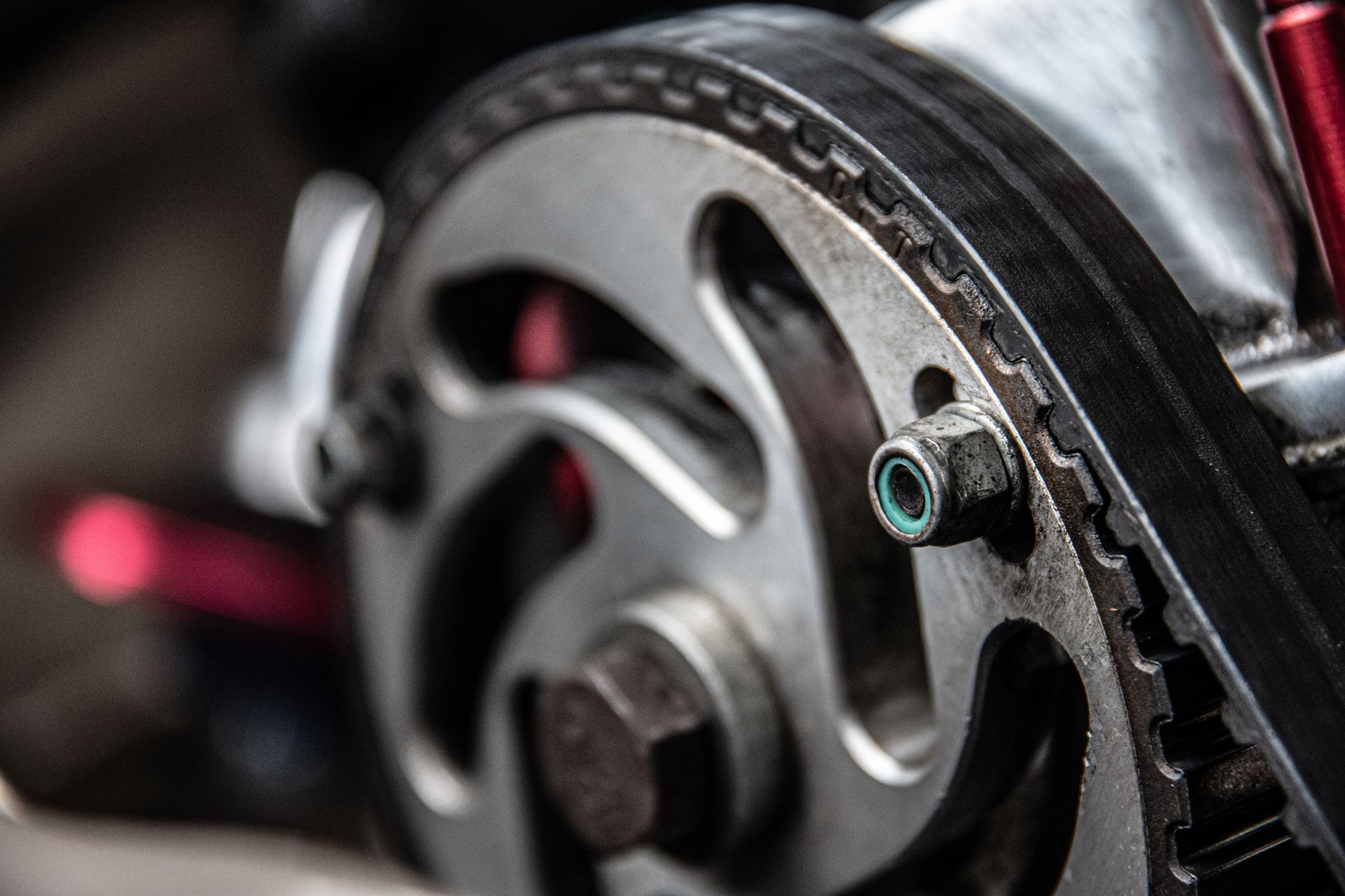
    Mechanic inspecting timing chain components during an engine repair, a common job related to timing chain failure UK cars
    Photo by Hebert Santos on Pexels

    The engine families you will see most often

    Ford’s 1.0-litre EcoBoost (engine code M1DA, M2DA, P4JA) is probably the busiest one right now. Fitted to hundreds of thousands of Fiestas, Focuses and EcoSports registered between 2012 and 2021, it has a well-documented history of timing chain stretch combined with water pump failure, and when one goes, it often takes the other with it. The chain runs through oil; if the car has been serviced late or run on cheap oil, the tensioner loses pressure and the chain begins to slap. Ford revised the design more than once, but many pre-2018 units are still running on original hardware.

    The PSA/Vauxhall 1.2-litre PureTech (EB2DTS, EB2ADTS) is another repeat offender. This three-cylinder unit is fitted to the Vauxhall Corsa E and F, the Peugeot 208, the Citroën C3 and several other high-volume models. The timing chain sits at the back of the engine on some variants, which means chain replacement is a significantly bigger job. Stellantis acknowledged issues with early units and extended warranties in some markets, but plenty of out-of-warranty cars are now making their way into the independent sector.

    Volkswagen Group’s 1.4-litre TSI in CAXA and CTHD configurations brought a particular pattern of upper guide rail failure. The plastic guide literally disintegrates, and small fragments can travel into the oil pick-up. I’d argue this is the scariest one on the list, because by the time you pull codes, the secondary damage is already happening. It was fitted to Golfs, Polos, Seats and Škodas in large numbers.

    BMW’s N47 diesel deserves a mention even though it is less common in city traffic now. The 2.0-litre four-cylinder found in the 3 Series, 5 Series and X3 between roughly 2007 and 2014 has a chain at the back of the engine, driven off the flywheel end. When it goes, it often goes catastrophically. Any N47 with more than 100,000 miles that has not had the chain done is a liability sitting on four wheels.

    Early warning signs and what the diagnostics actually show

    The cold start rattle that clears within thirty seconds is the classic first symptom. Customers usually describe it as a ticking or a mechanical chattering from the top of the engine. Some say it sounds like a diesel even though the car is petrol. On the Ford EcoBoost, you may also see coolant loss at the same time because of the integrated water pump situation.

    On the scan tool, you are looking for variable valve timing codes. P0011, P0012, P0021 and P0022 relate to intake and exhaust camshaft timing errors and are the most common flags on VVT-equipped engines with chain issues. On VW Group vehicles, P0016 and P0017 (crankshaft to camshaft correlation faults) are very specific indicators. Do not just clear these and retest; if they return within a short drive, the chain has stretched beyond what the tensioner can compensate for.

    Oil condition matters here. Pull the dipstick before you do anything else. Thin, dark, sludgy oil on a car that has been serviced at 20,000-mile intervals tells you the chain has been running without proper lubrication for a long time. That changes the repair conversation immediately, because extended oil starvation affects more than just the chain.

    On some PSA PureTech engines, you will see the stretched chain cause the timing marks to be visibly out of position even before the tensioner fully collapses. A brief crank angle sensor cross-reference against cam position sensor data on live readings can confirm actual versus expected timing deviation. If you are seeing more than three to four degrees of retard at idle that is not explained by a faulty sensor, the chain is the culprit.

    Repair viability versus engine replacement

    This is the conversation that separates good workshops from great ones. A timing chain kit on a Ford 1.0 EcoBoost, done properly with the water pump, tensioner, guides and all gaskets, runs to around £600 to £850 in parts depending on your supplier. Labour on a car where everything cooperates is six to eight hours. On a PSA PureTech with a rear-mounted chain, budget for ten to fourteen hours. Those jobs are viable on a three to five-year-old car with a clean service history and no secondary damage.

    The calculation changes fast when you lift the cam cover and find debris in the oil galleries, or when a guide has already shattered and sent fragments south. At that point you are looking at a strip-down inspection that may reveal scored bores, damaged cam followers or a worn oil pump. I’ve seen cases where the repair quote legitimately exceeded £3,000 on a car worth £5,500. That is a job worth doing. I’ve also seen cars where the internal damage pushed the repair cost past the vehicle’s value, and in those situations a remanufactured or low-mileage used engine is the honest recommendation.

    Remanufactured units from suppliers such as Ivor Searle or similar UK-based remanufacturers carry warranties and are often the cleanest solution on high-mileage examples. A used engine from a reputable dismantler with verifiable mileage is another option, but given that timing chain issues are often mileage and maintenance related, you need to know that the donor engine has a clean history. This links directly to the kind of vehicle history transparency that the DVLA’s digital logbook rollout is starting to make easier for traders when assessing used stock.

    How to price the job honestly

    Flat rate guides are not your friend on these jobs. I’d recommend building the quote in three parts: a confirmed diagnosis charge (which should be non-negotiable), a parts estimate with your supplier’s confirmed availability, and a labour quote that includes a contingency line for what happens if you open it up and find worse than expected.

    Be specific with the customer. Tell them the parts you are fitting, why you are fitting them, and what you will do if the strip-down reveals additional damage. Customers who understand what they are paying for are far less likely to dispute an invoice than customers who get a surprise. The Society of Motor Manufacturers and Traders has published guidance on consumer communication standards that is worth reading if your workshop does not already have a documented estimate process.

    One practical note: parts delays are still affecting the independent sector in 2026. If you are waiting on a timing chain kit for a PureTech, the car is sitting in your bay costing you space. It is worth reading about how UK garages are currently navigating parts sourcing to avoid that bottleneck wherever possible.

    Timing chain work is also a natural upsell point for cam phaser inspection, particularly on the VW TSI units where variable valve timing failures and chain issues often travel together. If you have not already read through the guide to cam phaser and variable valve timing faults, that pairing of knowledge will pay off quickly in the workshop.

    The engines on this list are not going away. They are sitting on driveways all over the country, ageing, and heading towards independent garages as the main dealer warranty relationship expires. Mechanics who know these codes, understand the failure modes and can quote the job accurately will fill their booking diaries without breaking sweat.

    Frequently Asked Questions

    What are the most common symptoms of timing chain failure on UK family cars?

    A rattling or chattering noise from the engine on cold start that fades after thirty seconds is the most common early sign. You may also see engine management lights with camshaft timing correlation fault codes such as P0016 or P0011, and on some Ford EcoBoost engines, coolant loss can accompany the chain problem due to the integrated water pump design.

    Which UK-registered cars are most at risk of timing chain failure?

    High-risk models include Ford Fiestas and Focuses with the 1.0 EcoBoost engine, Vauxhall Corsas and Peugeot 208s with the 1.2 PureTech, VW Golfs and Polos with the 1.4 TSI in CAXA configuration, and BMW 3 Series and 5 Series models with the N47 2.0-litre diesel. All of these engine families have documented tensioner and guide failures.

    How much does a timing chain replacement cost in the UK?

    On a Ford 1.0 EcoBoost, a full kit including the water pump, tensioner and guides typically costs £600 to £850 in parts, with six to eight hours of labour on top. PSA PureTech jobs with a rear-mounted chain can run to ten to fourteen labour hours, making total repair costs between £1,200 and £2,000 or more at independent garage rates.

    Is it worth repairing a timing chain failure or should I replace the engine?

    It depends on the extent of secondary damage found during strip-down. If the guides have shattered and debris has travelled into the oil galleries, causing scored bores or a worn oil pump, a remanufactured engine often makes more financial sense than a full rebuild. On a car with a clean service history and low secondary damage, chain replacement is usually the better option.

  • Cam Phasers, Variable Valve Timing and the Faults UK Mechanics Are Seeing Most Often Right Now

    Cam Phasers, Variable Valve Timing and the Faults UK Mechanics Are Seeing Most Often Right Now

    Variable valve timing failures have quietly become one of the most common fault categories landing in UK workshop booking diaries right now. If you’re seeing a spike in rough idle complaints, rattly cold starts and check engine lights pointing at camshaft position sensors or oil control valves, you’re not imagining it. The three platforms causing the most headaches are the Ford EcoBoost family, Vauxhall’s 1.4 and 1.6 turbos, and BMW’s N-series engines. Between them, they cover an enormous chunk of the used car parc on British roads, so this is a fault set every independent garage needs to have thoroughly dialled in.

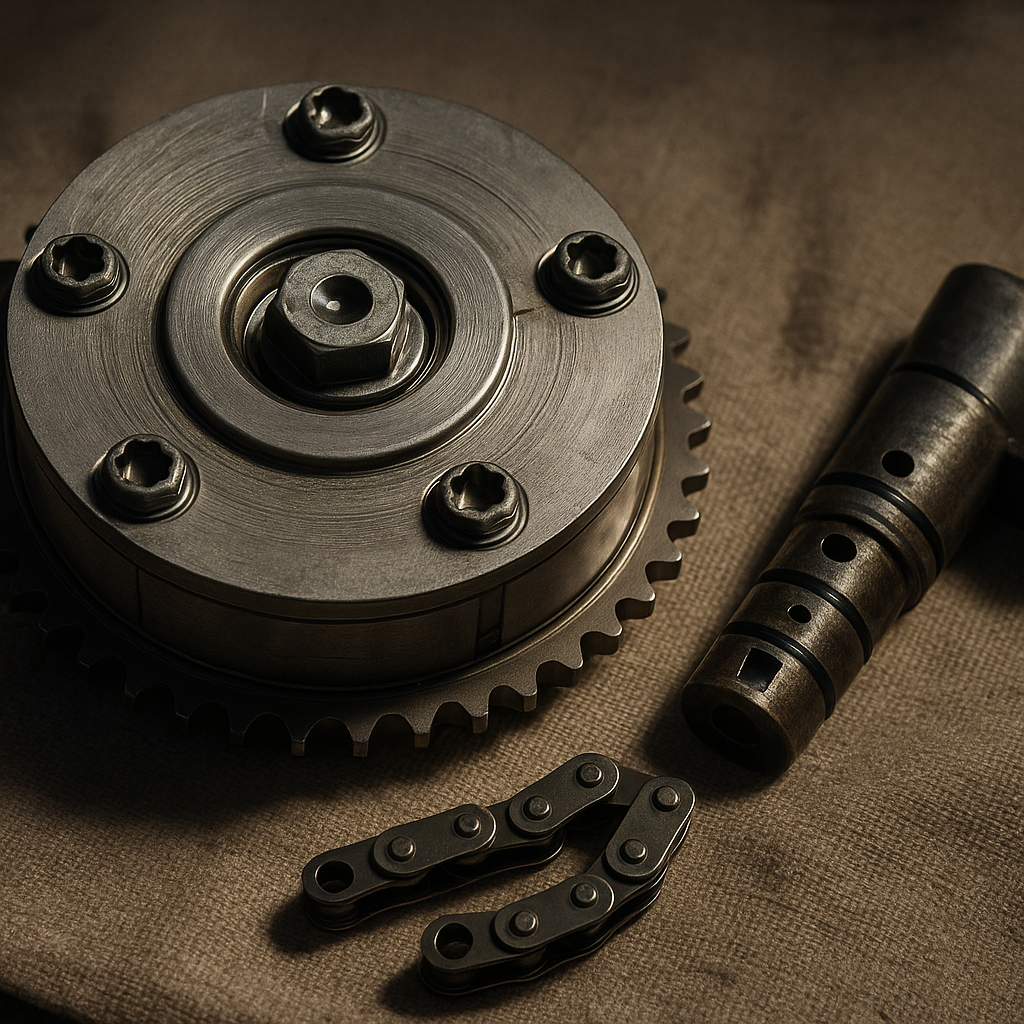
    UK mechanic inspecting cam phaser components during a variable valve timing failure diagnosis

    Why Variable Valve Timing Systems Fail So Often

    VVT systems are fundamentally oil pressure-dependent. The cam phaser (or vanos unit on BMW) relies on a steady, clean supply of oil at the right viscosity to hold position and respond to ECU commands. When oil maintenance lapses, as it regularly does on higher-mileage used cars, the system starts to degrade. Sludge builds up in oil control valve galleries, phaser actuators wear, and timing chains stretch. The result is a system that can no longer accurately advance or retard cam timing on demand.

    There is also a design factor at play. Many of these engines were engineered for extended service intervals during a period when fuel economy and emissions targets dominated everything else. Tighter tolerances and narrower oil passages made them more sensitive to oil quality than older, simpler engines. A car that skipped one oil change too many at 50,000 miles can be paying the price by 80,000.

    Ford EcoBoost Variable Valve Timing Problems: What to Expect

    The 1.0-litre three-cylinder EcoBoost and the 1.5 and 2.0-litre four-cylinder units are all VVT-equipped and all capable of generating significant workshop work. The 1.0 EcoBoost in particular has developed a reputation for timing chain stretch on earlier units, which directly affects cam phaser behaviour because a worn chain cannot hold the accurate position the phaser needs. You will typically see P0011 or P0012 codes (camshaft position timing over-advanced or over-retarded for bank 1), alongside a rough idle that smooths out once the engine warms up.

    On the 1.5 and 2.0 variants, the oil control solenoid valves are a common culprit. Before condemning the phaser itself, always flush and refill with the correct Ford-specified oil, clear the codes, and retest. A surprising number of these will resolve, or at least improve significantly, with fresh oil. If it persists, remove the solenoid valve and inspect the screen filter, they block with debris and starve the phaser of oil pressure without triggering a sensor fault.

    Vauxhall 1.4 Turbo and 1.6 CDTI VVT Faults

    Vauxhall’s 1.4 turbocharged petrol, found in the Astra J and Mokka among others, shares its architecture with various PSA and GM units from the same era. The VVT actuator on the exhaust cam is a known weak point. Symptoms include a harsh rattle on cold start that lasts between five and fifteen seconds, P0017 (camshaft position correlation fault) and occasionally a slightly raised idle. The rattle is the phaser vanes loose within the actuator body before oil pressure builds.

    On the 1.6 CDTI diesel units, VVT interaction with the high-pressure fuel pump cam lobe wear is worth checking simultaneously. These engines can present with multiple overlapping faults and it pays to do a full cam timing check rather than just replacing components on the basis of codes alone. Timing chain tensioner condition is also worth inspecting whilst you have the cover off.

    Close-up of cam phaser and oil control solenoid removed during variable valve timing failure repair

    BMW N-Series Vanos: The N47, N55 and N20 Explained

    BMW’s double vanos system on the N-series engines is more sophisticated and, when it fails, more expensive to sort. The N47 diesel suffered heavily from timing chain failures on earlier examples, a fault BMW eventually acknowledged, but the petrol N55 and N20 units have their own VVT-related issues. The most common presentation on these is a P0014 or P0024 code combined with an intake rattle and slightly elevated fuel consumption.

    On N20 and N55 units, the vanos solenoid seals are a well-documented failure point. The seals harden with age and heat cycling, allowing oil to bypass rather than actuate the phaser. Replacement seal kits are available and the job, whilst fiddly, is far more cost-effective than fitting a new vanos unit. Always torque the solenoid to spec; overtightening cracks the housing and creates a fresh problem.

    Cam chain tensioner wear on the N47 has been widely reported and should always be part of the conversation with any customer bringing in a pre-2013 BMW diesel. The timing chain noise at cold start is often mistaken for a VVT fault, so a proper cam timing check with a timing kit rather than relying solely on code data is the correct approach.

    Diagnostic Approach: Get the Method Right Before Touching Parts

    Variable valve timing failures are a category where parts swapping without proper diagnosis costs customers money and damages workshop reputation. The basic diagnostic sequence should be: scan and record all codes, check live data for cam and crank position correlation, verify oil level and condition, check oil pressure at idle if there is any doubt, and inspect the solenoid valve and its screen filter before ordering a phaser assembly.

    A cam timing kit appropriate to the vehicle is essential if you suspect mechanical timing deviation rather than a solenoid or electrical fault. Relying on OBD data alone will not tell you whether the chain has physically stretched beyond tolerance. On EcoBoost engines specifically, Ford’s FDRS software gives far more granular cam timing data than generic OBD tools, and access to manufacturer-level diagnostics makes a real difference on this fault family.

    Oil viscosity matters enormously. Many of these engines specify 0W-20 or 5W-30 fully synthetic. Fitting a heavier oil to try to buy extra oil pressure on a worn engine tends to slow phaser response and can worsen the fault. Stick to the specification and document what was in the engine when the car arrived.

    Parts Sourcing for VVT Repairs

    Cam phasers, solenoid valves and timing chain kits are widely available through the main motor factor networks in the UK. For the Ford EcoBoost range, Gates and Febi both supply quality chain kits. For BMW N-series, Rein Automotive and INA are solid choices for tensioners and chain guides. Vauxhall actuator assemblies are reasonably priced through standard channels including Euro Car Parts and GSF.

    If you’re sourcing parts for a wider commercial vehicle or fleet application that involves diesel engines outside the standard passenger car range, it’s worth knowing that specialist suppliers exist for larger units too; outfits supplying Cummins engine parts serve a different market but the principle of sourcing from engine-specialist suppliers rather than generic aggregators applies equally to VVT component quality.

    Talking to Customers About VVT Repairs

    Variable valve timing repairs can range from a £40 solenoid and a service to a £600-plus timing chain job. Customers often arrive having Googled their fault code and found horror stories about engine replacement. The key is to explain the diagnostic process clearly before quoting, confirm what is actually worn rather than speculating, and give them a tiered quote if there are multiple possible outcomes depending on what the investigation reveals.

    Showing a customer the blocked solenoid screen filter or the worn phaser vanes on a camera is far more effective than describing it. It builds trust, justifies the diagnosis charge, and makes an authorisation decision much simpler for the customer. Workshops that communicate this kind of detail professionally tend to retain VVT repair work rather than lose it to main dealers on the back of a customer who didn’t understand what they were being charged for.

    The Retail Motor Industry Federation publishes guidance on transparent quoting practices that are worth reviewing if your workshop is formalising its customer communication process.

    VVT faults are not going away. The engines generating them are in peak mid-life now, sitting in the price range most private buyers and small fleets are shopping in. Get the diagnostic process right, have the right tooling, and this is a solid, repeatable revenue stream for any independent workshop that takes the time to specialise in it.

    Frequently Asked Questions

    What are the most common symptoms of variable valve timing failure?

    The most typical signs are a rattling noise on cold start that fades as the engine warms, a rough or lumpy idle, and a check engine light with camshaft position or timing correlation fault codes such as P0011, P0014 or P0017. Fuel economy can also drop noticeably as cam timing becomes erratic.

    How much does it cost to fix a variable valve timing fault in the UK?

    Costs vary significantly depending on the fault found. A blocked solenoid valve clean or replacement can cost as little as £80-£150 including labour. A full timing chain and phaser replacement on a BMW N-series or Ford EcoBoost can reach £500-£900 at an independent garage. Always insist on a proper diagnostic before authorising any parts replacement.

    Can I drive with a variable valve timing fault?

    Short distances may be possible, but it is not advisable. A failing VVT system can cause engine damage if the timing becomes significantly out of specification, particularly on higher-revving petrol engines. If the fault is accompanied by knocking or significant power loss, stop driving and get the vehicle inspected promptly.

    Will an oil change fix a variable valve timing problem?

    Sometimes, yes. If the fault is caused by oil sludge restricting the solenoid valve or phaser, a fresh oil and filter change with the correct specification lubricant can resolve or substantially improve the problem. It is always worth trying this first on a high-mileage car before ordering mechanical components.

    Which Ford EcoBoost engines are most prone to VVT and timing chain issues?

    The 1.0-litre three-cylinder EcoBoost built before 2018 has the strongest track record for timing chain stretch affecting VVT performance. The 1.5 and 2.0-litre four-cylinder units are more prone to solenoid valve and oil control issues than chain problems. Regular servicing with the correct 0W-20 or 5W-30 fully synthetic oil significantly reduces the risk on all variants.