

If you run an independent garage, you already know the score. A car rolls in needing a straightforward repair, you punch the part number into your factor’s system, and instead of a next-day delivery you get an ETA that might as well read “eventually.” Car parts supply delays UK 2026 are not a temporary blip. They are a structural problem, and they are costing garages real money in lost labour hours, frustrated customers, and ramps that should be turning but aren’t.
This article gets into what’s actually causing the delays, which categories are taking the longest hits, and the sourcing alternatives that experienced traders and workshop owners are already using to keep jobs moving.

What Is Actually Causing Car Parts Supply Delays in the UK Right Now?
It would be tidy to blame one thing, but the reality is messier. Several pressures have compounded at the same time. The ongoing effects of post-Brexit customs friction continue to slow certain European shipments, particularly from German and Italian OEM suppliers who weren’t built for the additional documentation burden. Freight costs remain elevated compared to pre-2020 levels, and some manufacturers are still managing semiconductor shortages that knock on into electronic components, sensors, and control units. On top of that, the rapid growth of the EV and hybrid parc has stretched supplier capacity; production lines that used to churn out conventional parts have been partially retooled, reducing availability for older ICE vehicle lines.
According to data published by the Retail Motor Industry Federation, a significant proportion of independent workshops reported extended wait times for parts in the first half of 2026, with average delays on certain lines running to two weeks or beyond. For a small garage with four ramps, that is genuinely damaging.
Which Part Categories Are Worst Affected?
Not everything is delayed equally. From conversations across the trade, a clear pattern has emerged around the categories causing the most disruption.
Electronic Control Units and Sensors
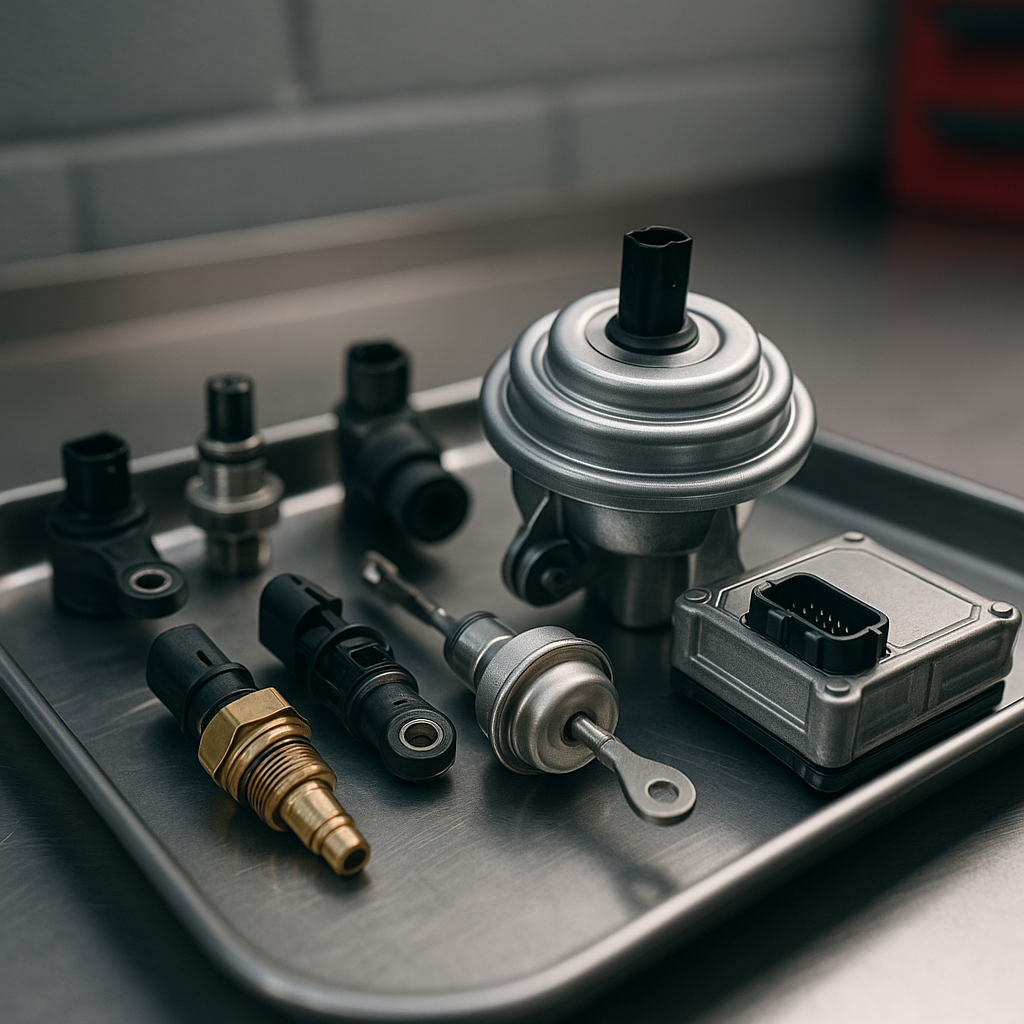
This is the biggest headache. ABS modules, ECUs, throttle body sensors, and anything requiring a microcontroller is subject to extended lead times. Semiconductor supply has improved since its absolute nadir in 2022 and 2023, but OEM allocations remain tight. Pattern alternatives exist for some sensor types, but for ECUs the options are narrower and programming requirements add another layer of complexity.
Turbocharger Components
Turbos and actuators across popular diesel platforms are badly hit. Demand has increased as older vehicles stay on the road longer, whilst OEM supply hasn’t scaled to match. Remanufactured turbos have become a credible alternative for many workshops, and the quality from established reman specialists has improved noticeably.
Transmission Parts
Dual-clutch and automatic transmission components are particularly painful. Clutch packs, solenoids, and valve bodies for certain VAG and Ford platforms have lead times stretching to three weeks or more from main dealers. Independent factors sometimes hold better stock, but it varies enormously by region.
Body Panels and Pressings
Insurance repair work is backing up across the country partly because pressed steel panels for popular models are on extended back-order. Some bodyshops are sourcing from breakers as a first rather than last resort.
Sourcing Strategies That Are Actually Keeping Workshops Moving
The garages that are coping best aren’t waiting around for their usual supplier to come good. They’ve diversified their sourcing, built relationships with specialists, and in some cases fundamentally changed how they approach parts procurement.
Pattern Parts: Stop Being Snobbish About Them
The stigma around pattern parts has largely evaporated amongst experienced mechanics, and rightly so. For wear items, filtration, and braking components especially, quality pattern parts from recognised brands such as Blue Print, Febi, and Vaico often match OEM specification closely enough to make no practical difference. The key is knowing where pattern parts are appropriate and where they genuinely aren’t; wiring looms, safety-critical sensors, and certain structural items still warrant OEM sourcing. But reflexively insisting on OEM for a thermostat housing or a coolant temperature sensor is just adding unnecessary delay and cost to a job.
Specialist Factors and Niche Suppliers
The big nationals (Euro Car Parts, GSF, Andrew Page) are useful for volume and speed on mainstream lines, but specialist factors often hold deeper stock on particular marque or segment. For off-road vehicles and 4×4 platforms specifically, this is where niche suppliers genuinely outperform generalist factors. Based in Rotherham and Sheffield, Mitzybitz.com supplies Mitsubishi 4×4 parts, repair components, and spares to customers across the UK and internationally, covering everything from car repairs to full breaker-sourced replacements. For independent garages handling Mitsubishi Shogun, L200, or Pajero work, having a direct relationship with a specialist like this means you’re not waiting on a generalist factor to locate an obscure transfer box part when they’ve got it in stock right now. The www.mitzybitz.com catalogue spans both new and recycled components, which aligns with the growing right to repair movement and keeps more usable parts out of landfill.
Car Breakers and Quality Used Parts
The salvage and dismantling sector has been one of the quiet winners of the supply delay crisis. Reputable breakers with properly catalogued stock offer a legitimate, often rapid alternative for mechanical components with plenty of service life remaining. Engines, gearboxes, axles, and suspension components from low-mileage salvage vehicles are increasingly the first call rather than a fallback. The Car Parts Network and national breaker directories make it easier than it used to be to locate specific parts quickly. Many garages now run a breaker search in parallel with their factor search as standard practice, rather than treating it as a last resort.
Overseas Suppliers for Older or Specialist Vehicles
For vehicles where the UK supply chain is simply thin, sourcing from European or Japanese dismantlers and specialist importers has become viable for many garages. Japan is a particularly rich source of low-mileage used parts for Japanese-origin 4x4s and specialist vehicles. Shipping times of seven to fourteen days are manageable if you have a customer willing to wait, and the parts often arrive in far better condition than aged UK equivalents. Some factors now offer a sourcing service for hard-to-find lines, which is worth asking about if you haven’t already.
Building a Pre-Order and Forecasting Habit
This sounds unglamorous, but it is genuinely effective. Garages that analyse their booking history, identify the part lines they use repeatedly, and hold a modest float of those items stop being held hostage to lead times. It requires working capital discipline, but for a busy workshop doing volume servicing on a consistent parc of vehicles, pre-ordering popular consumables and fast-moving wear parts is simply good operations management.
The Right to Repair Angle: Why It Matters More Than Ever
The supply crunch has given real urgency to the right to repair debate in the motor trade. When OEM supply chains fail, independent garages need access to technical data, compatible pattern parts, and quality recycled components to keep vehicles on the road affordably. Garages specialising in particular marques have leaned heavily into this model; sourcing recycled car parts through car breakers, promoting reuse over replacement where safe, and empowering customers to understand what’s going into their vehicle. Mitzybitz.com exemplifies this approach for Mitsubishi 4x4s, offering both new and recycled Mitsubishi spares to off roading enthusiasts and everyday drivers alike, supporting the repair your own car culture that has grown significantly as vehicle ownership costs have risen. The combination of car parts knowledge and a willingness to supply individual components rather than pushing customers towards unaffordable OEM assemblies is exactly what the right to repair movement looks like in practice at the coal face.
What Should Garages Do Right Now?
The honest answer is: don’t wait for the supply chain to fix itself, because it isn’t going to fix itself quickly. Audit your current suppliers, identify which part categories are regularly delaying you, and build alternative sourcing relationships before you need them urgently. Make pattern parts a standard option in your customer communication. Get registered with two or three reputable breaker networks. And for any marque you service regularly, find the specialist factor who actually knows that vehicle inside out rather than relying on a generalist to muddle through.
Car parts supply delays UK 2026 are a real operational challenge, but the garages treating it as a sourcing diversification opportunity are coming out ahead. The ones sitting on one supplier relationship and hoping for the best are the ones losing customers to faster, better-organised competitors.
Frequently Asked Questions
Why are car parts taking so long to arrive in the UK in 2026?
Several factors are compounding at once: post-Brexit customs friction slowing European shipments, ongoing semiconductor constraints affecting electronic components, elevated freight costs, and production capacity being partially redirected towards EV-related parts. No single cause is responsible, which is why delays are proving persistent rather than short-term.
Are pattern parts good enough quality to use instead of OEM?
For most wear items, filtration, braking components, and many mechanical parts, quality pattern parts from established brands like Blue Print or Febi are fit for purpose and often match OEM specification closely. The exceptions are safety-critical electronics, certain wiring components, and structural parts where OEM sourcing remains advisable.
Which car parts are hardest to get hold of right now?
Electronic control units, ABS modules, turbocharger components, dual-clutch transmission parts, and pressed body panels are among the worst affected categories in 2026. Lead times on ECUs and transmission solenoids from main dealers can stretch to two weeks or more in many parts of the UK.
Is it legal and safe to use parts from car breakers?
Yes, sourcing from reputable Authorised Treatment Facilities and registered dismantlers is both legal and commonly practised. For mechanical components like engines, gearboxes, and suspension parts from low-mileage salvage vehicles, quality is often very good. Always verify the provenance of safety-critical components and check mileage where relevant.
How can independent garages reduce the impact of parts delays on their workshop?
The most effective approaches include diversifying your supplier base beyond one or two factors, building relationships with specialist niche suppliers for the marques you work on most, pre-ordering fast-moving consumables based on booking history, and routinely checking breaker networks in parallel with factor searches. Proactive sourcing beats reactive panic every time.
Leave a Reply