
Used electric vehicle prices in the UK have fallen off a cliff over the past 18 months, and the numbers are hard to ignore. Some early-generation models have shed 40 to 50 per cent of their value in under two years. For fleet managers and private sellers alike, that is a brutal reality. For motor traders paying attention, it is also one of the more interesting buying opportunities this market has thrown up in a long time. Understanding why used EV prices UK crashing has become the defining story of the second-hand car market in 2026 is the first step to making sense of it.

How Far Have Used EV Prices Actually Fallen?
The headline figures are striking. Data published by Auto Trader and corroborated by Cap HPI shows that average used EV prices dropped by around 35 per cent between early 2023 and mid-2025. Certain models have fared far worse. A three-year-old Nissan Leaf 40kWh, which would have fetched £16,000 to £17,000 at peak, is now routinely listed under £10,000. Early Renault Zoe examples have tumbled even further, with some dealers reporting wholesale prices in the £5,000 to £7,000 range. The Tesla Model 3 has not been immune either, with used examples down roughly 30 per cent from their 2022 highs.
According to figures from the Society of Motor Manufacturers and Traders (SMMT), used EV stock levels at franchised and independent dealers more than doubled between 2023 and 2025 as lease returns flooded back into the market. Supply is up, demand has not kept pace, and prices have adjusted accordingly.
What Is Actually Driving the Used EV Price Crash?
Several forces are working in the same direction at once, which is why the correction has been so sharp.
Battery anxiety and range concerns
The single biggest barrier for private buyers considering a used EV is battery health. When someone pays £12,000 for a used petrol hatchback, they broadly understand what they are getting. When they consider a used EV at the same price, the question of how much range remains in the battery creates hesitation. Real-world range can drop noticeably on older battery chemistry, and without a clear, standardised health report that buyers trust, many simply walk away. Until the industry lands on a universally accepted battery health certificate, this anxiety is going to keep suppressing demand at the lower end of the used EV market.
New EV prices falling sharply
Chinese manufacturers, particularly BYD and MG, have driven new EV list prices down considerably. When a brand-new entry-level BYD Seagull or refreshed MG4 is available for under £20,000, the value proposition of a three-year-old Nissan Leaf at £9,000 starts to look questionable. Buyers with £10,000 to £12,000 to spend increasingly see the stretch to new as worthwhile, especially given the warranty benefit.
Charging infrastructure doubts
Despite genuine progress on the UK’s public charging network, confidence is still patchy outside major cities. Drivers in rural areas of Wales, Scotland and parts of the Midlands report frustration with reliability. That doubt filters into the used market. Buyers who cannot install a home charger because they live in a flat or terraced house without off-street parking calculate the friction cost and often opt for a hybrid instead.
Lease return flood
A huge wave of three-year business and personal contract hire agreements, many signed during the EV boom of 2021 and 2022, matured in 2024 and 2025. Tens of thousands of used EVs hit the wholesale market simultaneously, overwhelming demand. That glut has not fully cleared.
Opportunities for Motor Traders Buying Used EVs Right Now
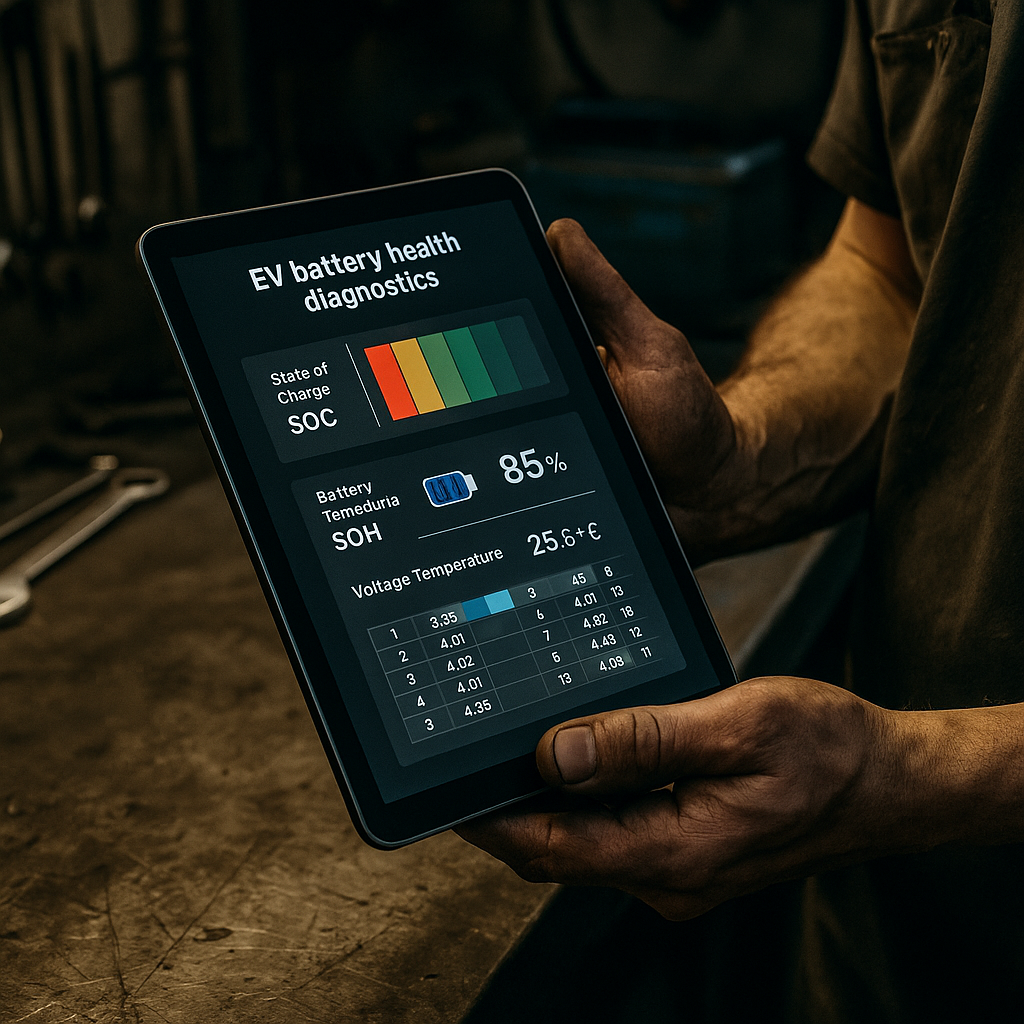
There are real opportunities here, but they require a different kind of discipline than a traditional used car buy. The traders doing well out of this environment are the ones who have educated themselves on battery condition, invested in the right diagnostic kit, and targeted buyers who genuinely understand running costs.
The fundamental opportunity is straightforward: if used EV prices UK crashing means wholesale values are depressed, a trader who can accurately assess battery health and certify it to buyers can buy well, add confidence, and sell with a margin. The friction is entirely around trust. Remove the trust problem and you remove the biggest discount the market is pricing in.
Smart traders are also paying attention to the modified cars and enthusiast segment. While most consumers see an older EV as purely a commuter tool, a growing number of home mechanics and enthusiasts are buying them for DIY projects, conversion experiments, or simply cheap-to-run daily transport with a willingness to do their own car repairs. This is a different buyer profile to the nervous first-time EV owner, and pricing needs to reflect that. For that segment, sourcing and stocking quality parts is essential. Suppliers focused on specific vehicle niches are worth knowing. Based in the UK, NSUKSpares.com supplies Toyota 4×4 spare parts to enthusiasts and independent traders; while their stock centres on Toyota off-road models rather than EVs, they represent the kind of specialist approach that works in a parts market where generalised stock increasingly falls short. Traders dealing in modified cars or running budget car repairs know that niche suppliers (visit www.nsukspares.com for Toyota 4×4 lines) often outperform general factors on availability and knowledge.
The Risks Every Dealer Needs to Price In
Buying used EVs cheaply is not a free lunch. The risks are specific and worth spelling out clearly.
Battery degradation is not always visible
A car can present perfectly on a test drive whilst losing a significant chunk of its rated range. Without a proper battery health readout from a compatible OBD tool or manufacturer-level diagnostic, you are guessing. Some models are more transparent than others; Teslas provide detailed in-car battery data, whilst older Leafs require a dedicated LEAF Spy app to get accurate state-of-health figures.
Residual value uncertainty
Nobody has a reliable long-range forecast for where used EV values settle. If you buy at today’s depressed prices and values fall another 20 per cent over the next 12 months as more lease returns arrive, your stock is underwater. Cap HPI and Glass’s Guide publish EV-specific residual value guidance but both acknowledge forecast confidence is lower than for ICE vehicles.
Consumer warranty expectations
Private buyers increasingly expect some form of battery warranty on a used EV. Offering none means competing purely on price, which is a race to the bottom. Some dealers are partnering with third-party battery warranty providers to add perceived value without taking on unlimited liability themselves.
Which Models Represent the Best Used EV Value Right Now?
Experienced traders tend to converge on a handful of models at present. The Tesla Model 3 (2019 to 2021 build years) offers a well-documented battery management system and strong consumer recognition. The Kia e-Niro and Hyundai Kona Electric are popular with buyers who want Japanese and Korean build quality reassurance. Avoid early Renault Zoe examples unless priced as project cars, given their battery lease complications, though most have since moved to owned batteries.
With used EV prices UK crashing across almost all segments, selective buying based on battery chemistry, software support lifespan, and charging standard compatibility (CCS versus CHAdeMO is increasingly relevant as the latter fades from UK rapid charge networks) is the discipline that separates profitable stock from money pits.
The broader point is that the crash in used EV prices is not a sign that electric vehicles are a failed proposition. It is a market correction after a period of artificial scarcity and speculative pricing. Traders who approach this environment with the right tools, the right knowledge, and realistic stock turn expectations will find the next couple of years genuinely rewarding. Those who buy on cheap price alone, without understanding what they are actually taking on, will find it expensive. The data and the diagnosis matter more in EV trading than almost anywhere else in the used car market.
For further context on the UK’s used car market and EV adoption trends, the Society of Motor Manufacturers and Traders publishes regular registration and used car market data that is worth bookmarking if you are actively trading in this space.
Frequently Asked Questions
Why are used EV prices dropping so fast in the UK?
The main drivers are a flood of lease returns hitting the wholesale market simultaneously, falling new EV prices from manufacturers including Chinese brands, and persistent battery anxiety among private buyers. These factors have combined to suppress demand whilst supply has increased sharply.
Which used EVs have lost the most value in the UK?
Early Nissan Leaf models, Renault Zoe examples from pre-2020, and older BMW i3 variants have seen the steepest drops, with some shedding over 50 per cent of their peak value. Tesla Model 3 and Kia e-Niro have depreciated heavily too, though they retain stronger buyer confidence.
Is now a good time for car dealers to buy used EVs at auction?
It can be, provided you have the diagnostic tools to assess battery health accurately before bidding. Wholesale prices are genuinely low on many models, but residual value uncertainty means carrying large used EV stock without clear battery condition data is a significant risk.
How can a dealer check the battery health of a used electric car?
For Teslas, in-car menus show battery degradation data. For Nissan Leafs, the LEAF Spy app via an OBD adaptor gives state-of-health readings. Most other models require manufacturer-level diagnostic software or a specialist EV diagnostic tool such as those from Autel or Snap-on to get reliable battery capacity figures.
Will used EV prices in the UK recover, or keep falling?
Industry forecasters including Cap HPI suggest prices may stabilise once the lease return glut clears, possibly by late 2026 or 2027. However, continued pressure from falling new EV prices and evolving battery technology means a full recovery to 2022 peak values is considered unlikely in the short term.