

If you run a workshop in the UK right now, you already know the answer before I even type the question. Turbocharged petrol engines are coming in with coolant-related faults at mileages that would have seemed embarrassingly early a decade ago. We’re talking 40,000 to 70,000 miles on cars that look nearly new on the outside. Water pump failures, cracked plastic coolant headers, thermostat housings that split without warning, and coolant hoses that weep quietly for months before the owner notices a temperature spike. It’s becoming a weekly pattern on the ramp, and the engine families involved are not obscure exotics. They’re the bread-and-butter cars filling UK driveways.
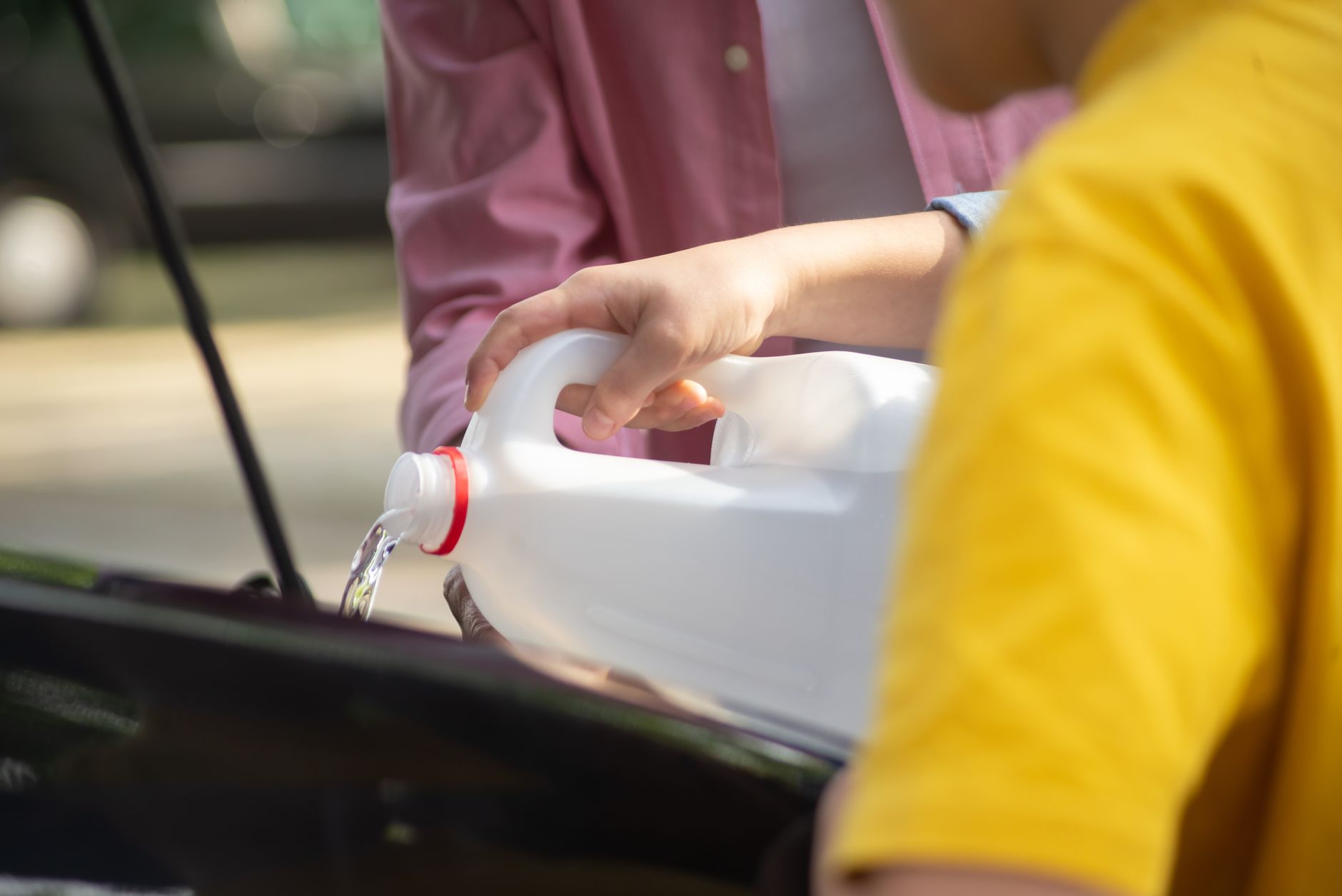
The root cause is not bad luck. It’s physics meeting compromised engineering decisions. Downsized turbocharged petrols run hotter, cycle between extreme temperature ranges more aggressively, and are often packaged so tightly under the bonnet that thermal management has become genuinely difficult. Manufacturers chased efficiency figures and emissions targets, and the cooling system often paid the price. I’ve seen this pattern escalating over the past two or three years, and the spike in coolant system failures across UK workshops is well documented at this point.
Why turbocharged petrol engines run their cooling systems harder
A naturally aspirated 1.6 from fifteen years ago had thermal management you could almost draw on a napkin. Turbochargers change everything. The turbo itself gets extremely hot under load, and manufacturers increasingly plumb the turbo into the engine’s main coolant circuit rather than using a separate oil-fed system. This means the coolant is doing more work across a wider temperature range, and the components handling that load need to be consistently good quality. Many aren’t.
Plastic thermostat housings are a recurring issue I see across multiple engine families. Ford’s 1.0 EcoBoost is the obvious example, but the problem is broader than one badge. VAG’s 1.4 TSI and 1.5 TSI engines, PSA’s Prince-family 1.2 PureTech, and BMW’s B38 and B48 units all generate significant coolant system work in independent garages. The plastic becomes brittle after repeated heat cycling, and by the time the car hits 60,000 miles, the housing can crack with very little provocation. Sometimes it’s the housing itself. Sometimes it’s the sensor boss moulded into it. Either way, the car is losing coolant faster than the owner realises.
Water pump failures: the pattern mechanics are seeing
Electric water pumps are now common on these engines, and they bring their own failure modes that differ significantly from the mechanical pumps most experienced mechanics trained on. The pump motor itself can fail, but more often it’s the impeller that’s the problem. On some VAG units in particular, the plastic impeller separates from the motor shaft. The pump runs, makes no obvious noise, shows no code immediately, but circulation is reduced. The engine runs hotter than it should, and the turbo suffers first.
I’d always check coolant flow rate if a customer complains of intermittent temperature fluctuations before there’s any visible leak. Scan tool live data on coolant temperature from multiple sensors tells you a lot. If the engine temp and the thermostat outlet temp are diverging unexpectedly, a lazy or partially failed water pump is worth suspecting before you start chasing hoses.
Mechanically driven water pumps on turbocharged engines are not immune either. The Ford 1.5 and 1.6 EcoBoost units have a known weakness where the water pump weep hole allows a gradual seep that deposits a white residue on the front of the block. Owners miss it entirely. By the time they notice the coolant level dropping, the bearing is already on its way out. Catching these early is a workshop profitability play as much as anything else: a water pump swap at the right time is a straightforward job; dealing with an overheated engine that’s pulled a head gasket is not.
Thermostat faults on modern engines
Modern turbocharged engines increasingly use map-controlled thermostats rather than a simple wax-element unit. The ECU varies coolant temperature depending on load conditions to optimise efficiency. Good in theory. In practice, these units stick, fail to open fully, or fail open and cause the engine to run chronically cool. A thermostat failing open won’t cause overheating, but it will cause the engine to run below optimal temperature, which shows up as poor fuel economy, increased emissions, and often a failed MOT on emissions. The thermostat is not always the first thing technicians check when chasing emissions faults, but it should be higher up the list than it typically is.
The BMW B48 is particularly prone to thermostat housing failures where the housing itself cracks at the flange. It’s a known issue covered extensively by independent BMW specialists, and the fix is a revised housing rather than just the thermostat element. Fitting the thermostat alone and returning the car is a common mistake that brings the job back to the workshop within six months.
The engine families UK workshops are seeing most
Ford’s 1.0 EcoBoost remains the single most common turbocharged petrol engine presenting with coolant faults in UK independent workshops. It’s been a massive seller since 2012, and there are enormous numbers of them in the parc now. The degas bottle, thermostat housing, and coolant hoses are all routine consumables at this point on higher-mileage examples. Parts quality varies enormously, and this is where sourcing matters. Fitting cheap own-brand coolant system components on an EcoBoost is a false economy; the thermal stress they endure is significant.
VAG’s 1.4 TSI EA111 and EA211 families have well-documented water pump issues, and the 1.5 TSI EA211 evo that replaced them has introduced its own thermostat and coolant flap problems. Skoda, SEAT, Audi and Volkswagen all share these issues to varying degrees depending on tune and market. PSA’s 1.2 PureTech deserves a mention too: the timing chain situation on that engine gets most of the press, but coolant hose connections near the turbo are another weak point that UK workshops are increasingly familiar with.
When sourcing replacement coolant system components, quality of manufacture matters enormously on these engines. Whether you’re ordering from a factors account or a specialist supplier, always check the OE manufacturer behind the part. A number of reputable parts suppliers in the engine components space, including KMP Brand, demonstrate why knowing who actually makes the part behind the label is worth the extra minute of research before you fit it.
Preventing comebacks: what to do differently at the point of repair
Coolant system work on a modern turbocharged petrol is not a job to rush. Pressure test before and after any repair. Use a proper vacuum refill tool to eliminate air pockets, because bleeding these systems manually on some engines is extremely difficult and an air lock on a turbo engine is a fast route to a callback. Always check the coolant concentration: many cars come in with a mix that’s either too dilute or using the wrong type of coolant entirely. Mixing OAT and HOAT coolants is still happening in 2026 and causes corrosion inside the system that undermines whatever else you’ve just repaired.
If the water pump is coming out, fit a new thermostat at the same time. If the thermostat housing is cracking, check the adjacent hose connections; on many engines they’re moulded into the same assembly and the rubber degrades at the same rate. Labour overlap on these jobs is significant, and a customer who has to come back three months later for the part you could have replaced at the same time will not be a customer for long.
For technicians new to these engine families, the hidden mechanical risks on popular UK engine families go well beyond the cooling system alone, and understanding the full picture before a car comes off the ramp is the only way to give the owner a genuinely complete picture. The DVSA publishes annual MOT data at gov.uk that shows cooling-related and emissions faults trending upwards, and it lines up exactly with what I’m hearing from workshops up and down the country.
These engines are here to stay for the foreseeable future. The work they generate is good, consistent workshop income if you understand the failure patterns and price the jobs correctly. Ignore the pattern and you end up chasing symptoms on return visits that were entirely predictable from the start.
Frequently Asked Questions
Why are modern turbocharged petrol engines failing coolant systems at low mileage?
Downsized turbocharged engines run cooling systems at higher thermal stress than older naturally aspirated units, often routing coolant through the turbo itself. Combined with plastic housings and tightly packaged engine bays, components like thermostat housings and water pump impellers degrade faster than expected, often showing faults before 70,000 miles.
Which turbocharged petrol engines have the most coolant problems in the UK?
Ford’s 1.0 EcoBoost is the most commonly seen in UK workshops due to its huge sales volume, followed by VAG’s 1.4 and 1.5 TSI family and PSA’s 1.2 PureTech. BMW’s B38 and B48 units also generate regular thermostat housing and coolant system work at independent garages.
How do I tell if an electric water pump has failed on a turbocharged petrol?
Use your scan tool’s live data to monitor coolant temperatures from multiple sensors simultaneously. A divergence between engine temperature and thermostat outlet temperature, especially under load, can indicate poor circulation from a failing pump before any fault code appears. A plastic impeller separating from the motor shaft is a known failure mode on several VAG units.
Leave a Reply