Author: Ethan Miller

  • Why Used Pickup Trucks Are Dominating The UK Trade Market

    Why Used Pickup Trucks Are Dominating The UK Trade Market

    If you work in the motor trade, you will have noticed that used pickup trucks are everywhere right now. From small independent garages to main dealer forecourts, trade buyers cannot get enough of them, and retail customers are snapping up anything tidy and sensibly priced.

    Why used pickup trucks are so popular with UK traders

    The appeal is simple: used pickup trucks bridge the gap between commercial workhorse and family vehicle. Double cabs qualify as crew transport, can tow serious weight, and still look smart enough for weekend use. For many sole traders, one vehicle now has to cover work, family and leisure, so a pickup becomes the default choice.

    There is also the tax angle. While rules have tightened, many buyers still see pickups as a more efficient way to run a vehicle through the business compared with an equivalent SUV. That keeps demand high in the trade lanes and at auction, especially for models with good payload ratings and lower emissions.

    Key models driving the used pickup trucks boom

    From a trader or mechanic’s perspective, a few nameplates dominate the conversation. The Ford Ranger has become the poster child of the segment, with strong brand recognition and a wide spread of specs from basic work trucks to high-end lifestyle models. Toyota Hilux remains the byword for durability, particularly in rural areas and for utility fleets.

    Isuzu D-Max has built a quiet following among operators who value simple, robust engineering. Nissan Navara, especially the later coil-sprung models, is still sought after, although chassis corrosion checks are essential. Mitsubishi’s L200 continues to pull buyers who want a compact, nimble pickup rather than a bulkier platform.

    For breakers, rebuilders and independent garages, that popularity translates into brisk trade in engines, gearboxes, axles and body panels, as well as more specialist items such as l200 parts to keep older stock retail-ready.

    What mechanics should watch for on trade stock

    The surge in demand for used pickup trucks has not magically made them bulletproof. If anything, many are working harder than ever. High mileages, heavy towing and mixed-use driving mean that a proper inspection is non-negotiable before you put your name to any retail sale.

    Pay particular attention to chassis and body corrosion, especially around rear spring hangers, load bed mounts and inner arches. Modern double cabs often hide serious rust behind plastic liners and side steps. Likewise, check for evidence of overloading: flattened rear springs, tired dampers and cracked bushes are all clues that a vehicle has spent its life at or above its rated payload.

    Driveline issues are another recurring theme. Propshaft centre bearings, universal joints and differential pinion seals are common wear points. On 4×4 models, verify that all-wheel-drive systems engage smoothly, and listen for clunks or binding on full lock that could point to transfer box or front diff problems.

    How changing regulations are reshaping the pickup market

    Legislation is quietly steering the future of used pickup trucks. Tightening emissions standards and expanding low emission zones are starting to bite older, higher output diesels. That is pushing some buyers out of Euro 5 stock and into newer Euro 6 models, while others are simply avoiding city centres altogether.

    On the commercial side, payload classifications and vehicle taxation rules are still crucial. Traders need to be crystal clear on whether a pickup is treated as a car or a commercial vehicle for benefit-in-kind and VAT purposes, especially when dealing with double cabs that blur the line. Misunderstandings here can sour deals and damage reputations.

    Insurance is another moving target. Modified pickups with lift kits, oversized wheels or power upgrades can be harder to place and more expensive to cover. For retail customers, a clean, largely standard truck is often a safer bet, and that is worth highlighting in your sales pitch.

    Opportunities for the UK motor trade

    For workshops and traders who understand the quirks of used pickup trucks, there is plenty of profit left in the segment. Preventive maintenance packages, rust protection, towing upgrades and tailored servicing schedules all add value for owners who rely on their trucks for a living.

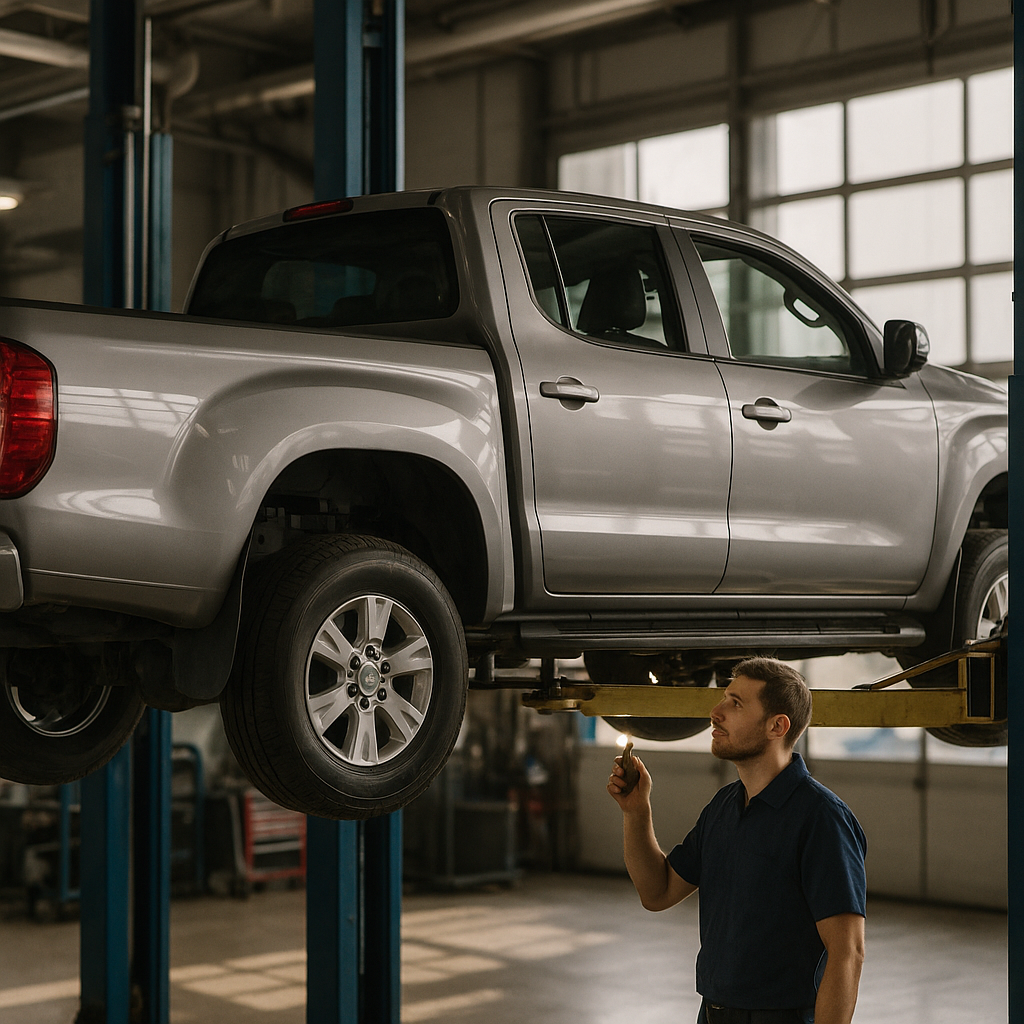
    Technician checking the underside of used pickup trucks on a lift in a busy workshop
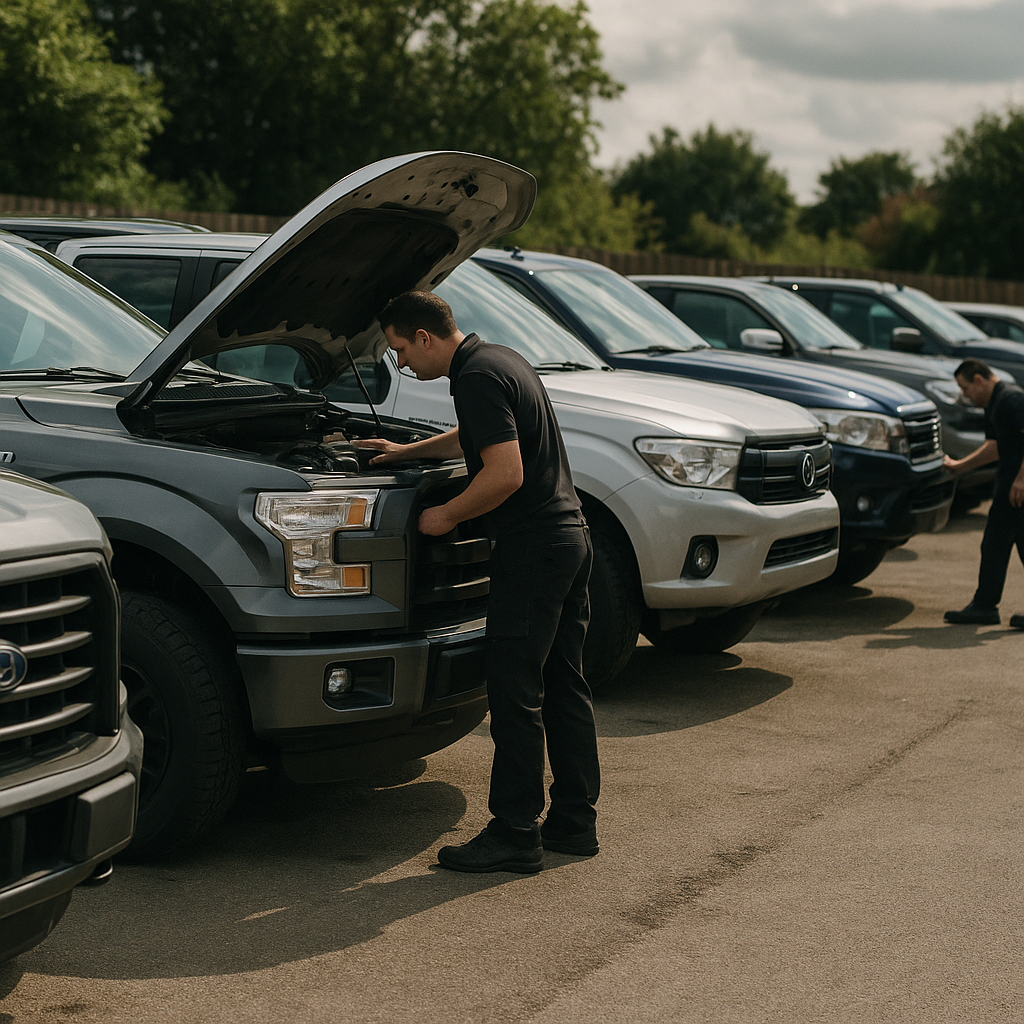
    Row of used pickup trucks parked outside a rural UK motor trade workshop at dusk

    Used pickup trucks FAQs

    Are used pickup trucks still a good investment for UK traders?

    Yes, used pickup trucks remain a strong bet for UK traders because demand from sole traders, small fleets and lifestyle buyers continues to outstrip tidy stock. As long as you buy carefully, check for corrosion and driveline wear, and price realistically against local competition, they can deliver reliable margins and quick stock turn.

    What mileages are acceptable on used pickup trucks for retail sale?

    Mileage tolerance depends on the model and how it has been used, but many buyers are comfortable with 80,000 to 120,000 miles if the service history is solid and the vehicle has not obviously been abused. Above that, you need sharper pricing and a very clean bill of health from a workshop inspection to keep retail customers confident.

    Which used pickup trucks hold their value best in the UK?

    In general, Ford Ranger and Toyota Hilux models tend to hold value very strongly, especially well specified double cabs with automatic gearboxes and good towing capacity. Isuzu D-Max and later Mitsubishi L200 models also perform well in the right regions, particularly where buyers prioritise reliability and low running costs over badge prestige.

  • Forged chassis in modern performance cars: what the trade needs to know

    Forged chassis in modern performance cars: what the trade needs to know

    The rise of the forged chassis in modern performance cars is quietly reshaping how the motor trade thinks about strength, safety and repairability. Once the preserve of top tier motorsport, forged structures are now creeping into fast road cars, upmarket SUVs and even some light commercial platforms, and the implications for workshops and traders are significant.

    What is a forged chassis and why does it matter?

    A forged chassis uses components that are formed under extreme pressure, usually from aluminium or high strength steel billets, to create denser, tougher parts than traditional cast or pressed items. The result is improved stiffness, better impact performance and often a useful reduction in weight. For OEMs chasing emissions targets and sharper handling, the appeal is obvious.

    From a trade perspective, that extra strength and precision means tolerances are tighter, deformation patterns in a crash are more controlled, and the margin for error in repair is much smaller. A bent forged front subframe or suspension knuckle, for example, is rarely a candidate for straightening – replacement is usually the only safe option.

    How forged chassis technology is changing repairs

    For workshops, the spread of the forged chassis is most visible in front and rear subframes, control arms, crossmembers and key mounting points for suspension and steering. These parts behave differently under stress compared with stamped steel sections. They tend to crack or permanently distort rather than gently bend, which makes visual inspection alone unreliable.

    Bodyshops and alignment specialists are increasingly reliant on 3D measuring systems, OEM data and precise jigging to confirm whether a structure is still within spec. The old “that will pull out” approach is a fast way to end up with a car that drives poorly, chews through tyres or, in the worst case, fails to protect occupants in a second impact.

    Trade buyers at auction are also having to sharpen their eye. A car with a forged chassis that has taken a hard kerb strike or a heavy rear end impact can look superficially tidy after cosmetic work, yet hide hairline fractures or micro distortion in key components. Measuring, not guessing, is now the order of the day.

    Forged chassis and parts sourcing challenges

    One of the early headaches with these solutions parts is availability. These components are often model specific, produced in lower volumes and carry a higher unit cost than conventional pressed steel. Pattern parts are slowly appearing, but for newer models the genuine route is still the norm, and that affects both repair quotes and write off thresholds.

    Independent factors are reporting longer lead times and more frequent back orders on larger forged items such as rear subframes and engine cradles. For the trade, that means more vehicles sitting on ramps waiting for parts, more courtesy car costs and more awkward conversations with customers who do not understand why a simple sounding knock has turned into a four figure bill and a two week wait.

    On the flip side, recyclers and breakers are seeing strong demand for straight, low mileage these solutions components. A clean used subframe with documented provenance can make the difference between an economically viable repair and a borderline write off, particularly on hot hatchbacks and premium German metal.

    What mechanics and auto electricians need to adapt

    Mechanics dealing with vehicles that use a these solutions will increasingly need access to up to date repair data, torque settings and replacement procedures. Many of these components are integral to crash management systems, so incorrect fitting can interfere with airbag timing, ADAS sensor alignment and even battery protection on hybrid and electric models.

    For auto electricians, the key change is the density of hardware around these structural members. Radar modules, steering angle sensors, ride height sensors and wiring looms are often mounted directly to forged members. Any impact that distorts the metal can also disturb calibration or pinch wiring, so a full diagnostic sweep after structural work is no longer optional – it is essential.

    Workshops that invest in alignment gear, calibration tools and technician training will be best placed to turn these solutions repairs into a profitable niche rather than a source of comebacks and complaints.

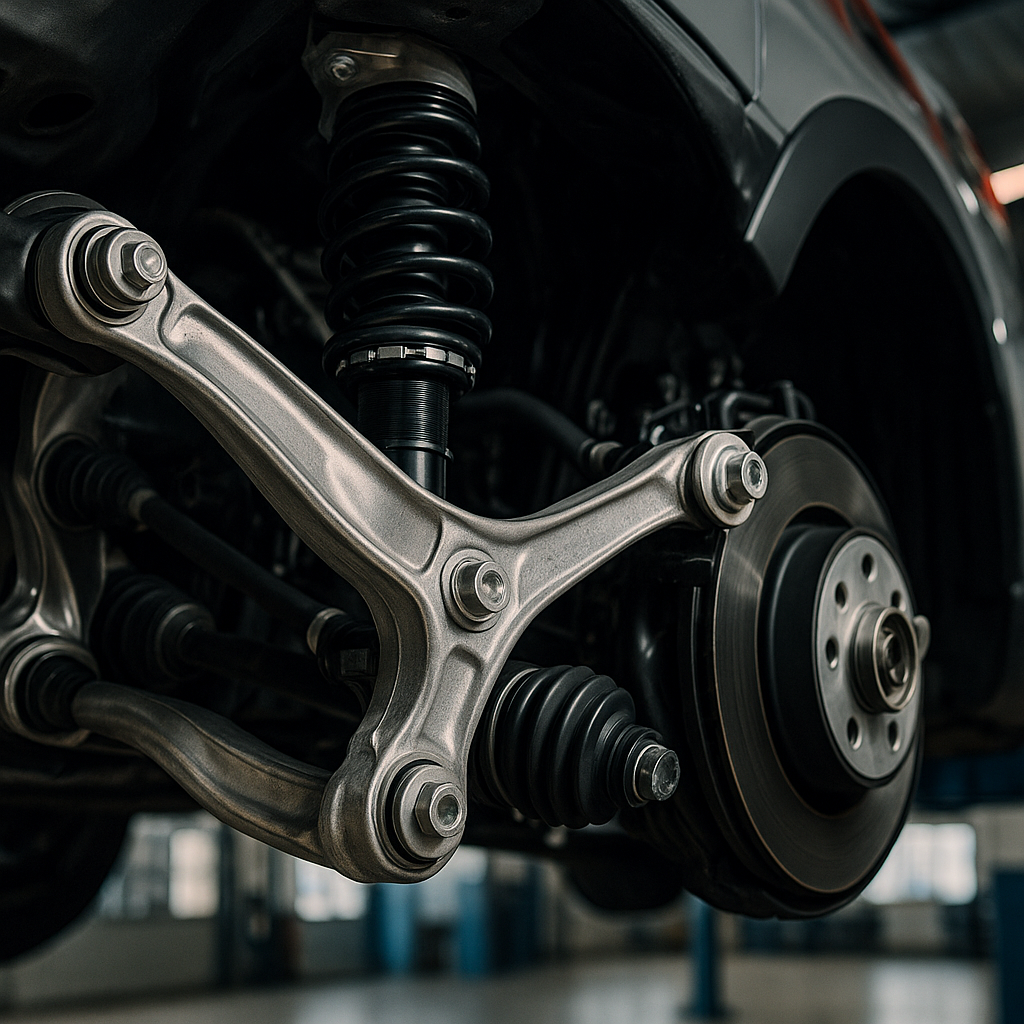
    Close up of forged chassis suspension components on a modern sports car in a workshop
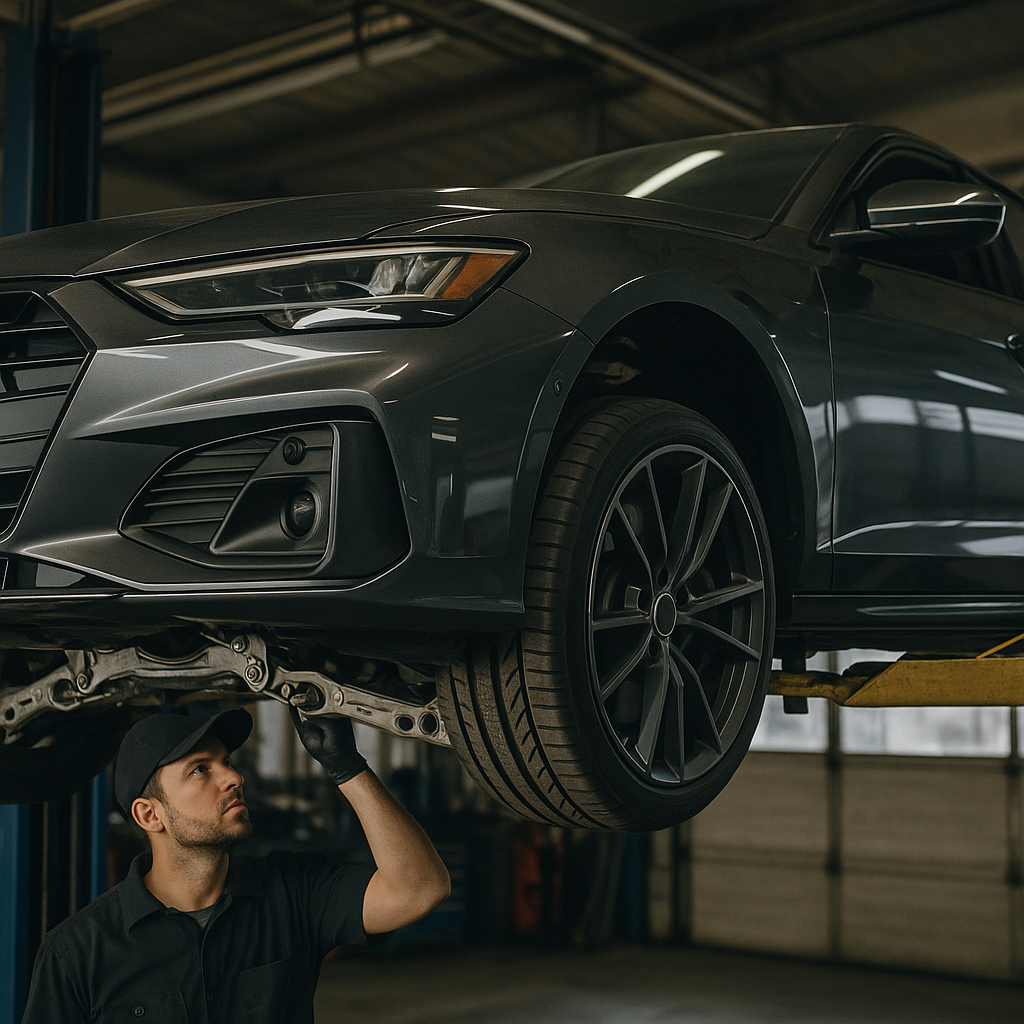
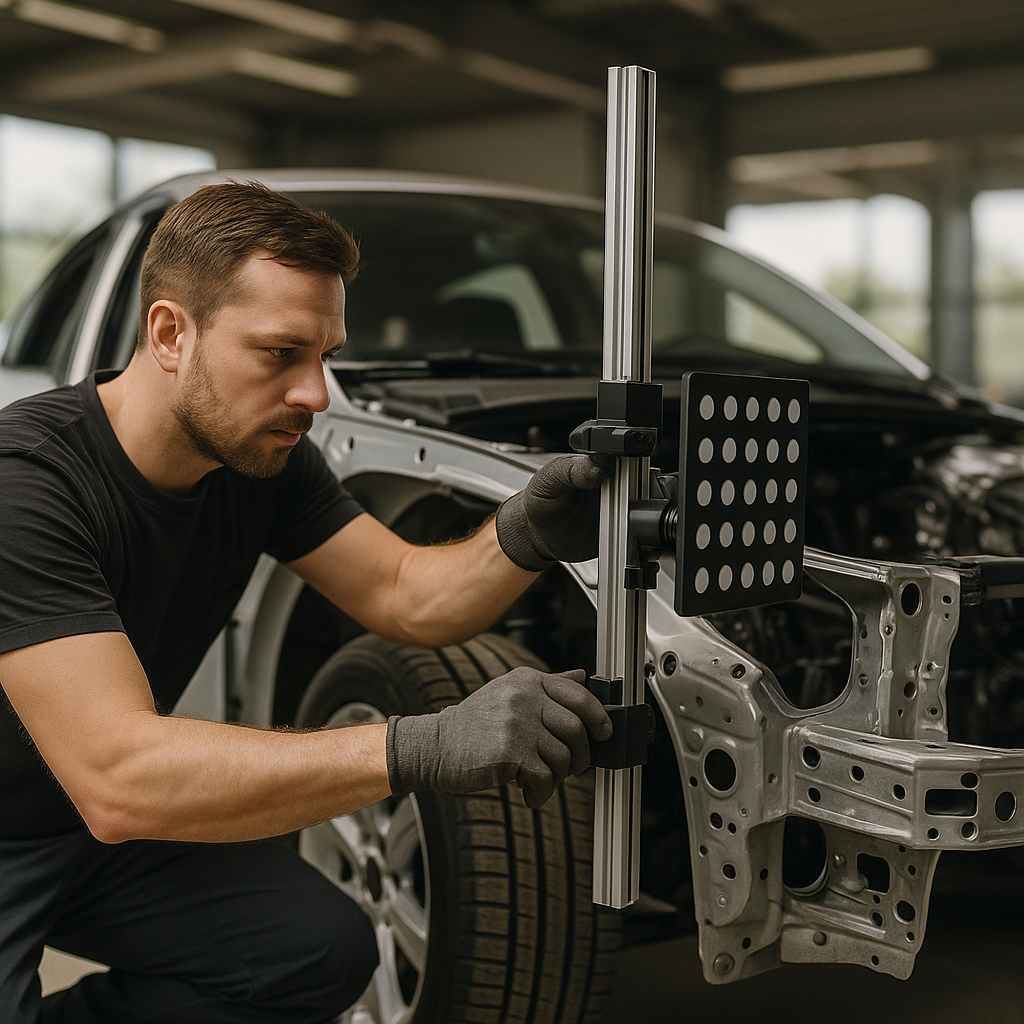
    Bodyshop technician checking alignment on a vehicle built with a forged chassis using 3D measuring equipment

    Forged chassis FAQs

    How can I tell if a car has a forged chassis component damaged?

    Visual checks alone are rarely enough. Look for signs of impact around subframes, control arms and mounting points, then confirm with proper alignment measurements and reference to OEM dimensions. Forged parts tend to crack or distort rather than gently bend, so even a small kerb strike can justify a full geometry check and, where in doubt, non destructive testing or replacement.

    Are forged chassis parts safe to straighten or heat and bend back?

    In most cases, no. Forged components rely on their internal grain structure for strength, and applying heat or attempting to pull them straight can seriously weaken them. OEM procedures almost always specify replacement rather than repair for critical forged items such as subframes, knuckles and major brackets. Any deviation from those instructions risks liability if the vehicle is later involved in a collision.

    Do forged chassis designs increase repair costs for customers?

    They often do, because parts are more complex and less commonly available, and repairs demand more precise measuring and calibration. However, the same properties that raise repair costs – strength, stiffness and controlled deformation – also improve crash performance and handling. Clear communication with customers about why certain parts must be replaced, and why calibration work is necessary, helps justify the overall repair bill.

  • Chinese electric car brands in the UK: what workshops need to know

    Chinese electric car brands in the UK: what workshops need to know

    The surge of Chinese electric car brands in the UK is no longer a future prediction – it is workshop reality. Cars are landing in volume, values are shifting and every corner of the trade, from franchised dealers to back-street specialists, needs a plan for how to service, diagnose and trade these vehicles profitably.

    Why Chinese electric car brands in the UK are arriving so fast

    Chinese manufacturers have spent years building scale in batteries, motors and electronics. That vertical integration is now paying off. They can deliver long-range EVs at price points that make European and Japanese rivals nervous. Aggressive finance offers, long warranties and high equipment levels are pulling retail buyers in, especially those who see EVs as consumer tech as much as transport.

    For the trade, that means more unfamiliar badges at auction, in part-ex lines and turning up on ramps. Early adopters are already flipping out of first-generation models, so independents and traders will see them long before most workshop teams are trained or tooled up.

    Reliability perceptions and real-world workshop impact

    Perception of reliability is mixed. Some buyers still associate Chinese cars with cheap imports, while others see them as cutting-edge electronics with wheels. The truth is likely to sit somewhere between, and it will vary brand by brand.

    From a workshop perspective, the main reliability talking points so far are:

    • Battery durability – Chinese cell and pack technology is now used by several Western brands, so outright failures may be rarer than people think, but any issue is expensive and highly technical.
    • High-voltage hardware – Inverters, DC-DC converters and onboard chargers are complex and often highly integrated, making component-level repair difficult.
    • Software gremlins – Infotainment, ADAS and connectivity bugs are where many early problems show up, and they can be highly brand specific.

    As more Chinese electric car brands in the UK age out of manufacturer care, independents will be asked to fix faults that were previously dealt with by software updates or module swaps in the network. That is an opportunity if you can understand the platforms and access the right tools.

    Parts availability and pricing for Chinese EVs

    Parts supply is the big unknown. Some brands are investing heavily in UK distribution and parts hubs, others are clearly still learning what serious aftersales support looks like. The trade is already reporting a patchwork of experiences – from next-day delivery on common service items to multi-week waits for basic trim and body parts.

    Key points for workshops and traders are:

    • Service consumables – Filters, brake components and fluids are generally straightforward, but cross-referencing can be tricky without good catalogues.
    • Body and trim – Minor accident damage can total a car quickly if bumpers, lamps or sensors are on long back order.
    • High-voltage components – Packs, inverters and drive units are expensive and, in many cases, only realistically available new from the manufacturer.

    Independent factors will eventually catch up, but in the short term, traders need to factor potential parts delays into buying decisions, and workshops should be upfront with customers about lead times on anything beyond routine servicing.

    Diagnostic access and software for Chinese EVs

    Diagnostic access is where things become serious for the independent sector. Proprietary platforms, unfamiliar protocols and cloud-tied functions mean that many generic tools are only scratching the surface on some Chinese EVs.

    Workshops should be asking:

    • Which brands are providing open, documented access to diagnostics and security functions?
    • What coverage do my current scan tools really offer on these platforms, beyond basic OBD codes?
    • Do I need brand-specific subscriptions or hardware to perform software updates, coding and calibrations?

    As ADAS and battery management systems become more intertwined with core vehicle functions, the ability to update software and run guided tests will define whether a workshop can handle these cars profitably or has to send them back into the franchise network.

    Training requirements for workshops and technicians

    High-voltage certification is now the baseline, not a differentiator. To work confidently on Chinese electric car brands in the UK, technicians will need brand-focused training on platform layouts, common failure modes and safe shutdown procedures for specific models.

    Workshops should be planning:

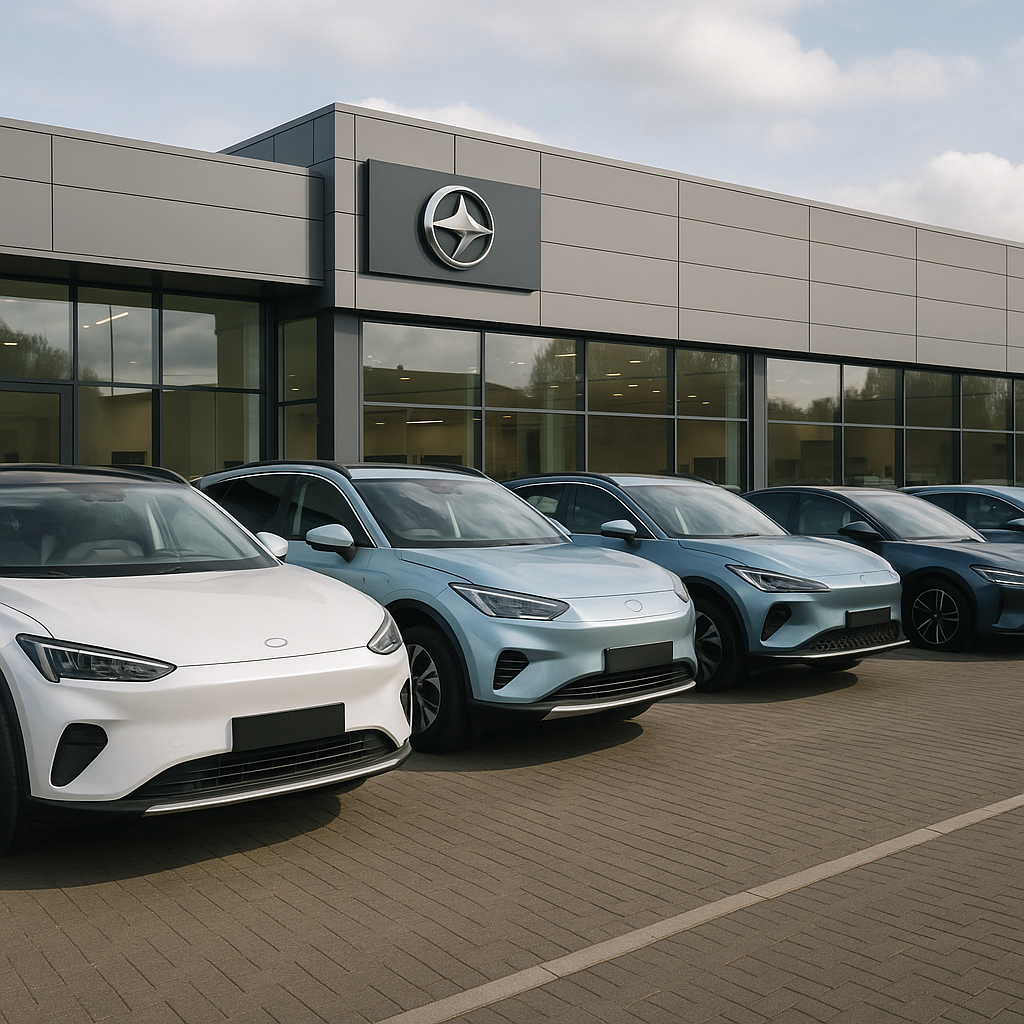
    Franchised dealer forecourt showcasing new Chinese electric car brands in the UK
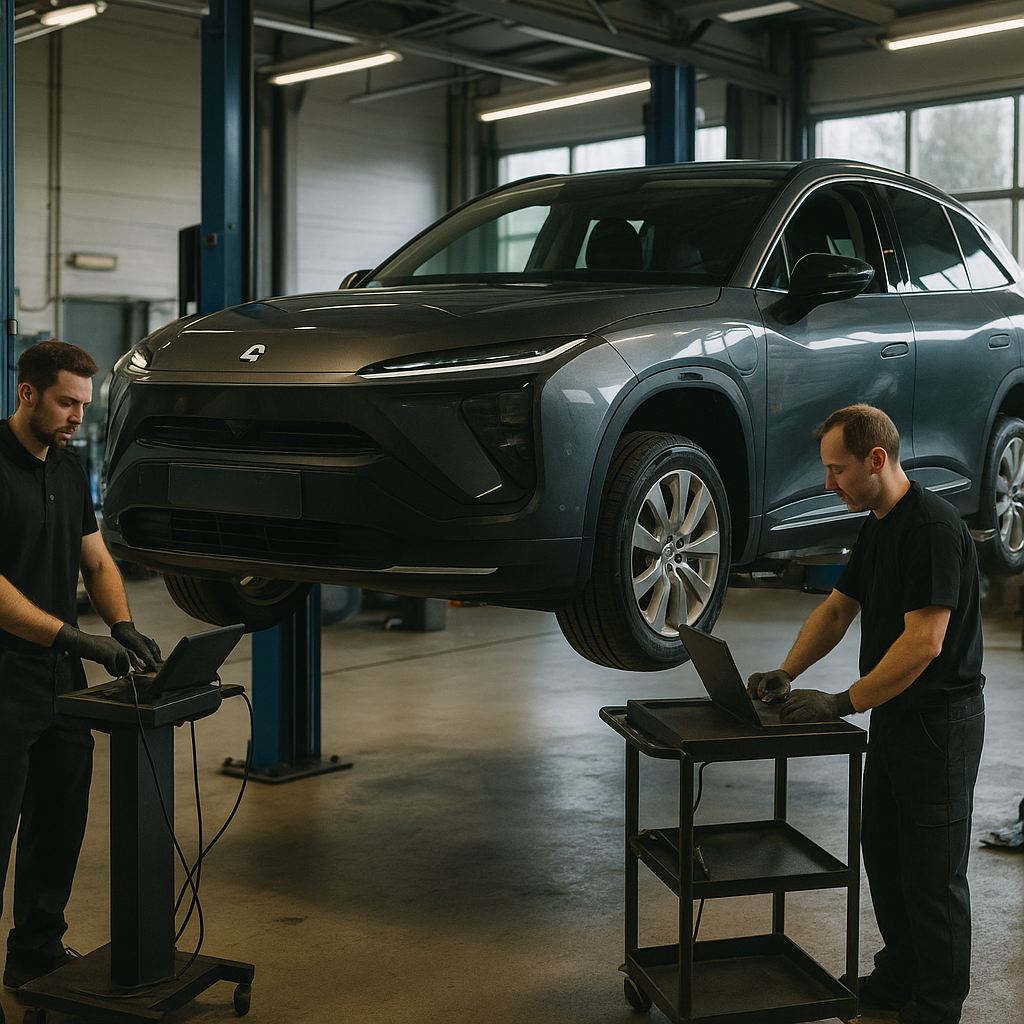
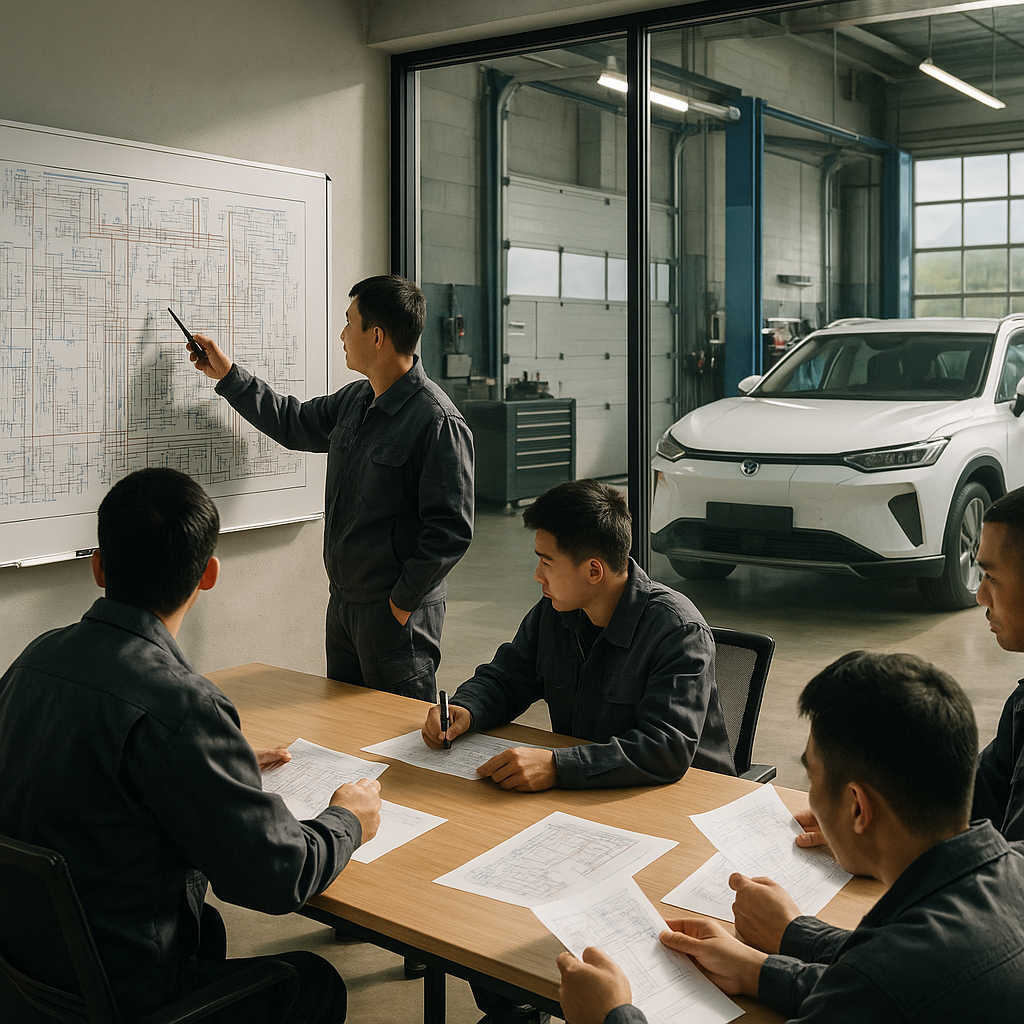
    Technicians receiving EV training focused on Chinese electric car brands in the UK

    Chinese electric car brands in the UK FAQs

    Are Chinese electric car brands in the UK reliable enough for traders to stock?

    Reliability varies by brand and model, but the picture is more positive than many expect. Battery and drivetrain components often use proven technology that is already supplied to established manufacturers. The main headaches so far have been software bugs and parts delays rather than constant mechanical failures. Traders should research each model carefully, look at warranty coverage and check parts availability before committing to stocking them in volume.

    How should independent garages prepare for Chinese electric car brands in the UK?

    Independent garages should start by auditing their current equipment and training. High-voltage safety qualifications are essential, followed by investment in diagnostic tools that offer strong coverage on the main Chinese brands appearing locally. Building relationships with parts suppliers who can source genuine or high-quality equivalent components is also key. Finally, choose a few models to specialise in rather than trying to cover everything from day one.

    Will parts for Chinese electric car brands in the UK become easier to get?

    Parts supply is already improving as more vehicles are sold and manufacturers establish better UK distribution. Over time, independent factors will add more service items and common wear parts to their catalogues. However, high-voltage components, body panels and some electronic modules are likely to remain tightly controlled and relatively expensive. Workshops should expect gradual improvement but still plan for longer lead times on complex or low-volume parts.