Category: Insights

  • Forged chassis in modern performance cars: what the trade needs to know

    Forged chassis in modern performance cars: what the trade needs to know

    The rise of the forged chassis in modern performance cars is quietly reshaping how the motor trade thinks about strength, safety and repairability. Once the preserve of top tier motorsport, forged structures are now creeping into fast road cars, upmarket SUVs and even some light commercial platforms, and the implications for workshops and traders are significant.

    What is a forged chassis and why does it matter?

    A forged chassis uses components that are formed under extreme pressure, usually from aluminium or high strength steel billets, to create denser, tougher parts than traditional cast or pressed items. The result is improved stiffness, better impact performance and often a useful reduction in weight. For OEMs chasing emissions targets and sharper handling, the appeal is obvious.

    From a trade perspective, that extra strength and precision means tolerances are tighter, deformation patterns in a crash are more controlled, and the margin for error in repair is much smaller. A bent forged front subframe or suspension knuckle, for example, is rarely a candidate for straightening – replacement is usually the only safe option.

    How forged chassis technology is changing repairs

    For workshops, the spread of the forged chassis is most visible in front and rear subframes, control arms, crossmembers and key mounting points for suspension and steering. These parts behave differently under stress compared with stamped steel sections. They tend to crack or permanently distort rather than gently bend, which makes visual inspection alone unreliable.

    Bodyshops and alignment specialists are increasingly reliant on 3D measuring systems, OEM data and precise jigging to confirm whether a structure is still within spec. The old “that will pull out” approach is a fast way to end up with a car that drives poorly, chews through tyres or, in the worst case, fails to protect occupants in a second impact.

    Trade buyers at auction are also having to sharpen their eye. A car with a forged chassis that has taken a hard kerb strike or a heavy rear end impact can look superficially tidy after cosmetic work, yet hide hairline fractures or micro distortion in key components. Measuring, not guessing, is now the order of the day.

    Forged chassis and parts sourcing challenges

    One of the early headaches with these solutions parts is availability. These components are often model specific, produced in lower volumes and carry a higher unit cost than conventional pressed steel. Pattern parts are slowly appearing, but for newer models the genuine route is still the norm, and that affects both repair quotes and write off thresholds.

    Independent factors are reporting longer lead times and more frequent back orders on larger forged items such as rear subframes and engine cradles. For the trade, that means more vehicles sitting on ramps waiting for parts, more courtesy car costs and more awkward conversations with customers who do not understand why a simple sounding knock has turned into a four figure bill and a two week wait.

    On the flip side, recyclers and breakers are seeing strong demand for straight, low mileage these solutions components. A clean used subframe with documented provenance can make the difference between an economically viable repair and a borderline write off, particularly on hot hatchbacks and premium German metal.

    What mechanics and auto electricians need to adapt

    Mechanics dealing with vehicles that use a these solutions will increasingly need access to up to date repair data, torque settings and replacement procedures. Many of these components are integral to crash management systems, so incorrect fitting can interfere with airbag timing, ADAS sensor alignment and even battery protection on hybrid and electric models.

    For auto electricians, the key change is the density of hardware around these structural members. Radar modules, steering angle sensors, ride height sensors and wiring looms are often mounted directly to forged members. Any impact that distorts the metal can also disturb calibration or pinch wiring, so a full diagnostic sweep after structural work is no longer optional – it is essential.

    Workshops that invest in alignment gear, calibration tools and technician training will be best placed to turn these solutions repairs into a profitable niche rather than a source of comebacks and complaints.

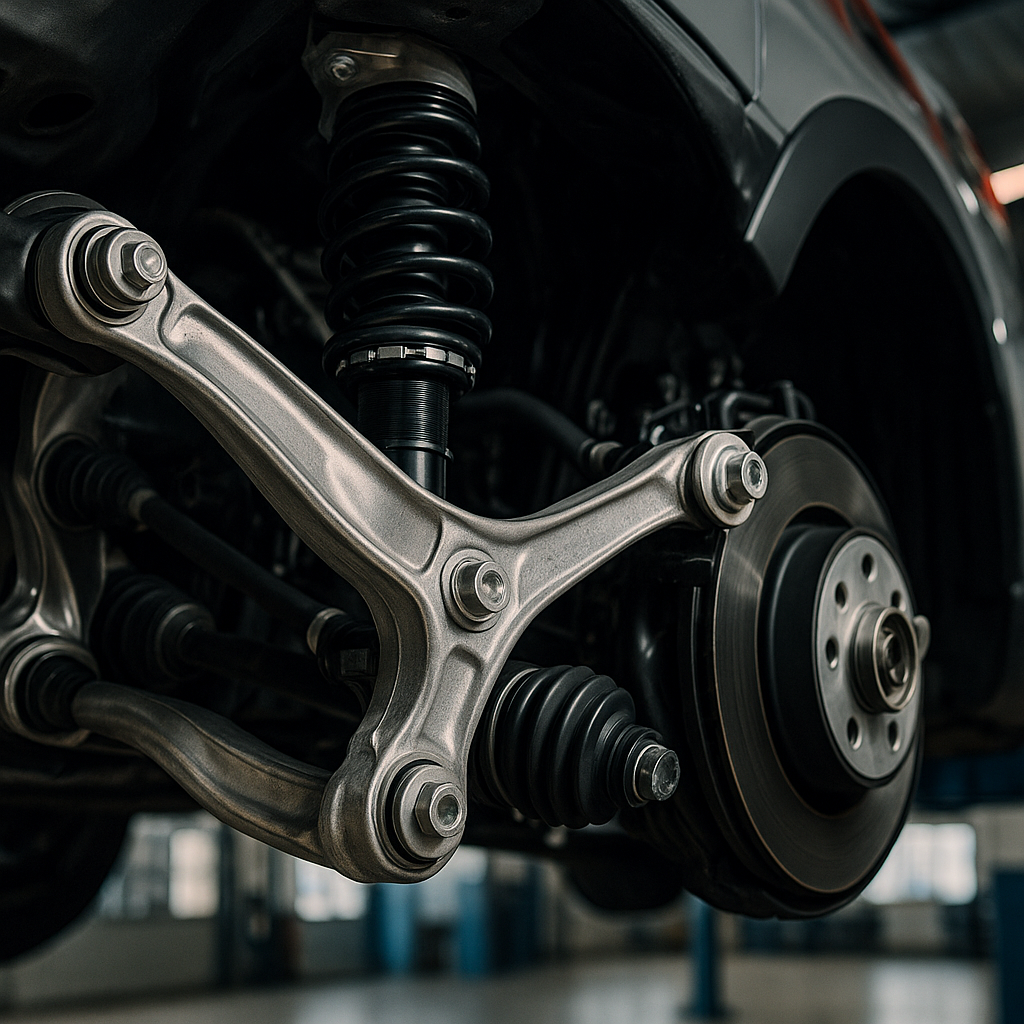
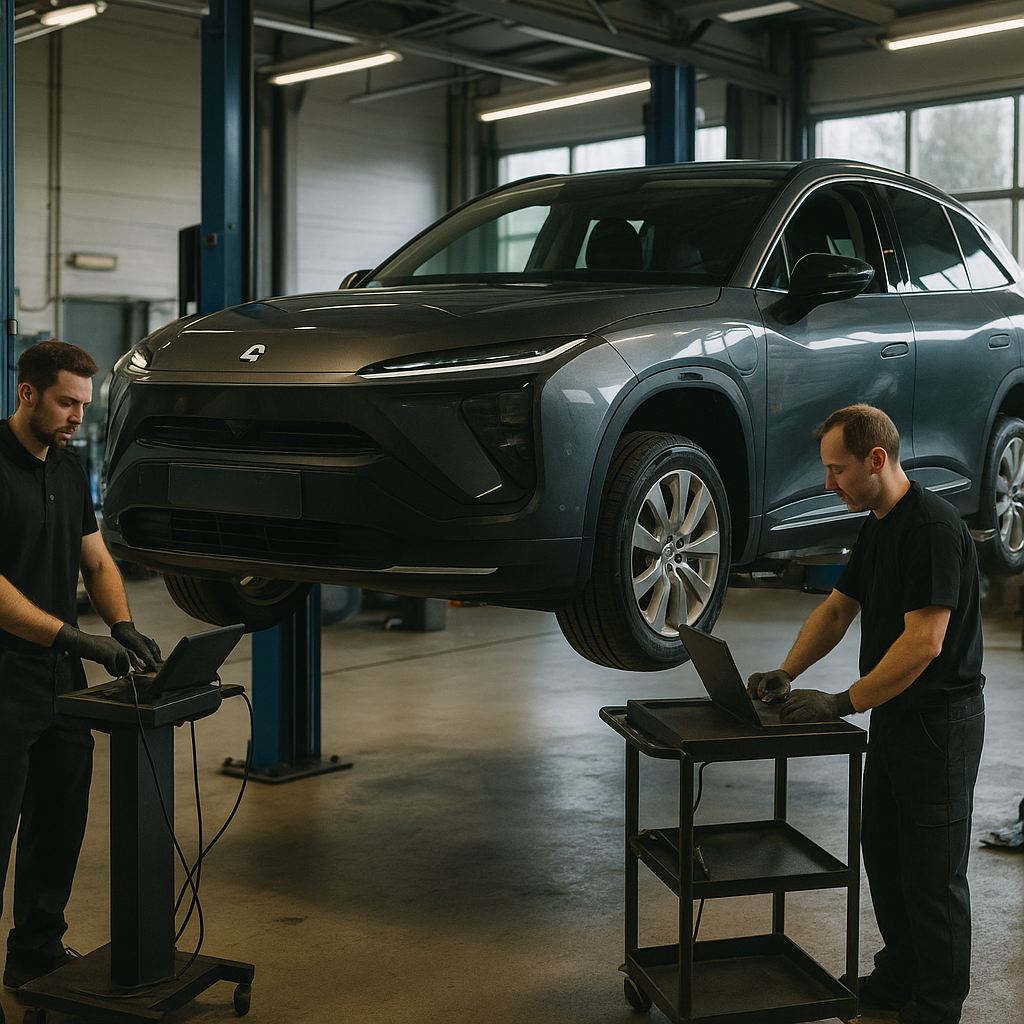
    Close up of forged chassis suspension components on a modern sports car in a workshop
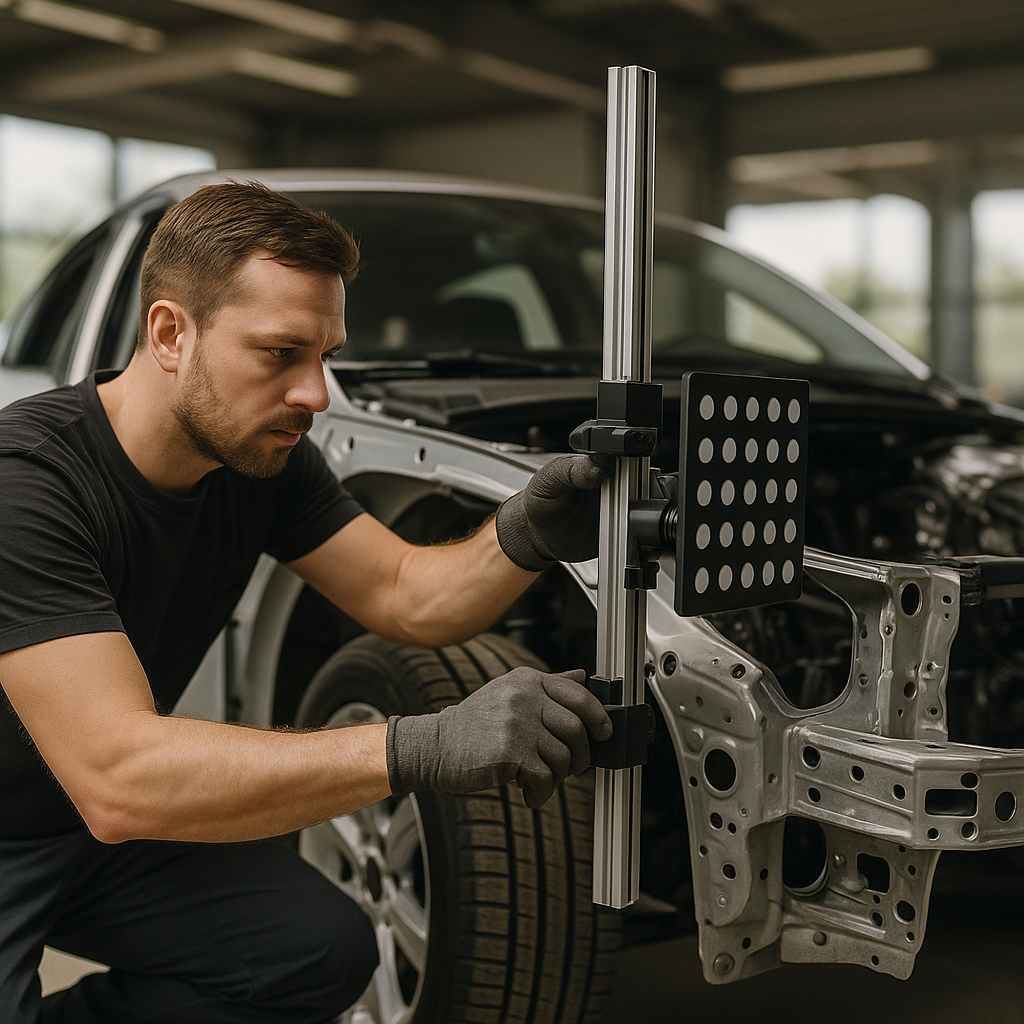
    Bodyshop technician checking alignment on a vehicle built with a forged chassis using 3D measuring equipment

    Forged chassis FAQs

    How can I tell if a car has a forged chassis component damaged?

    Visual checks alone are rarely enough. Look for signs of impact around subframes, control arms and mounting points, then confirm with proper alignment measurements and reference to OEM dimensions. Forged parts tend to crack or distort rather than gently bend, so even a small kerb strike can justify a full geometry check and, where in doubt, non destructive testing or replacement.

    Are forged chassis parts safe to straighten or heat and bend back?

    In most cases, no. Forged components rely on their internal grain structure for strength, and applying heat or attempting to pull them straight can seriously weaken them. OEM procedures almost always specify replacement rather than repair for critical forged items such as subframes, knuckles and major brackets. Any deviation from those instructions risks liability if the vehicle is later involved in a collision.

    Do forged chassis designs increase repair costs for customers?

    They often do, because parts are more complex and less commonly available, and repairs demand more precise measuring and calibration. However, the same properties that raise repair costs – strength, stiffness and controlled deformation – also improve crash performance and handling. Clear communication with customers about why certain parts must be replaced, and why calibration work is necessary, helps justify the overall repair bill.

  • Chinese electric car brands in the UK: what workshops need to know

    Chinese electric car brands in the UK: what workshops need to know

    The surge of Chinese electric car brands in the UK is no longer a future prediction – it is workshop reality. Cars are landing in volume, values are shifting and every corner of the trade, from franchised dealers to back-street specialists, needs a plan for how to service, diagnose and trade these vehicles profitably.

    Why Chinese electric car brands in the UK are arriving so fast

    Chinese manufacturers have spent years building scale in batteries, motors and electronics. That vertical integration is now paying off. They can deliver long-range EVs at price points that make European and Japanese rivals nervous. Aggressive finance offers, long warranties and high equipment levels are pulling retail buyers in, especially those who see EVs as consumer tech as much as transport.

    For the trade, that means more unfamiliar badges at auction, in part-ex lines and turning up on ramps. Early adopters are already flipping out of first-generation models, so independents and traders will see them long before most workshop teams are trained or tooled up.

    Reliability perceptions and real-world workshop impact

    Perception of reliability is mixed. Some buyers still associate Chinese cars with cheap imports, while others see them as cutting-edge electronics with wheels. The truth is likely to sit somewhere between, and it will vary brand by brand.

    From a workshop perspective, the main reliability talking points so far are:

    • Battery durability – Chinese cell and pack technology is now used by several Western brands, so outright failures may be rarer than people think, but any issue is expensive and highly technical.
    • High-voltage hardware – Inverters, DC-DC converters and onboard chargers are complex and often highly integrated, making component-level repair difficult.
    • Software gremlins – Infotainment, ADAS and connectivity bugs are where many early problems show up, and they can be highly brand specific.

    As more Chinese electric car brands in the UK age out of manufacturer care, independents will be asked to fix faults that were previously dealt with by software updates or module swaps in the network. That is an opportunity if you can understand the platforms and access the right tools.

    Parts availability and pricing for Chinese EVs

    Parts supply is the big unknown. Some brands are investing heavily in UK distribution and parts hubs, others are clearly still learning what serious aftersales support looks like. The trade is already reporting a patchwork of experiences – from next-day delivery on common service items to multi-week waits for basic trim and body parts.

    Key points for workshops and traders are:

    • Service consumables – Filters, brake components and fluids are generally straightforward, but cross-referencing can be tricky without good catalogues.
    • Body and trim – Minor accident damage can total a car quickly if bumpers, lamps or sensors are on long back order.
    • High-voltage components – Packs, inverters and drive units are expensive and, in many cases, only realistically available new from the manufacturer.

    Independent factors will eventually catch up, but in the short term, traders need to factor potential parts delays into buying decisions, and workshops should be upfront with customers about lead times on anything beyond routine servicing.

    Diagnostic access and software for Chinese EVs

    Diagnostic access is where things become serious for the independent sector. Proprietary platforms, unfamiliar protocols and cloud-tied functions mean that many generic tools are only scratching the surface on some Chinese EVs.

    Workshops should be asking:

    • Which brands are providing open, documented access to diagnostics and security functions?
    • What coverage do my current scan tools really offer on these platforms, beyond basic OBD codes?
    • Do I need brand-specific subscriptions or hardware to perform software updates, coding and calibrations?

    As ADAS and battery management systems become more intertwined with core vehicle functions, the ability to update software and run guided tests will define whether a workshop can handle these cars profitably or has to send them back into the franchise network.

    Training requirements for workshops and technicians

    High-voltage certification is now the baseline, not a differentiator. To work confidently on Chinese electric car brands in the UK, technicians will need brand-focused training on platform layouts, common failure modes and safe shutdown procedures for specific models.

    Workshops should be planning:

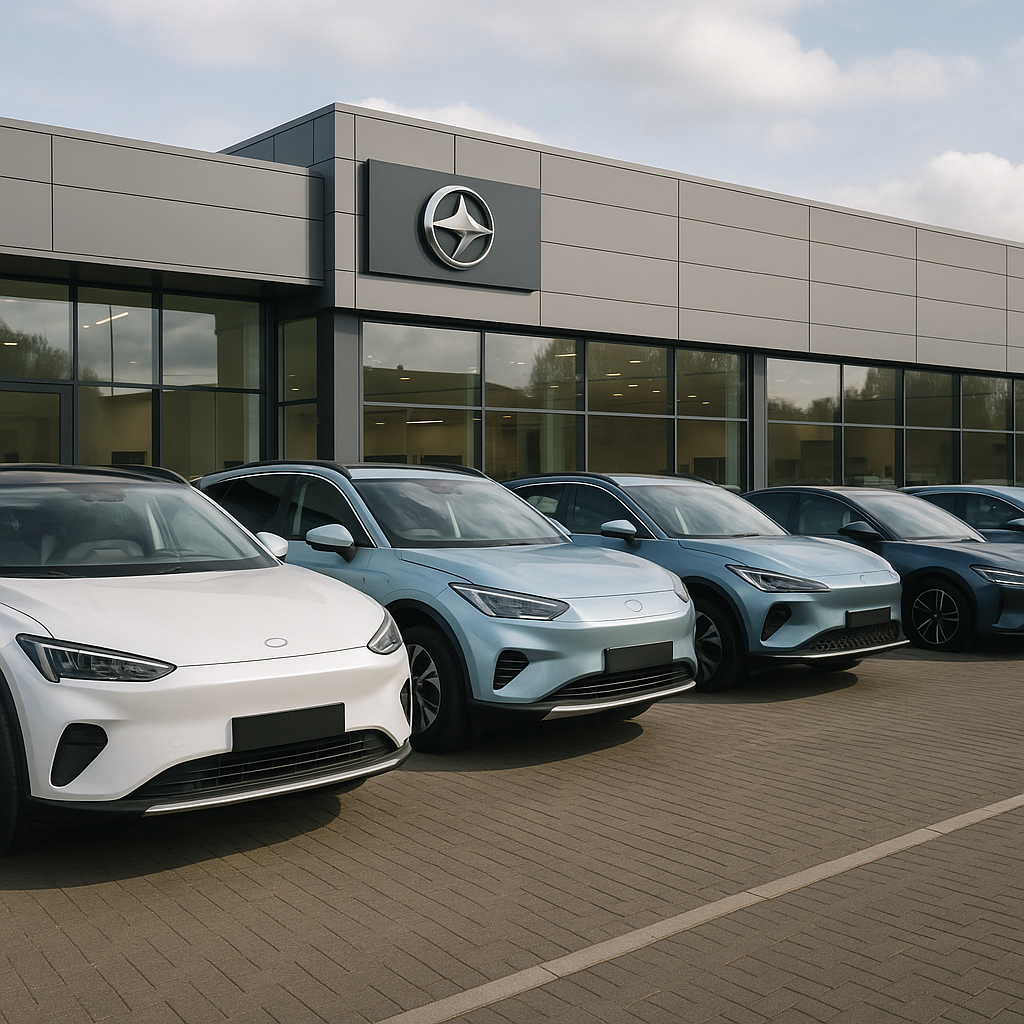
    Franchised dealer forecourt showcasing new Chinese electric car brands in the UK
    Technicians receiving EV training focused on Chinese electric car brands in the UK

    Chinese electric car brands in the UK FAQs

    Are Chinese electric car brands in the UK reliable enough for traders to stock?

    Reliability varies by brand and model, but the picture is more positive than many expect. Battery and drivetrain components often use proven technology that is already supplied to established manufacturers. The main headaches so far have been software bugs and parts delays rather than constant mechanical failures. Traders should research each model carefully, look at warranty coverage and check parts availability before committing to stocking them in volume.

    How should independent garages prepare for Chinese electric car brands in the UK?

    Independent garages should start by auditing their current equipment and training. High-voltage safety qualifications are essential, followed by investment in diagnostic tools that offer strong coverage on the main Chinese brands appearing locally. Building relationships with parts suppliers who can source genuine or high-quality equivalent components is also key. Finally, choose a few models to specialise in rather than trying to cover everything from day one.

    Will parts for Chinese electric car brands in the UK become easier to get?

    Parts supply is already improving as more vehicles are sold and manufacturers establish better UK distribution. Over time, independent factors will add more service items and common wear parts to their catalogues. However, high-voltage components, body panels and some electronic modules are likely to remain tightly controlled and relatively expensive. Workshops should expect gradual improvement but still plan for longer lead times on complex or low-volume parts.

  • How To Assess Battery Health On Used Electric Cars In The Trade

    How To Assess Battery Health On Used Electric Cars In The Trade

    Anyone buying and selling EVs for stock quickly learns that the battery is the deal. Get it right and margins are solid. Get it wrong and you are sitting on a five figure liability. Knowing how to assess battery health on used electric cars properly is now a core trade skill, just like reading compression figures used to be.

    Why battery health matters more than mileage

    With combustion cars, mileage is the shorthand for overall wear. With EVs, the traction battery deserves its own separate analysis. Two identical cars with the same mileage can have wildly different state of health depending on charging habits, climate and usage profile.

    For trade buyers, battery condition affects:

    • What you can safely bid at auction or on a doorstep
    • How confident you can be with retail warranties
    • Stock turn speed, especially on older high mileage EVs
    • Future part exchange risk when that same EV comes back

    Ignoring the battery is effectively guessing at the biggest cost item on the car.

    Using state of health tools to assess EV batteries

    The most reliable way to assess battery health on used electric cars is to read state of health data directly from the vehicle. Most modern EVs store this in the battery management system and expose it through the OBD port, a manufacturer diagnostic tool or both.

    Independent tools and apps paired with a quality OBD dongle can give you:

    • State of health (SoH) as a percentage of original capacity
    • Usable capacity in kWh
    • DC and AC charge counts and totals
    • Cell voltage spread and temperature data

    For trade work, look for tools that log and export data so you can keep a record with the stock file. Consistency matters: use the same hardware and process on every EV so your SoH figures are comparable across cars and over time.

    Reading manufacturer battery data correctly

    Many brands now show some form of battery data in the infotainment system or service menu. It is useful, but you need to understand what you are actually looking at:

    • Some show total capacity, others show usable capacity only
    • Some round aggressively, so a 91.6 percent pack appears as 90 percent
    • Some reset after software updates or module changes

    Always cross check the on screen figure with your independent SoH tool and the vehicle history. A pack that suddenly jumps from 82 percent to 95 percent between services probably had a software update or a module swap. That is not necessarily bad news, but it changes how you price and explain the car.

    Typical battery degradation patterns by brand

    Every EV degrades, but not at the same rate. Broadly, you will see:

    • Early air cooled packs: faster initial drop, then a slower tail
    • Modern liquid cooled packs: gentle decline if charging habits are sensible
    • High performance models: a bit more wear where drivers lean on rapid charging and full throttle often

    Look for patterns in your own stock. Track SoH against age, mileage and usage. Within a year you will know what is normal for each brand and which models you want to avoid at certain mileages. Manufacturer warranty terms also give you a clue: if a brand is happy to back a pack for eight years to 70 percent, they are confident typical cars will sit above that line.

    How to price battery risk into trade bids

    Once you can read the data, the next step is turning it into numbers on a bid sheet. A simple framework keeps you out of trouble:

    1. Start with your usual book figure for a clean, average example
    2. Apply a battery adjustment based on SoH banding
    3. Layer on any warranty cover that remains on the high voltage pack
    4. Factor in your local retail demand for older EVs

    For example, you may decide that:

    Technician reading state of health data to assess battery health on used electric cars
    Motor traders inspecting stock while planning to assess battery health on used electric cars at auction

    Assess battery health on used electric cars FAQs

    What is a good state of health percentage for a used EV battery?

    For most mainstream EVs, anything above 90 percent state of health is typically considered very strong for a used example and should not need a price hit beyond normal trade negotiation. Between about 80 and 90 percent is common on older or higher mileage cars and can still be perfectly usable, but you should reflect the reduced range in your bid. Once a pack drops into the 70s, you need to buy cautiously, check remaining battery warranty, and be clear with retail customers about expected range.

    Can I assess battery health on used electric cars without specialist tools?

    You can get a rough feel for battery condition from range tests, dash readouts and service history, but it is not enough for confident trade buying. To assess battery health on used electric cars properly, you really need to read state of health data from the battery management system using a suitable diagnostic tool or app. The cost of basic kit is low compared with the potential loss on a single misjudged EV purchase.

    How much should battery degradation affect my trade bid price?

    The impact on your bid should reflect both the loss of usable range and the potential cost of future repair. Many traders work with simple bands, applying no adjustment for high SoH packs, a modest deduction for mid 80s figures, and a much stronger deduction or a walk away decision once the battery drops into the low 70s or worse. Local demand, remaining manufacturer battery warranty and the price of replacement or repair options in your area should all feed into your numbers.

  • Why Ute-Style Pickups Are Dominating the UK Workhorse Market

    Why Ute-Style Pickups Are Dominating the UK Workhorse Market

    If you work in the motor trade, you will have noticed how ute-style pickups have moved from niche to normal on UK forecourts. Once the preserve of farmers and utility companies, these trucks are now everyday stock for dealers, bodyshops and independent garages handling commercial fleets and lifestyle buyers alike.

    What is driving demand for ute-style pickups?

    The surge in popularity of ute-style pickups is not an accident. It is the result of a perfect storm of practicality, tax advantages and changing customer expectations. Operators who once ran medium vans are now looking for vehicles that can tow heavy plant, carry a decent payload and still double as family transport at the weekend.

    Modern double-cab designs give car-like cabins, ISOFIX points, proper infotainment and respectable refinement, while retaining leaf springs and ladder frames where it counts. For many small businesses, one vehicle now has to do it all, and a well-specced truck ticks more boxes than a panel van ever could.

    Key advantages of ute-style pickups for UK operators

    From a workshop and sales perspective, the appeal is easy to understand. Towing capacities around 3.5 tonnes are becoming the norm, letting operators move trailers, diggers and plant without stepping up to a 7.5-tonner. Payloads regularly exceed a tonne, which keeps them within HMRC definitions that still offer attractive benefit-in-kind treatment for company drivers.

    Ground clearance and four-wheel drive make them ideal for construction sites, farms and utilities work. At the same time, manufacturers have finally understood that drivers spend long hours behind the wheel, so we see heated seats, advanced driver assistance systems and high-grade interiors that would not look out of place in a family SUV.

    How the used pickup market is evolving

    On the trade side, the used market for these trucks has become one of the most closely watched segments. Residuals remain strong for reputable models with full service history, especially where there is evidence of careful use rather than hard site work. Dealers are increasingly selective, avoiding heavily modified or overworked examples that can become comeback magnets for their workshops.

    Specialist breakers and parts suppliers have also stepped up, with strong availability of components for popular models and generations. Where fleets once feared downtime, they now know that everything from body panels to driveline components and even niche items like Toyota Hilux spares can be sourced quickly from dedicated trade partners.

    Workshop considerations when maintaining modern pickups

    For independent garages and auto electricians, these vehicles are both an opportunity and a challenge. Drivetrains are typically robust, but the mix of heavy-duty mechanicals with increasingly complex electronics means technicians need to be comfortable working on both. AdBlue systems, diesel particulate filters and advanced stability control all feature heavily, especially on newer Euro 6 models.

    Regular underbody inspections are critical. Trucks that spend their lives on building sites or farms will see accelerated wear on suspension bushes, steering joints and brake lines. Corrosion protection has improved, but stone chips and mud traps can still cause long-term issues if not addressed early. Smart operators are now booking in pre-winter and post-winter checks as standard practice.

    Where the market is heading next

    Looking ahead, the big story is electrification and hybridisation of pickups. While pure electric trucks are still rare in the UK, manufacturers are openly trialling plug-in hybrid drivetrains, 48-volt systems and more efficient diesel engines to keep running costs in check. Expect greater use of lightweight materials and more sophisticated driver assistance as fleets demand safer, cleaner workhorses.

    For the motor trade, that means investing in training, tooling and diagnostic capability now, rather than waiting until these vehicles become mainstream. Workshops and dealers who understand ute-style pickups inside out will be best placed to capture both fleet contracts and retail customers as the segment continues to grow.

    Whether you are selling, maintaining or refurbishing these trucks, it is clear that they are no passing fad. Ute-style pickups have become a cornerstone of the UK workhorse market, and the businesses that treat them as such will be the ones that stay ahead of the curve.

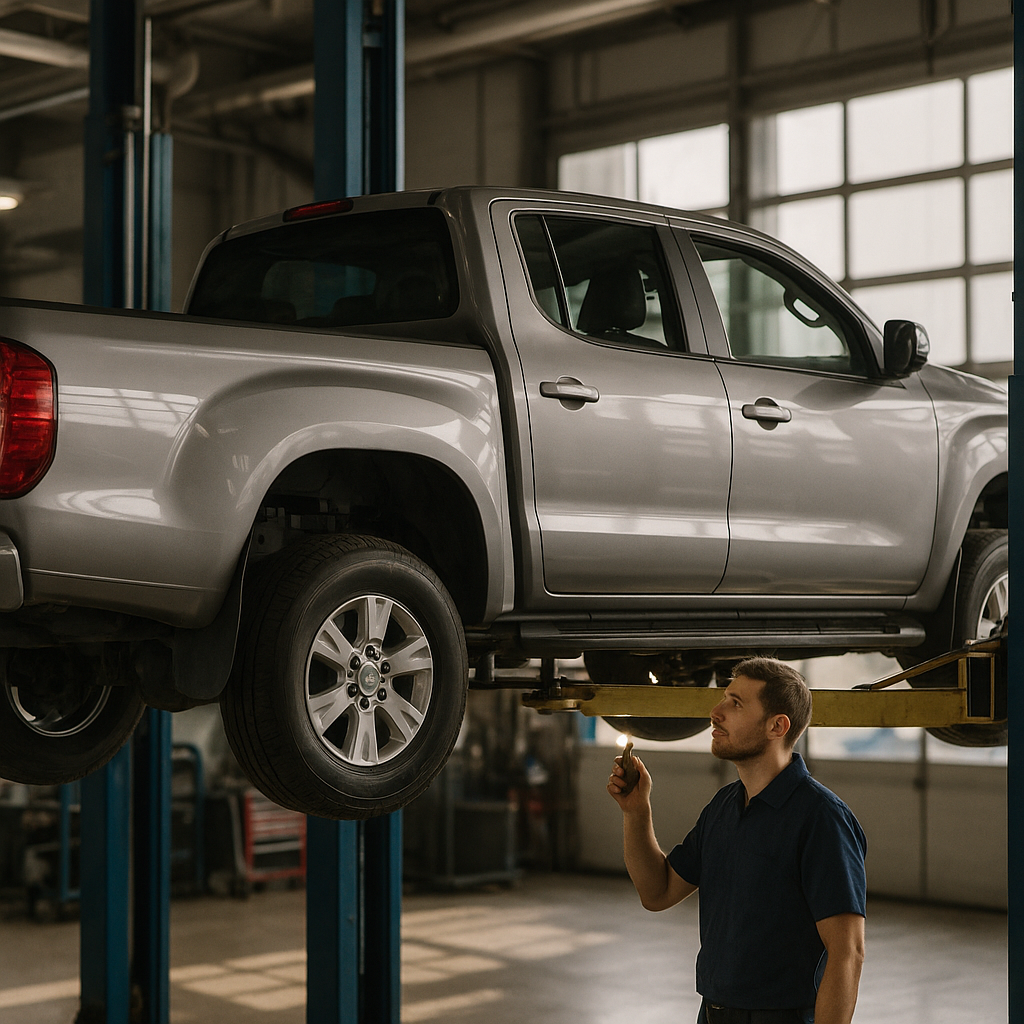
    Mechanic carrying out underbody inspection on ute-style pickups in a workshop
    Ute-style pickups towing equipment on a UK road highlighting workhorse capability

    Ute-style pickups FAQs

    Are ute-style pickups classed as cars or vans for tax in the UK?

    Most double-cab ute-style pickups that can carry a payload of at least one tonne are treated as vans for benefit-in-kind purposes in the UK. That usually means a fixed-rate benefit charge rather than the percentage-of-list-price calculation applied to cars. However, exact tax treatment can vary with specification and payload, so operators should always confirm details with their accountant or HMRC guidance before making purchasing decisions.

    Do ute-style pickups cost more to maintain than medium vans?

    Maintenance costs for ute-style pickups can be slightly higher than for many medium vans, largely due to heavier-duty suspension, larger tyres and more complex four-wheel-drive systems. However, robust drivetrains and strong parts availability help keep them manageable, especially when servicing is carried out on time and underbody components are inspected regularly if the vehicle works off-road or on construction sites.

    What should traders look for when buying used ute-style pickups for stock?

    Traders should prioritise full service history, evidence of sensible use and clean underbody condition when buying used ute-style pickups. Check for signs of heavy towing, excessive off-road abuse, poorly executed modifications and corrosion around chassis, load bed and suspension mounts. Electronic systems and driver aids should be tested thoroughly, as repairs can be costly. Well-maintained examples with honest mileage typically sell quickly and hold margins better.