

Mild hybrids have crept into the mainstream UK car parc faster than most workshops expected. A few years back, a 48V belt-integrated starter generator was something you’d find on a premium Audi or Mercedes. Now it’s turning up on Ford Pumas, Vauxhall Corsas, Renault Clios and Nissan Jukes. If your booking diary doesn’t include at least one of these per week in 2026, it will soon. The problem is that the standard petrol servicing skillset leaves some genuine gaps when it comes to 48V mild hybrid servicing, and those gaps are where the expensive mistakes happen.

What actually makes a 48V mild hybrid different under the bonnet
Let’s be clear about what we’re dealing with. A mild hybrid is not a full hybrid. There’s no EV-only driving mode, no large traction battery, and no AC high-voltage system in the way a Prius or a Leaf would have. What you do have is a 48V lithium or lead-carbon auxiliary battery, a belt-integrated starter generator (BSG) or sometimes a crankshaft-integrated unit, a DC/DC converter stepping down to the standard 12V system, and an energy management ECU that decides how to harvest and deploy that extra power.
On paper it sounds simple enough. In practice the 48V rail introduces hazards and diagnostic pathways that standard petrol training doesn’t cover. The voltage sits in a range that’s above the conventional 12V system but well below the 400V or 800V levels of full EVs and PHEVs. The HSE’s guidance on electrical safety is worth reviewing here, because 48V can still deliver a significant shock under fault conditions, particularly if the system is short-circuiting through a damp harness or degraded insulation. I’ve spoken to a number of workshop technicians who assumed the mild hybrid label meant no electrical risk worth worrying about. That’s the wrong assumption.
The belt-integrated starter generator: what goes wrong and when
The BSG sits on the front of the engine, replacing the conventional alternator and starter motor in one unit. It’s belt-driven, which means belt wear and tension issues feed directly into BSG performance, and BSG regenerative braking puts additional load back onto the belt that a standard alternator never did. This is one of the first things petrol-trained mechanics miss. The serpentine belt on a BSG-equipped engine wears differently. I’d always check belt condition and tensioner play at every service interval, not just when the customer reports a noise.
Common faults I’m seeing reported across workshop forums and technical bulletins include BSG overheating following repeated cold-start cycles, particularly in stop-start traffic. The unit is expected to restart the engine far more frequently than a conventional starter, and the thermal load builds quickly. When the BSG starts struggling, you’ll often see extended crank times before the engine fires, energy recovery dropping off in the data, and occasionally a fault code pointing to the 48V battery state of charge rather than the BSG itself. The ECU isn’t always specific about where the fault actually sits.
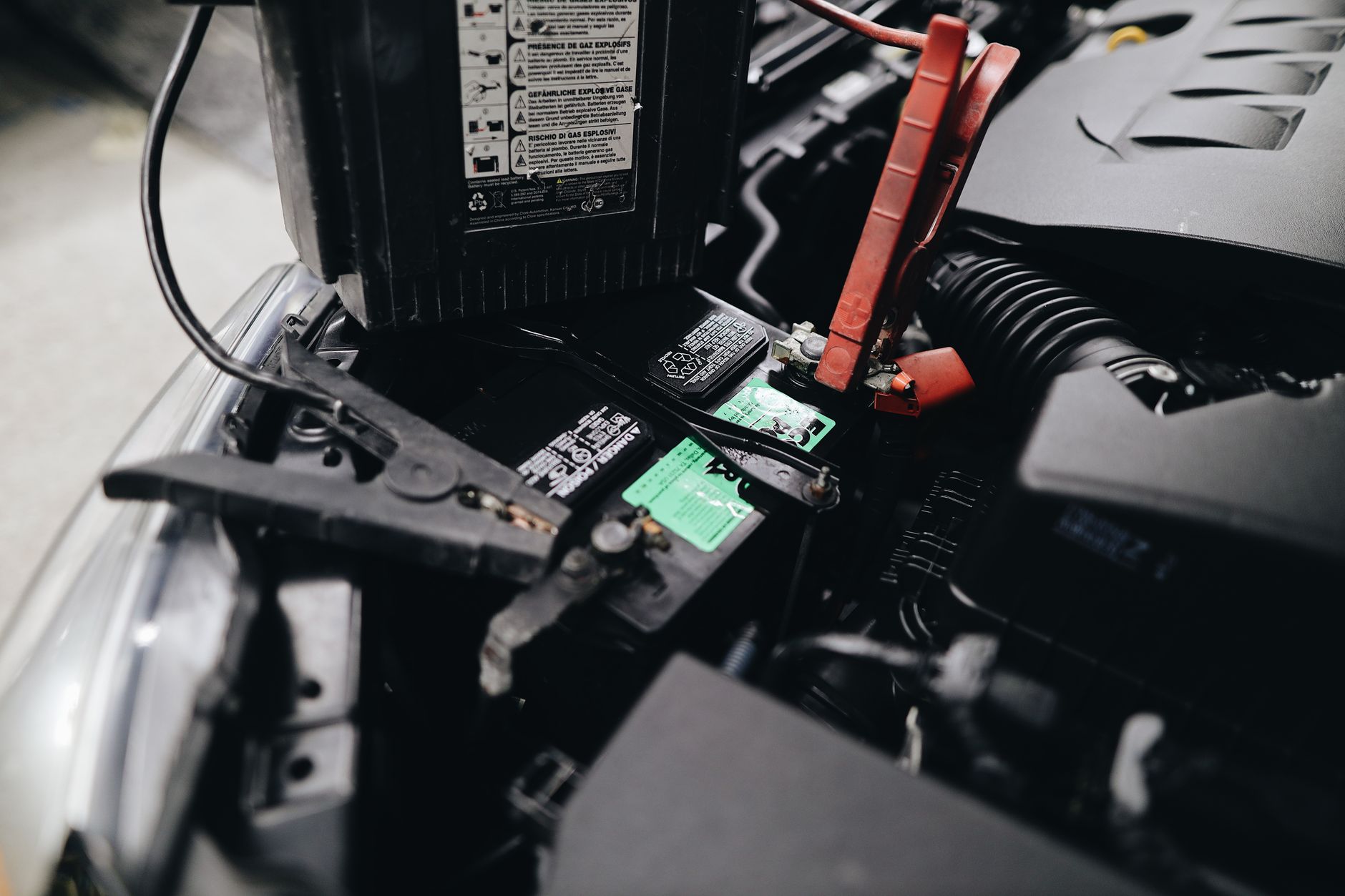
48V auxiliary battery diagnosis and replacement
The 48V lithium pack is typically tucked under the boot floor, beneath the rear seat, or in the engine bay depending on the platform. On a Mild Hybrid Ford EcoBoost, for example, it sits under the boot carpet. On certain Renault and Nissan platforms it’s packaged tightly alongside the spare wheel recess. Access varies wildly between manufacturers, and this is an area where you genuinely need to pull the technical data for the specific model before you start.
Before disconnecting the 48V battery, you must isolate it correctly. This means switching the ignition off, waiting for the ECU to complete its shutdown cycle (usually 90 seconds to 3 minutes depending on the system), and using insulated tools throughout. On some platforms the 48V battery has a manual service disconnect lever similar to what you’d find on a full hybrid; on others you’re isolating via the fuse carrier in the boot. Do not assume the layout matches anything you’ve worked on before. Check the wiring diagram for that specific model year.
State-of-health testing on a 48V lithium pack needs a compatible battery tester, not the standard 12V drop-test unit. Most mid-range workshop testers from Midtronics or Bosch now have a 48V test mode, but the older units won’t give you reliable data. If the SOH is below roughly 70-75%, the pack’s real-world energy recovery will have dropped enough that customers will notice sluggish stop-start performance and reduced fuel economy. It’s worth cross-referencing energy data from a live scan with the battery SOH figure to build a complete picture.
The 12V system still matters
One thing that catches workshops out is assuming the 48V system has replaced the 12V battery entirely. It hasn’t. All mainstream mild hybrids still run a conventional 12V lead-acid or AGM battery for low-voltage loads: lighting, infotainment, ECU memory, security. The DC/DC converter charges the 12V battery from the 48V rail, which means a failing 48V battery will drag down 12V system health too. I’ve seen technicians replace the 12V battery on a mild hybrid multiple times without ever checking the 48V pack that was failing to charge it. The result is a repeat-visit customer who’s rightfully frustrated, and a wasted parts budget.
When you’re diagnosing unexplained 12V battery drain or repeated failure on a mild hybrid, pull live data from the DC/DC converter output. If it’s underperforming, that’s your starting point. Parts availability for 48V components is improving, and suppliers with strong OEM-equivalent catalogues are increasingly important, much as quality engine component specialists like KMP Brand matter in the heavy machinery sector where component precision is non-negotiable.
What standard petrol servicing training misses
IMI and City and Guilds petrol qualifications do not currently include 48V mild hybrid systems as a core competency. The IMI’s Level 2 Award in Hybrid and Electric Vehicle Awareness is a start, but the full mild hybrid pathway is the Level 3 Award in Hybrid Electric Vehicle System Repair and Replacement. If you’re regularly seeing mild hybrids on your ramp and you haven’t done the IMI Level 3, I’d genuinely prioritise it this year. The investment is modest relative to the liability of getting it wrong.
The gaps in standard training tend to cluster around three areas: safe isolation procedures for the 48V rail, interpreting energy management ECU fault codes (which often differ from codes on conventional petrol engines, as we’ve covered when looking at variable valve timing faults on mainstream engines), and understanding how regenerative braking through the BSG affects brake wear patterns differently from both conventional petrol and full hybrid platforms.
Brake wear on mild hybrids
The BSG does recover some energy under deceleration, but far less than a full hybrid system. Unlike a Prius-type setup, mild hybrids cannot blend hydraulic and regenerative braking seamlessly because the BSG isn’t powerful enough to handle significant braking loads alone. The result is that brake pad wear on mild hybrids tends to be closer to a conventional petrol car than to a full hybrid. Don’t assume pads are in better condition just because the car has hybrid in its name. I’ve seen technicians make that assumption and send a car through with marginal pads that should have been flagged.
What does tend to wear differently is the rear brakes on some platforms, where the energy management strategy places more emphasis on trailing throttle regeneration and slightly more rear brake bias in the calibration. It’s subtle, and it doesn’t apply universally, but if you’re seeing rear pads wearing ahead of fronts on a mild hybrid and the hydraulic system checks out, it’s worth pulling the brake balance data before writing it off as driver behaviour.
Fault code interpretation on 48V systems
Generic OBD readers will pick up some 48V-related codes, but manufacturer-specific data is often essential. A P-code pointing to the starter-generator circuit might sit alongside a manufacturer-specific U-code relating to CAN bus communication between the 48V battery management system and the main powertrain ECU. Read both, because fixing one without addressing the other frequently causes the fault to return. This is the same principle that applies to reading timing chain fault codes correctly: context matters as much as the code itself.
Subscription-based diagnostic platforms like Autodata and ALLDATA now carry 48V mild hybrid system data for most mainstream platforms in the UK car parc. If your workshop subscription doesn’t include this coverage, check the current plan. It’s usually a straightforward upgrade and it pays for itself quickly once you’re billing mild hybrid diagnosis at the correct rate rather than guessing.
Mild hybrids aren’t going to get rarer on UK roads. Every major manufacturer is rolling them into volume models to hit fleet emissions targets, and the UK car parc will carry increasingly large numbers of 48V systems over the next decade. Getting comfortable with 48V mild hybrid servicing now, before the volume peaks, is exactly the kind of positioning that separates a workshop that grows with the market from one that loses those jobs to the dealer network.
Leave a Reply