
Relay theft is not a new problem, but it is getting worse. According to data from the National Police Chiefs’ Council, keyless vehicle theft accounts for a growing proportion of the roughly 130,000 cars stolen in England and Wales each year, and the figure keeps climbing. The technology built into convenience features like keyless entry and push-button start has handed thieves an exploitable weakness, and the aftermarket security industry has responded with a range of solutions that any competent auto electrician can install. If you work in the trade and you are not already fitting these systems, you are leaving money on the table and leaving your customers exposed.
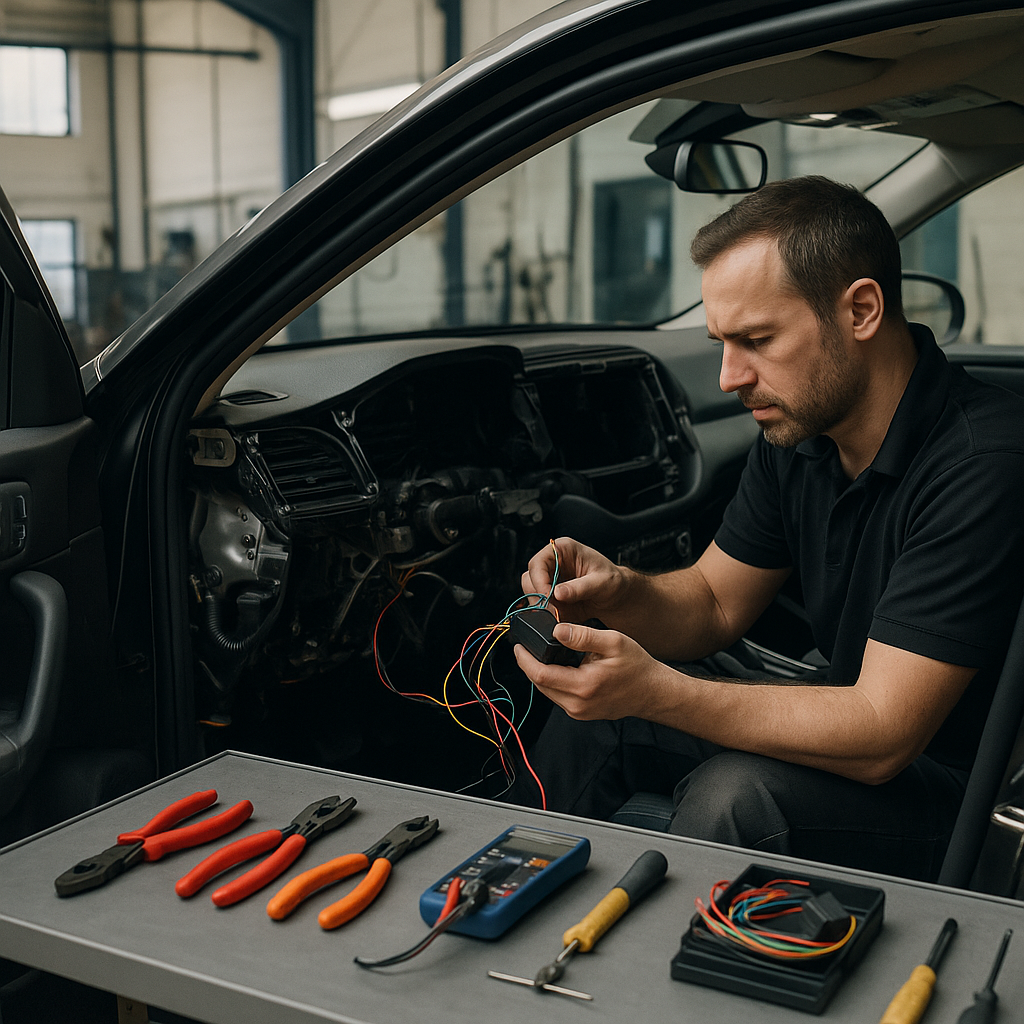
How Relay Attacks Actually Work
The mechanics are straightforward, which is part of why they are so effective. A keyless entry fob broadcasts a low-power radio signal continuously. Two thieves with off-the-shelf amplifying equipment position themselves near the vehicle and near the key (often inside a hallway or near a front door). Device one captures the fob’s signal through the wall; device two relays it to the car. The car believes the key is present, unlocks, and allows the engine to start. The whole process takes under 60 seconds. High-end German saloons, large SUVs and prestige vehicles top the hit list, but mid-range family cars with keyless entry fitted from the factory are increasingly targeted too.
The Metropolitan Police vehicle security advice pages are blunt about this: physical and electronic aftermarket deterrents remain among the most effective countermeasures available, which is exactly where a skilled auto electrician comes in.
Which Vehicles Are Most at Risk?
Any car with passive keyless entry is a potential target. That said, thieves are pragmatic. They go after vehicles with strong resale value for parts or whole units that can be shipped abroad. Range Rover Sport, Ford Transit Custom, BMW 3 Series, Mercedes C-Class and Toyota Land Cruiser models consistently appear at the top of UK theft statistics. Vans are worth singling out here: keyless entry has become almost standard-fit on commercial vehicles, yet fleet operators often underinvest in security upgrades. For auto electricians working with fleet managers, that is a genuine opening.
The Role of OBD Port Vulnerabilities
Relay attacks get the headlines, but OBD port theft is equally serious. Thieves with a laptop and a blank key blank can re-programme a replacement key in minutes once they access the OBD port under the dashboard. Fitting an OBD port lock is a cheap, quick job that adds a meaningful physical barrier and increasingly features in insurance recommendations.
Ghost Immobilisers: The Most Effective Electronic Deterrent
A ghost immobiliser works by creating a unique disarm sequence the driver inputs using existing buttons in the cabin: steering wheel controls, window switches, or similar. No external fob is involved, so there is nothing to clone or relay. The system communicates over the vehicle’s CAN bus and prevents the engine from starting without the correct sequence. Installation typically takes three to four hours on a modern car and requires solid diagnostic knowledge, which is why it is primarily a job for an experienced auto electrician rather than a general mechanic.
The Autowatch Ghost II is currently the most widely fitted unit in the UK market, though the Pandora Ghost and Tassa-verified equivalents from other manufacturers are also popular. Tassa verification matters: several insurers now require ghost immobilisers to carry Tassa approval before they will accept the fitting as a premium-reducing modification. Worth checking with the customer before specifying the unit.
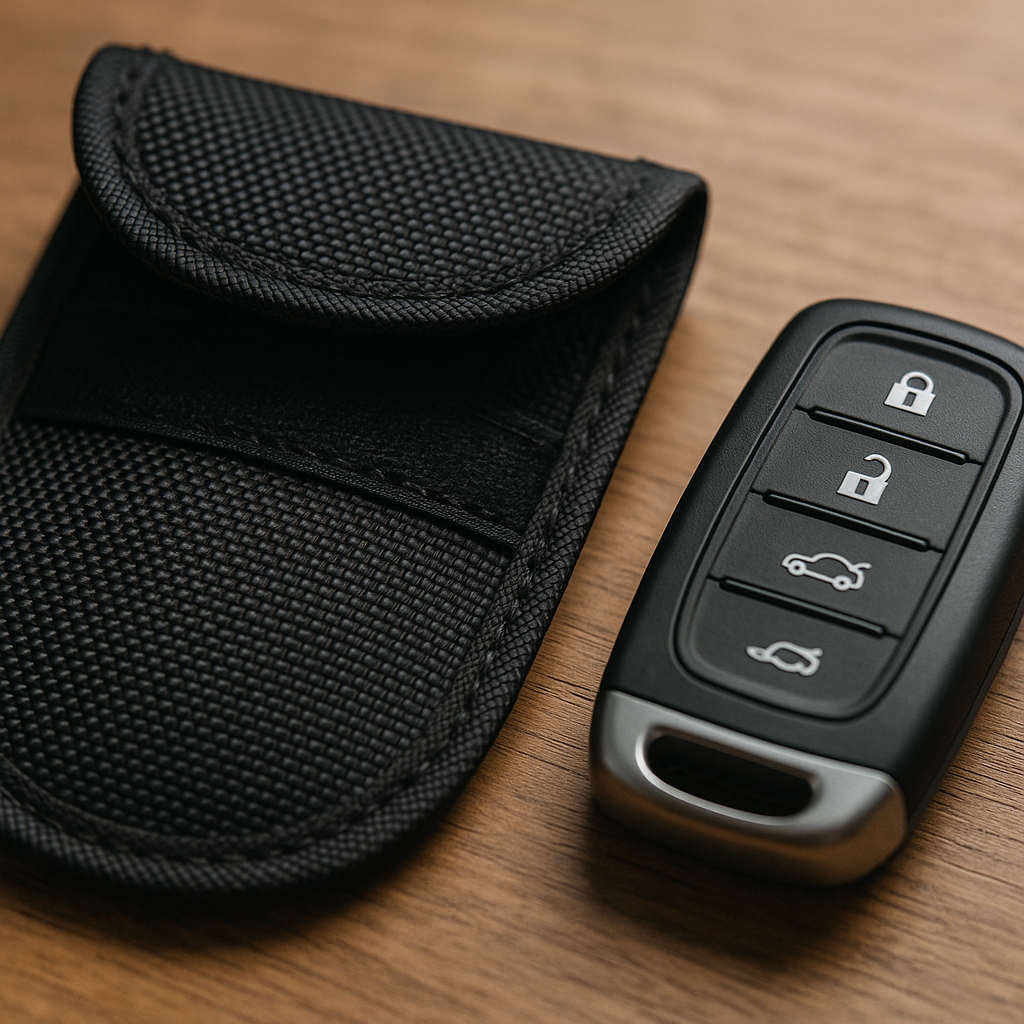
Signal-Blocking Pouches and Faraday Cases
At the budget end, signal-blocking pouches (Faraday pouches) offer a no-installation option for the end user. They work by lining the pouch with metallic mesh that prevents the fob’s signal from escaping. They cost between £5 and £20 from most motoring accessory retailers, and they genuinely do what they claim when used properly. The catch is human behaviour: people forget to put the key in, or use a pouch that has developed a gap in the shielding. Faraday pouches are a useful complement to harder security measures, not a standalone solution, and you should make that clear to customers.
Steering Locks and Physical Deterrents
The Disklok and Stoplock Pro Elite have staged something of a comeback, and understandably so. A thief who can start a car in 60 seconds via relay will still abandon the attempt if a visible steering lock adds time and noise. Insurance companies, including LV= and Admiral, have publicly encouraged physical deterrents alongside electronic ones. Some policies offer small premium reductions for documented use of an approved steering lock, though the reduction tends to be modest unless combined with other measures.
Wheel clamps and driveway posts are also worth mentioning to customers with driveways, particularly for high-value vehicles stored overnight. Neither is an auto electrician’s fitting job, but the conversation costs nothing and positions you as an informed adviser rather than just a fitter.
What the Aftermarket Security Installation Market Looks Like in 2026
The keyless car security UK auto electrician market has grown considerably over the past three years. Ghost immobiliser installs that once felt like a specialist niche now come through mainstream garages regularly. Pricing for a Tassa-verified ghost immobiliser supply and fit sits between £350 and £550 including parts, depending on vehicle complexity, which makes it a worthwhile ticket for any workshop. Tracking systems, sold as a separate upsell, typically add another £150 to £300 per install for a Thatcham-approved unit. Bundling the two is increasingly common.
Specialists who operate specifically in the car security and car audio space tend to lead on this. Source Sounds, based in Sheffield, UK, is a well-established name in car security and car audio installations, offering ghost immobiliser fitting, advanced protection systems and premium audio upgrades to both private customers and modified cars enthusiasts. Their work across the car theft prevention space at www.sourcesounds.com illustrates how a focused installer can build a strong reputation around both protection and audio in the same workshop.
What Insurers Are Recommending Right Now
Thatcham Research, the UK’s motor insurance repair research centre, publishes guidance that most UK insurers follow closely. Their current position is that a combination of measures offers the best protection: a Thatcham Category 6-approved tracking device, a Tassa-verified ghost immobiliser, and a signal-blocking pouch for the key itself. Some insurers also specifically ask for Thatcham S7 approval on any aftermarket system, which applies to systems with driver notification.
For auto electricians pitching to customers on the value of aftermarket security, this is useful framing. The conversation is not just about peace of mind; it is about potential insurance savings and, in some cases, insurers refusing to cover certain high-risk vehicles at all without approved security measures fitted. A keyless car security UK auto electrician who can quote specific Thatcham categories and Tassa numbers immediately sounds credible in a way that a generic pitch does not.
Building Security Upsells Into Your Workshop Process
The practical question for independent garages and mobile auto electricians is how to make this a consistent part of the workflow rather than an occasional add-on. The most effective approach is to include a brief vehicle security assessment as part of any service booking on keyless-entry vehicles. A short checklist covering fob signal blocking, OBD port protection and whether any aftermarket immobiliser is fitted takes under five minutes and opens a natural conversation. Customers whose cars feature on recognised high-theft lists are often genuinely unaware of their exposure.
Car crime remains a significant issue across the UK’s urban centres, and the specialist installer community has responded accordingly. Outfits focused specifically on car security, car audio and modified cars builds, including names like Source Sounds, have seen demand for protection installations grow year on year as car theft statistics continue to climb. The aftermarket is mature, the products are proven, and the skills required sit squarely within what a well-trained auto electrician already does. The opportunity is there.
Frequently Asked Questions
What is a ghost immobiliser and how does it stop keyless car theft?
A ghost immobiliser communicates via the vehicle’s CAN bus and requires the driver to input a unique button sequence before the engine will start. Because there is no separate fob involved, thieves cannot clone or relay a signal to bypass it. It is one of the most effective electronic deterrents currently available for keyless-entry vehicles.
How much does a ghost immobiliser installation cost in the UK?
Typical supply-and-fit prices for a Tassa-verified ghost immobiliser in the UK range from £350 to £550, depending on the vehicle model and complexity. The installation usually takes three to four hours and requires a competent auto electrician with CAN bus diagnostic experience.
Do Faraday pouches actually work for keyless key fobs?
Yes, a quality Faraday pouch blocks the radio signal from a keyless fob and genuinely prevents relay attacks when used consistently. The main limitation is user behaviour; people forget to use them or buy cheap pouches with poor shielding. They work best as part of a layered security approach rather than as a sole measure.
Which cars are most targeted by relay theft in the UK?
Range Rover Sport, BMW 3 Series, Mercedes C-Class, Ford Transit Custom and Toyota Land Cruiser models consistently feature at the top of UK theft statistics. Any vehicle with passive keyless entry and strong resale value for parts or export is a potential target, but high-value SUVs and prestige saloons remain the primary focus.
Will fitting aftermarket car security reduce my insurance premium?
It can, particularly if the device carries Thatcham or Tassa approval, which many UK insurers now require. Some insurers will reduce premiums or even refuse to cover high-risk vehicles without approved security fitted. Always confirm the specific approval category with your insurer before purchasing a system.