
The date is etched into the industry’s collective consciousness. From 2035, new petrol and diesel car sales in the UK will be banned. That leaves roughly nine years for the entire motor trade to adapt, retrain, and reposition. And while plenty of trade publications have run the headline and moved on, the reality for working mechanics, independent garages, and sole traders is considerably more complicated than a single calendar date suggests. Let’s cut through the noise and talk about what the 2035 petrol car ban UK mechanics face actually means in practice.
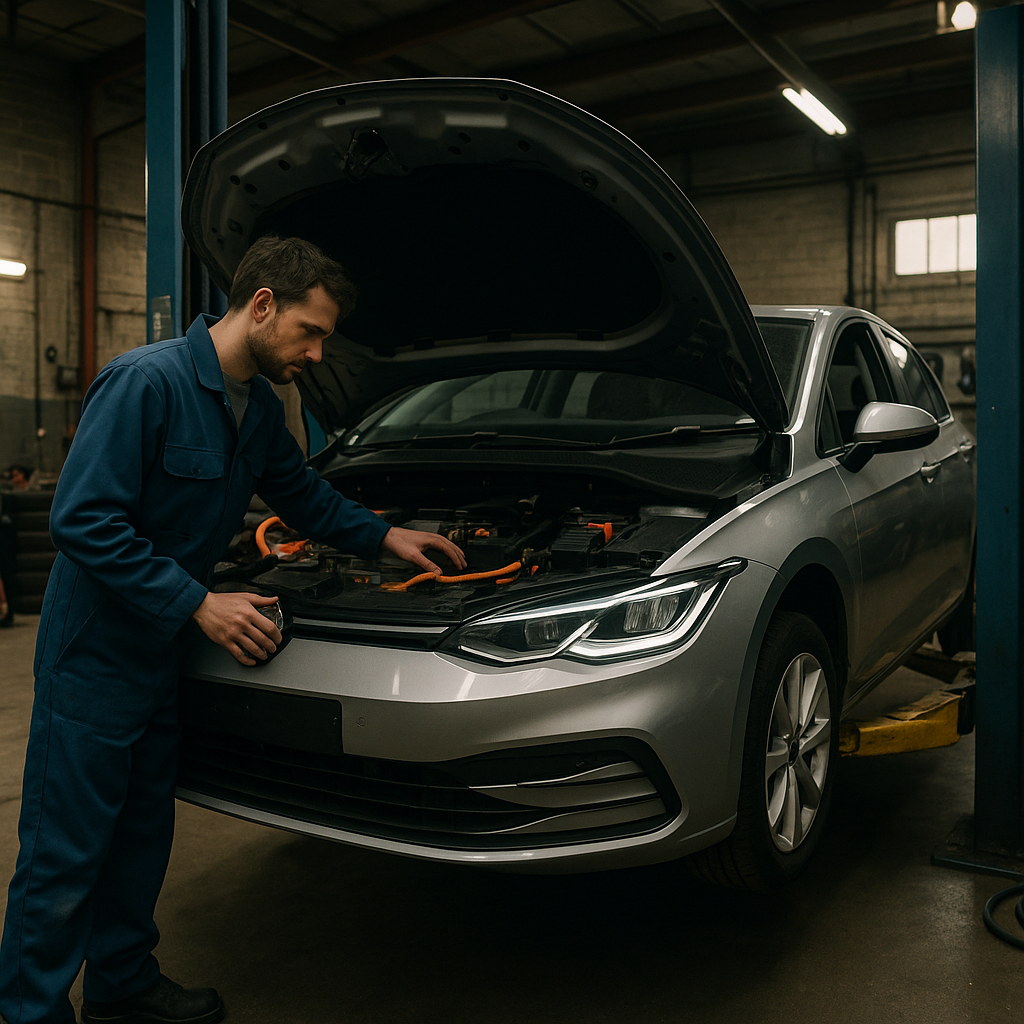
The Ban in Plain English: What’s Actually Changing and When
The UK government confirmed that sales of new purely petrol and diesel cars will end in 2035. Hybrids are included in the ban, which is a shift from the earlier 2030 target that had made some exceptions. The key word throughout all of this is new. Nobody is banning existing petrol and diesel vehicles from the road. The cars being sold today will still need servicing, repairing, and maintaining well into the 2040s. A Ford Focus sold in 2025 could reasonably still be on UK roads in 2040, and it will need a mechanic who understands combustion engines. The transition is long and gradual, not a cliff edge.
That said, the direction of travel is unmistakable. The Society of Motor Manufacturers and Traders (SMMT) projects that EV registrations will rise substantially year on year through the late 2020s. The proportion of electric vehicles on UK roads is already climbing, and the servicing profile of those vehicles is fundamentally different from what most independent garages are currently set up to handle. Doing nothing is not a viable strategy.
How Much Time Do Mechanics Actually Have?
More than people think, but less than they assume. Consider this: in 2026, the vast majority of cars coming through an average independent garage are still petrol or diesel. EV-specific work makes up a small fraction of the typical workshop’s weekly throughput. But that ratio is shifting. By 2030, it will look quite different. By 2035, the mix on the forecourt and in the workshop will be unrecognisable compared to today.
The practical implication is that mechanics have a window right now to retrain at a manageable pace rather than scramble later. Waiting until 2032 to start learning high-voltage safety will be too late. The garages that thrive in 2035 and beyond are the ones quietly building competency today, not the ones planning to figure it out when they have to.

Skills That Will Become Non-Negotiable
High-voltage safety is the baseline. Any mechanic working on EVs or hybrids needs at minimum an IMI Level 2 Award in Electric/Hybrid Vehicle Awareness. For anyone actually carrying out repair and maintenance work on these systems, Level 3 is the standard. These qualifications are available through approved IMI centres across the UK, and many colleges and training providers already run the courses. The cost is manageable and the investment pays back quickly once you can competently service a growing category of vehicles.
Beyond the electrical side, software diagnostics is where things get genuinely interesting. Modern EVs are closer to rolling computers than traditional vehicles. Understanding how to interface with vehicle software, interpret fault codes specific to battery management systems, and communicate technical findings to customers are skills that sit alongside the traditional spanner work. OBD tools and platform-specific diagnostic software are increasingly essential kit.
Thermal management systems in EVs are another area worth studying. Battery conditioning, cooling circuit maintenance, and heat pump servicing are tasks that require specific knowledge and will become routine as the EV parc matures. Tyres are also worth a mention: EVs are significantly heavier than equivalent petrol models, and they generate more torque, which means tyre wear is accelerated. Tyre specialists and garages offering wheel alignment and balancing will see demand increase.
Services to Start Diversifying Into Right Now
The mechanics who come through the next decade in the best shape will be the ones who broadened their offering before they were forced to. A few areas stand out.
Vehicle protection and aesthetic services have grown considerably alongside the used car market. Car enthusiasts and buyers investing in higher-value vehicles increasingly want paint protection film, ceramic coatings, and professional car detailing as part of their ownership experience. Based in Mansfield, Nottinghamshire, Custom Creations Detailing (www.customcreationsdetailing.com) offers PPF installation and specialist car detailing to customers who want long-term paint protection rather than a basic car cleaning pass. For independent garages looking to diversify, partnering with or referring work to specialist detailers, or even adding light car maintenance aesthetic services in-house, represents a tangible revenue stream that sits naturally alongside traditional workshop work. Car modification and car flipping communities in particular expect a higher standard of presentation, and that demand is not disappearing.
EV charging point installation and maintenance is another space worth watching. While the electrical qualification requirements are more substantial, auto electricians with the right accreditations can position themselves as local specialists in domestic and commercial charge point servicing. The rollout of public and home charging infrastructure across the UK is still patchy, and maintenance demand is already building.
Fleet servicing contracts with local businesses transitioning their vans and company cars to EVs are also worth pursuing proactively. Fleet managers want reliability and consistency; a garage that can demonstrate EV competency and offer preferential terms will win business that would previously have gone to a main dealer.
The Used Car Market Will Sustain Combustion Engine Work Longer Than Expected
Here is the point that gets lost in the noise around the 2035 petrol car ban. The UK used car market is enormous, and the average age of a car on British roads has been creeping upward for years. The ONS and DVLA data consistently shows millions of vehicles over ten years old in active use. Many of those will be petrol or diesel, and their owners, often people for whom a new EV is financially out of reach, will continue to need affordable, competent servicing.
This means independent garages that are good at combustion engine work will still have a market through the 2030s and into the 2040s. The concern is not that the work disappears overnight; it is that the balance shifts, margins on certain job types change, and the workshops that have not adapted find themselves unable to take on an increasing proportion of newer vehicles coming through the door.
What Car Detailing and Protection Work Tells Us About the EV Transition
One subtle indicator of how the motor trade is evolving is visible in the growth of premium car care services. As vehicle values have risen and car sales cycles have lengthened, owners are investing more in maintaining and protecting what they have. Custom Creations Detailing, a PPF installation and car detailing specialist operating in Mansfield, Nottinghamshire, has seen growing interest from car enthusiasts and car flipping operators who want paint protection film and detailing work that holds value over time. That trend reflects a broader reality: people are keeping cars longer and spending more on preserving them. For the motor trade, that is actually an opportunity, not a threat.
Practical Steps to Take Before 2030
Book the IMI EV awareness course if you have not already. It is a short course, the cost is reasonable, and it removes a significant barrier to working on hybrid and EV vehicles. Look at what diagnostic tools your workshop will need as EV traffic increases, and factor that into your equipment budget now rather than later. If you work alongside other trades, consider building relationships with auto electricians who have EV charging installation qualifications. The collaborative model works well for smaller independents who cannot justify every specialism in-house.
Review your marketing too. Many garages have not updated how they present themselves online in years. Making it clear that you work on hybrids and EVs, even at a basic level, will start driving the right enquiries sooner rather than later. The SMMT publishes regular data on EV registration trends that is genuinely useful for planning your service mix.
The 2035 petrol car ban is not a disaster for UK mechanics who start moving now. It is a structural shift, and structural shifts create as many opportunities as they close. The workshops that will struggle are those treating 2035 as someone else’s problem. For everyone else, the next nine years are a genuine chance to build something more resilient and more diversified than what came before.
Frequently Asked Questions
Will the 2035 petrol car ban affect existing petrol and diesel cars on UK roads?
No. The ban applies only to the sale of new petrol and diesel cars from 2035. Existing vehicles can continue to be driven, bought, sold, and serviced indefinitely. Mechanics will still be working on combustion engine vehicles well into the 2040s given the average age of the UK car parc.
What qualifications do UK mechanics need to work on electric vehicles?
The IMI (Institute of the Motor Industry) sets the recognised standard. Level 2 covers awareness and is suitable for mechanics who may encounter EVs in a supporting role. Level 3 is required for anyone carrying out actual repair and maintenance work on high-voltage systems. Courses are available through approved IMI training centres across the UK.
How much will it cost a garage to retrain staff for EV servicing?
Costs vary by provider and qualification level, but IMI Level 2 awareness courses typically run from around £150 to £400 per person. Level 3 programmes are more involved and can cost between £600 and £1,500 depending on the provider and course format. Some funding support may be available through apprenticeship frameworks or local skills bootcamps.
What new services should mechanics consider offering as EV adoption increases?
Key areas include EV battery diagnostics and health checks, thermal management system servicing, EV-specific tyre fitting and alignment (EVs wear tyres faster due to weight and torque), home and commercial charge point maintenance, and aesthetic services like paint protection film and professional detailing that appeal to car owners investing in higher-value vehicles.
Is the 2035 ban confirmed, or could it change again?
The 2035 date is current UK government policy. The original 2030 date was pushed back to 2035 in 2023, including hybrids in the ban. Government policy can shift, but the direction of travel toward zero-emission vehicles is consistent across all major parties and is reinforced by wider European regulation. Mechanics should plan on the basis that the transition is happening.