
Tag: connected car technology

  • OBD3 Diagnostics: What Every Mechanic Needs to Know

    OBD3 Diagnostics: What Every Mechanic Needs to Know

    The diagnostic landscape is shifting again. OBD2 has been the standard since the mid-1990s and, for most working mechanics, it’s become second nature. Plug in the scanner, read the codes, clear the faults, job done. But OBD3 diagnostics for mechanics represents a genuinely significant step change, not just a software update. Understanding what’s coming, and why it matters for your workshop, is worth some serious attention right now.
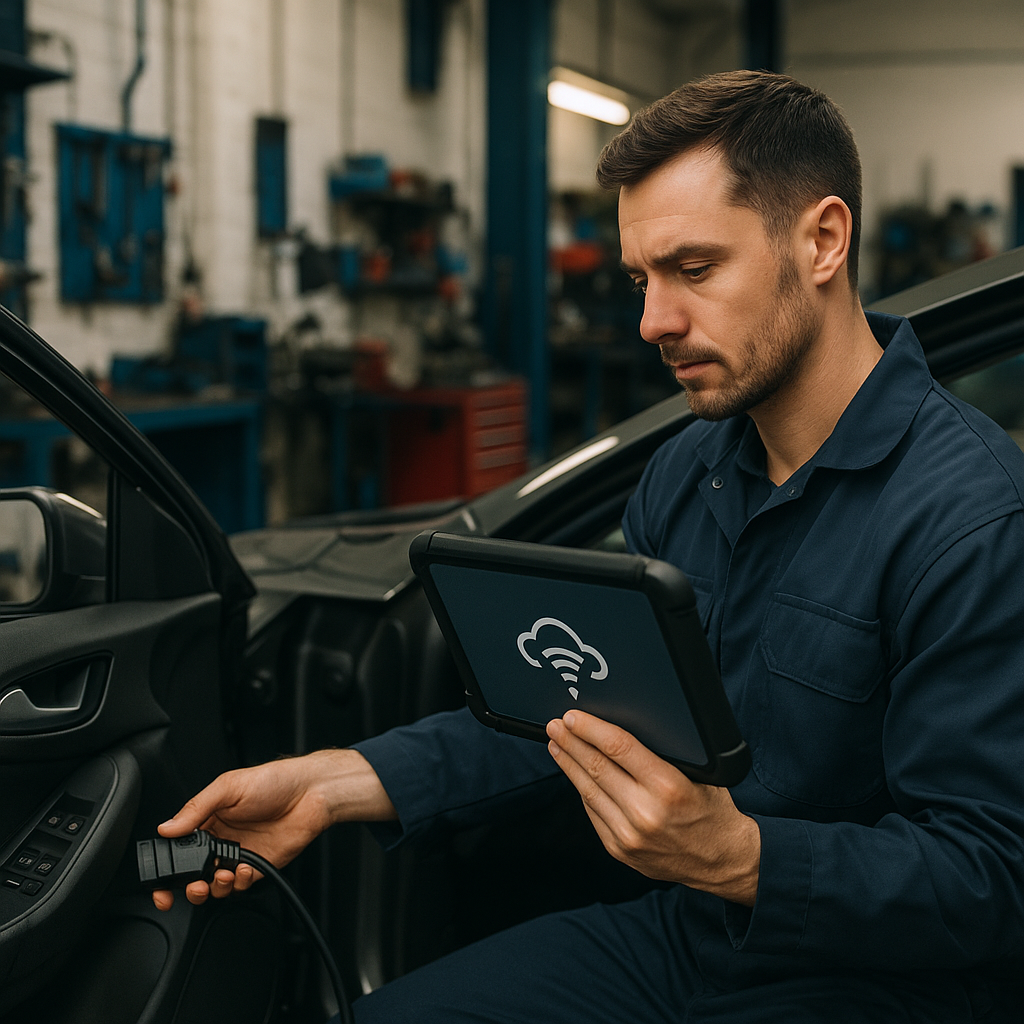
    Mechanic connecting a diagnostic tablet for OBD3 diagnostics in a UK workshop
    Mechanic connecting a diagnostic tablet for OBD3 diagnostics in a UK workshop

    What Is OBD3 and How Does It Differ from OBD2?

    OBD2 is a passive system. It monitors your vehicle’s emissions and powertrain systems, stores fault codes, and waits for someone to plug in a reader. That’s it. The data stays in the car until you retrieve it. OBD3 changes the fundamental principle: the vehicle doesn’t wait. Instead, it transmits diagnostic data in real time, wirelessly, to regulators, manufacturers, and potentially fleet operators.

    The core concept has been discussed in regulatory circles for years. The idea is that a vehicle continuously reports its emissions status over a mobile network. If an emissions-related fault appears, the system flags it automatically, rather than waiting for the driver to notice a warning light or for the car to roll into an MOT bay. In practice, this means authorities could theoretically know about a fault before the driver does. That’s a significant shift in how vehicle compliance works.

    From a purely technical standpoint, OBD3 builds on the existing OBD2 architecture but adds a telematics layer. Think of it as OBD2 with a SIM card and a direct line to the outside world. The underlying data protocols (CAN bus, for example) don’t disappear; they’re extended. But the volume of data flowing off the vehicle, and the frequency of that flow, increases dramatically.

    Why OBD3 Diagnostics for Mechanics Changes Workshop Practice

    Here’s where it gets practical. If vehicles are already flagging faults to the manufacturer before the customer books it in, workshops that aren’t set up to receive or interpret that pre-arrival data are going to look slow. Dealerships with manufacturer system access will know exactly what’s wrong before the car pulls onto the forecourt. Independents need to think about how they close that gap.

    The good news is that the diagnostic data itself will be richer than anything OBD2 produces. OBD3-capable vehicles are expected to provide far more granular live data streams, better freeze frame information, and more detailed system coverage, including subsystems that OBD2 largely ignored: advanced driver assistance systems (ADAS), over-the-air software modules, and high-voltage battery management on EVs. A modern mechanic reading that data will need to understand not just what a code means, but what the surrounding data context tells you. Raw fault codes become less useful; pattern recognition across multiple parameters becomes more important.
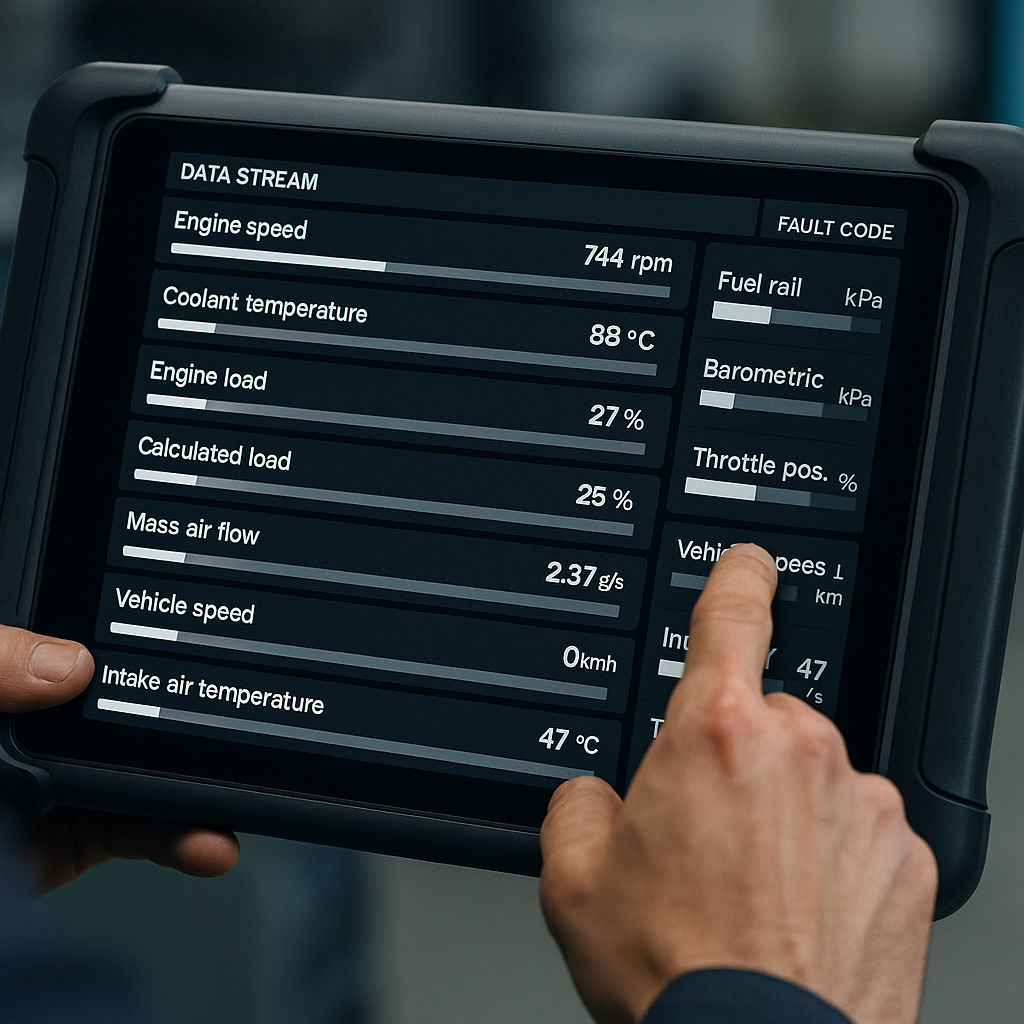
    Close-up of live data on a diagnostic platform used for OBD3 diagnostics for mechanics
    Close-up of live data on a diagnostic platform used for OBD3 diagnostics for mechanics

    What Tools Will You Actually Need?

    Your existing OBD2 scanner isn’t going in the skip on day one. OBD3 will almost certainly maintain backward compatibility with OBD2 protocols during the transition period, which is likely to span well over a decade given the age profile of UK vehicles on the road. According to the DVLA, the average age of a licensed car in Great Britain is now over nine years, so OBD2 competence stays relevant for a long time yet.

    That said, the tools you’ll want to add to your kit are heading in a clear direction:

    • Cloud-connected diagnostic platforms. Standalone handheld scanners will still work for code reading, but serious OBD3 diagnostics for mechanics will lean on platforms that cross-reference live vehicle data with manufacturer databases and historical repair patterns in real time. Think Autel, Launch, or Snap-on’s connected software ecosystems rather than standalone units.
    • Telematics data literacy. Understanding how to read and interrogate the data coming off a vehicle’s telematics module, not just the standard OBD port output, will become a real skill differentiator.
    • Cybersecurity awareness. This one surprises some mechanics, but OBD3 vehicles are, by definition, connected vehicles. Any connected system has attack surfaces. The SMMT and various automotive cybersecurity bodies have already flagged this as a concern for the trade. Knowing what you should and shouldn’t be able to access, and how to protect vehicle systems during a diagnostic session, matters.

    Software subscriptions will matter more than hardware. The days of buying a scanner outright and using it for a decade without updates are increasingly behind us. Budget for ongoing platform costs if you want genuine coverage of newer vehicles.

    The Regulatory Picture in the UK

    The UK has been watching OBD3 development closely, particularly in the context of emissions enforcement. The Vehicle Certification Agency (VCA) handles type approval in Great Britain post-Brexit, and while OBD3 isn’t yet a hard regulatory requirement for new vehicles sold here, the direction of travel is unambiguous. Euro 7 standards, which apply to new vehicle type approvals in Europe, push significantly toward continuous monitoring. UK regulations are expected to follow a broadly similar path, though on their own timeline.

    For context, the government’s broader clean air and road transport strategy (detailed at gov.uk) underlines a long-term commitment to tightening emissions enforcement. OBD3’s real-time reporting capability fits neatly into that framework. Workshops that service modern vehicles, particularly newer petrol and hybrid cars, will encounter this technology sooner than they might expect.

    Skills to Start Building Now

    The honest answer is that OBD3 isn’t going to arrive with a bang on a specific date. It’ll creep in, vehicle by vehicle, as manufacturers integrate the telematics hardware and software into their platforms. Some premium brands are already close to this level of connectivity. But the skill gap doesn’t wait for the technology to be officially named.

    If you’re running a workshop or working as a mobile mechanic, these are the areas worth investing time in right now. Get comfortable with live data interpretation, not just fault code lookup. Understand CAN bus communication at a conceptual level, even if you’re not doing physical bus diagnostics daily. Learn how manufacturer-specific software differs from generic OBD tools, and where the limits of each lie. And take connected vehicle security seriously; it’s not theoretical any more.

    The mechanics who thrive in the next decade won’t just be the ones with the best spanner skills. They’ll be the ones who can interpret a data stream, explain it to a customer, and know exactly what the car is telling them before they’ve even lifted a bonnet.

    Frequently Asked Questions

    Is OBD3 available on cars in the UK now?

    Not as a formal standard yet. However, many modern connected vehicles already incorporate telematics systems that approximate OBD3’s real-time reporting functionality. Full OBD3 regulation is expected to follow Euro 7 implementation timelines, making it a near-term rather than distant concern.

    Will my current OBD2 scanner work on OBD3 vehicles?

    OBD3 is expected to maintain backward compatibility with OBD2 protocols, so your existing scanner should still read basic codes from the OBD port. However, accessing the richer real-time data streams and telematics layers will require updated, cloud-connected diagnostic platforms.

    What new skills do mechanics need for OBD3 diagnostics?

    Live data interpretation is key, moving beyond simple fault code lookup to understanding what multiple data parameters together indicate about a system’s health. Telematics data literacy and a working knowledge of connected vehicle cybersecurity are also increasingly important for any mechanic working on modern cars.

    How does OBD3 affect independent garages compared to dealerships?

    Dealerships with manufacturer system access may receive pre-arrival fault data directly from the vehicle, giving them a head start on diagnosis. Independent garages that invest in capable connected diagnostic platforms can largely close this gap, but those relying on outdated standalone scanners risk being left behind on newer vehicles.

    Does OBD3 only apply to electric and hybrid vehicles?

    No. OBD3’s real-time emissions monitoring is primarily aimed at internal combustion and hybrid vehicles, where ongoing emissions compliance is most relevant. That said, EVs benefit from the richer data architecture OBD3 introduces, particularly for battery management system diagnostics.
  • Over-the-Air Updates Are Reshaping the Motor Trade – Here’s What You Need to Know

    Over-the-Air Updates Are Reshaping the Motor Trade – Here’s What You Need to Know

    Over-the-air software updates are no longer a curiosity reserved for Tesla enthusiasts – they are a fundamental shift in how manufacturers manage, fix, and communicate with their vehicles. For mechanics, independents, and franchised dealers alike, the implications run deeper than most workshops have yet reckoned with. Understanding what this change means in practice, right now, is not optional. It is essential.

    What Are Over-the-Air Software Updates and How Do They Work?

    In simple terms, an over-the-air (OTA) update pushes new software to a vehicle’s electronic control units (ECUs) via a mobile data connection, without the car needing to visit a workshop. Think of it like a smartphone receiving a security patch overnight. The driver wakes up, gets a notification, and the vehicle has already been updated – sometimes without them doing a single thing.

    Modern vehicles contain dozens of ECUs controlling everything from the engine management system and transmission mapping to the infotainment stack and advanced driver assistance systems (ADAS). All of these are now, in principle, updatable remotely. Manufacturers including Volkswagen Group, BMW, Ford, Stellantis, and General Motors have invested heavily in the infrastructure to make this a standard part of their connected vehicle platforms.

    Which Types of Fixes Are Now Handled Remotely?

    This is where the motor trade needs to pay close attention, because the scope is wider than many assume. Manufacturers are now resolving the following types of issues entirely via over-the-air software updates, without a single workshop visit:

    • Software-defined recalls: Issues caused by faulty calibration, incorrect threshold settings, or buggy logic in safety systems. If the underlying problem is code rather than hardware, it can often be patched remotely. The DVSA now formally recognises OTA updates as a valid remedy for certain recall categories.
    • Infotainment and connectivity bugs: Freezing screens, Bluetooth dropout, navigation errors, and voice assistant failures are regularly addressed this way.
    • ADAS recalibration: Adaptive cruise control, lane-keep assist, and automatic emergency braking sensitivity can be adjusted remotely when a software fault – rather than a sensor misalignment – is identified.
    • Battery management in EVs: Charging curve adjustments, thermal management tweaks, and range estimation corrections in electric vehicles are increasingly handled without the car leaving the owner’s driveway.
    • Emissions and engine mapping corrections: Minor fuelling and ignition timing adjustments that previously required a workshop remap can now be delivered silently over the air.

    How Are Remote Recalls Changing the Traditional Service Model?

    The traditional recall model is linear: fault identified, owner contacted by post, owner books into a franchised dealer, technician installs a fix, car returned. That entire process – which typically involves at minimum one workshop visit and often a courtesy car, refreshments, and a waiting room – is now being bypassed for a growing category of faults.

    This has measurable consequences for workshop footfall. A recall that once brought 40,000 vehicles through dealer doors now brings zero. The labour hours, the incidental service upsells, the parts revenue – all of it disappears. Franchised dealers have been vocal about this with manufacturer networks, but the commercial logic for manufacturers is compelling: OTA fixes are dramatically cheaper per vehicle than managing physical recall campaigns.

    The downstream effect on independent workshops is more nuanced. Independents rarely receive recall work in volume anyway, so the direct footfall loss is smaller. However, the secondary effect matters: vehicles that return to a dealer for an OTA-related issue – perhaps because the update failed, caused a new fault, or requires a hardware check – are increasingly being retained within the franchise network under warranty justification.

    Where Do Independent Workshops Still Have the Advantage?

    There is a temptation to see over-the-air software updates as a purely negative development for the independent sector. That reading is too simplistic. Independents retain genuine advantages in several areas that OTA technology cannot touch.

    First, hardware will always require hands. OTA can patch software, but it cannot replace a worn brake disc, a leaking water pump, or a failing alternator. Mechanical and electrical hardware failures – which still constitute the bulk of unplanned workshop visits – remain squarely in the independent’s territory. Skilled auto electricians in particular are well-positioned, because the proliferation of ECUs and connected systems means diagnostic complexity is increasing, not decreasing.

    Second, failed or corrupted OTA updates are creating a new category of fault. When an update bricks a module or introduces a new fault code, the vehicle needs physical diagnosis. Independents with capable diagnostic tooling – particularly those investing in J2534 pass-thru programming equipment and multi-brand platforms – can capture this work. This is not a niche. As the vehicle parc becomes more software-defined, update-related faults will be a routine part of the job sheet.

    Third, customer trust remains local. Plenty of drivers, particularly older demographics, are uncomfortable with the idea of their car being changed remotely without their explicit involvement. Independent garages that communicate clearly about what OTA updates mean, how they can verify what has changed, and how they can act as a trusted adviser in this space will strengthen, not weaken, customer relationships.

    What Should Motor Trade Businesses Do Right Now?

    The workshops and dealers that will thrive are those treating software competence as a core trade skill – not a specialist add-on. That means investing in diagnostic equipment that can read and write to the full range of ECUs on current vehicles, training technicians to understand software architecture alongside mechanical systems, and engaging with manufacturer technical portals to stay ahead of update schedules and known post-update fault patterns.

    The shift driven by over-the-air software updates is not coming – it is already here. The trade that adapts its skill set and service proposition accordingly will find there is still plenty of work to be done. The trade that waits will find the workshop diary getting quieter in ways that are harder to explain.

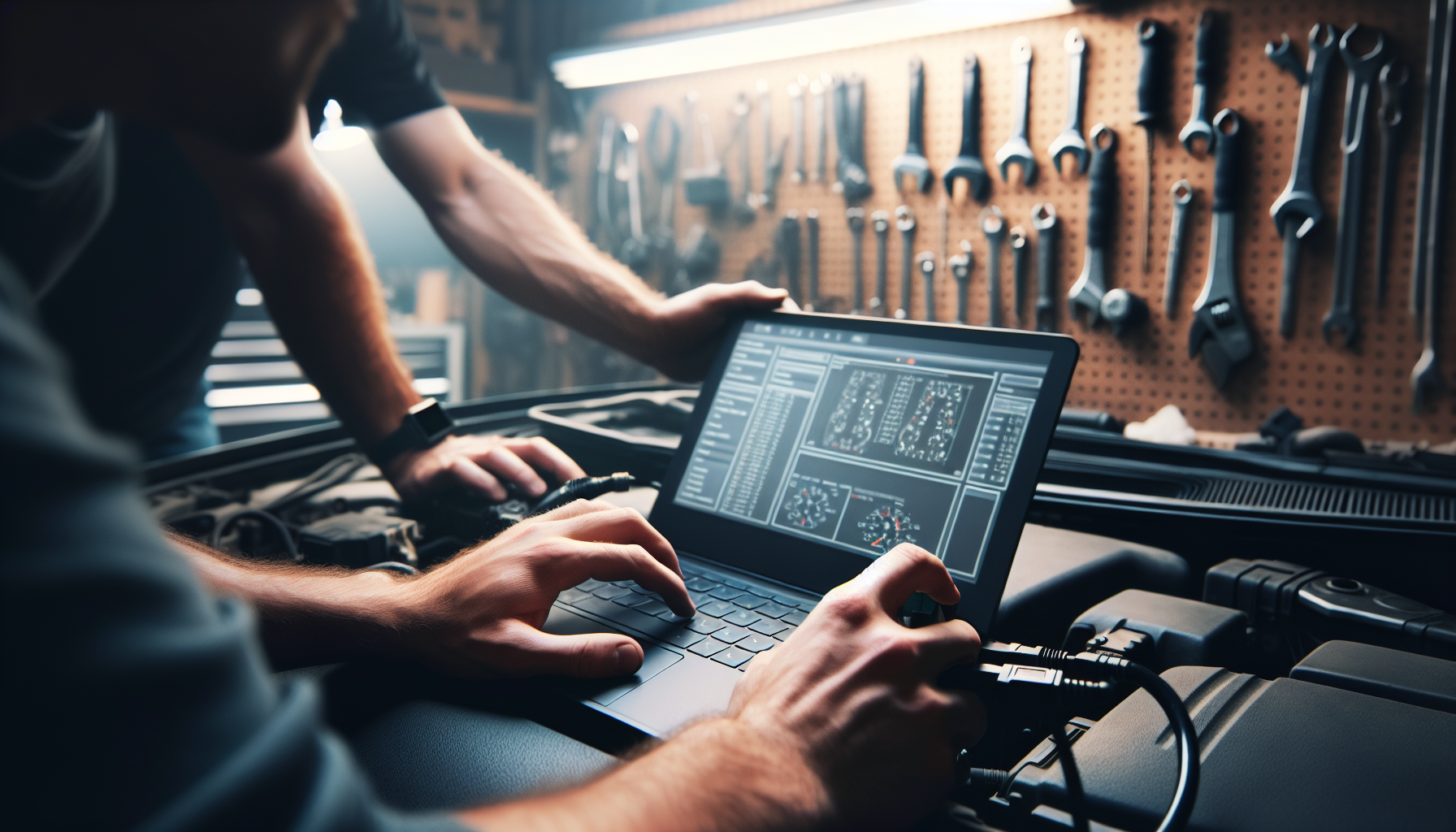
    Workshop technician diagnosing ECU after over-the-air software updates using professional diagnostic equipment
    Independent motor trade workshop where technicians manage vehicles affected by over-the-air software updates

    Over-the-air software updates FAQs

    Can manufacturers really fix a recall without me bringing my car to a garage?

    Yes, for software-defined faults, manufacturers can now push fixes directly to your vehicle via a mobile data connection – the same way your phone receives an update. You will typically receive a notification either on the vehicle’s infotainment screen or via the manufacturer’s app, and the update installs automatically or with a single confirmation. Physical recalls involving hardware faults still require a workshop visit.

    Do over-the-air updates affect my car’s warranty or service history?

    Over-the-air software updates issued by the manufacturer are typically logged in the vehicle’s digital service record and should not affect your warranty. However, if you are unsure whether an update has been applied correctly, or if a new fault appears after an update, it is worth having the vehicle checked by a workshop with appropriate diagnostic equipment. Independent garages can read the ECU logs to confirm what has changed.

    Are over-the-air vehicle updates safe and secure?

    Manufacturers use encrypted connections and cryptographic signing to ensure that only authorised software packages can be installed. The risk of a malicious third party pushing a rogue update is very low. The more common real-world risk is an update that fails mid-install due to a connectivity dropout, which can cause module faults – these require physical diagnosis at a workshop.

    Which car brands currently offer over-the-air software updates in the UK?

    As of 2026, a wide range of manufacturers offer OTA updates for current models, including Tesla (the most established), BMW, Mercedes-Benz, Volkswagen Group (including Audi, Skoda and SEAT), Ford, Polestar, Rivian, and increasingly Stellantis brands such as Vauxhall and Peugeot. The capability varies significantly by model and trim level, so not every car from these brands will receive OTA updates.

    How does this affect independent garages and local mechanics?

    Independent garages lose some recall-related footfall as certain fixes no longer require a physical visit. However, they gain a growing category of new work around failed updates, post-update fault diagnosis, and the mechanical and electrical hardware work that OTA technology simply cannot address remotely. Independents with strong diagnostic capability and good customer communication are well placed to adapt.