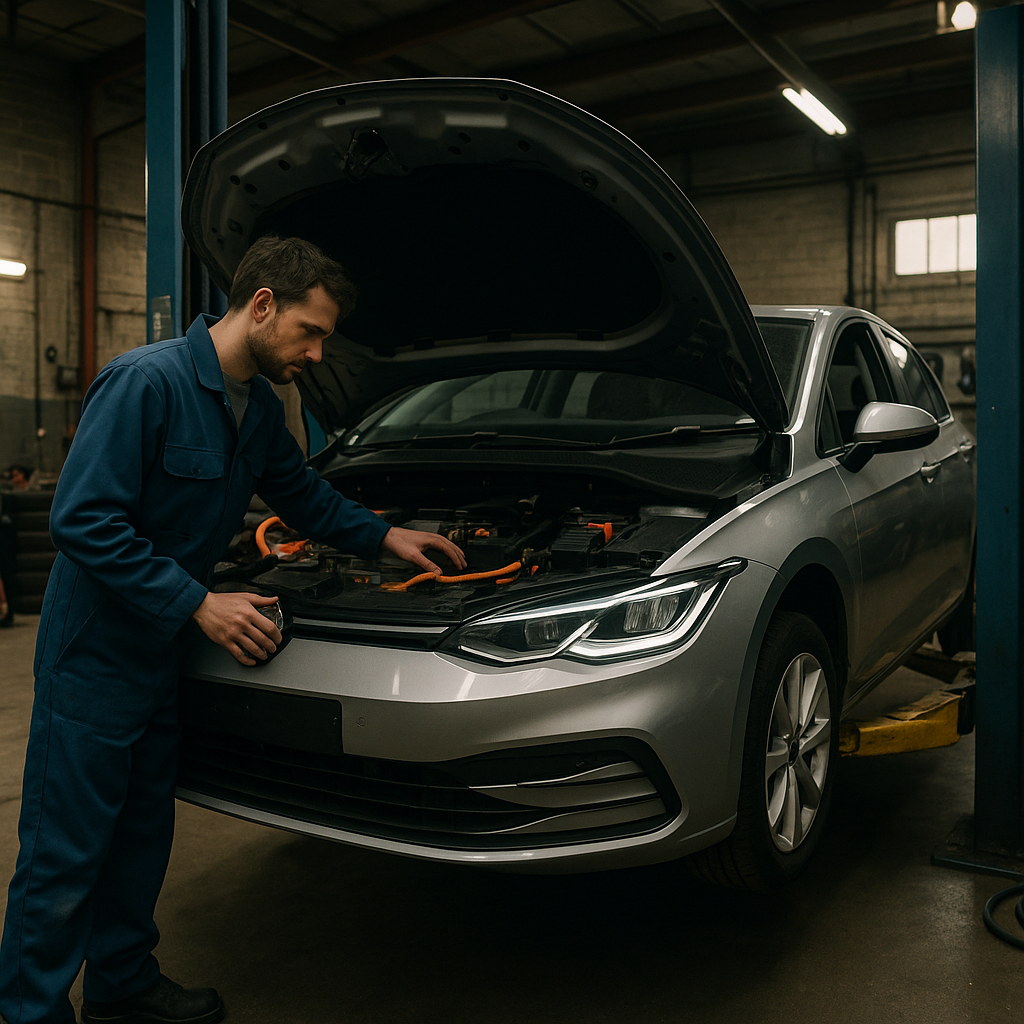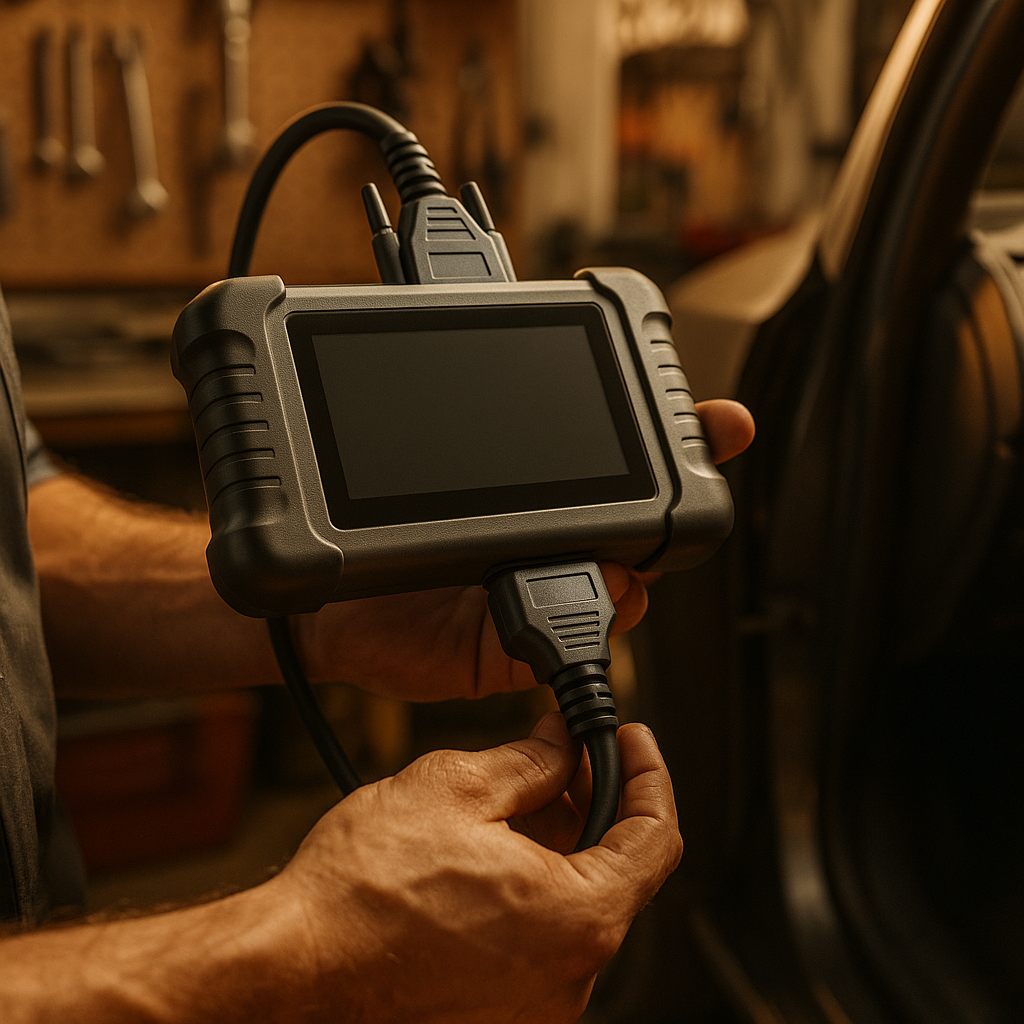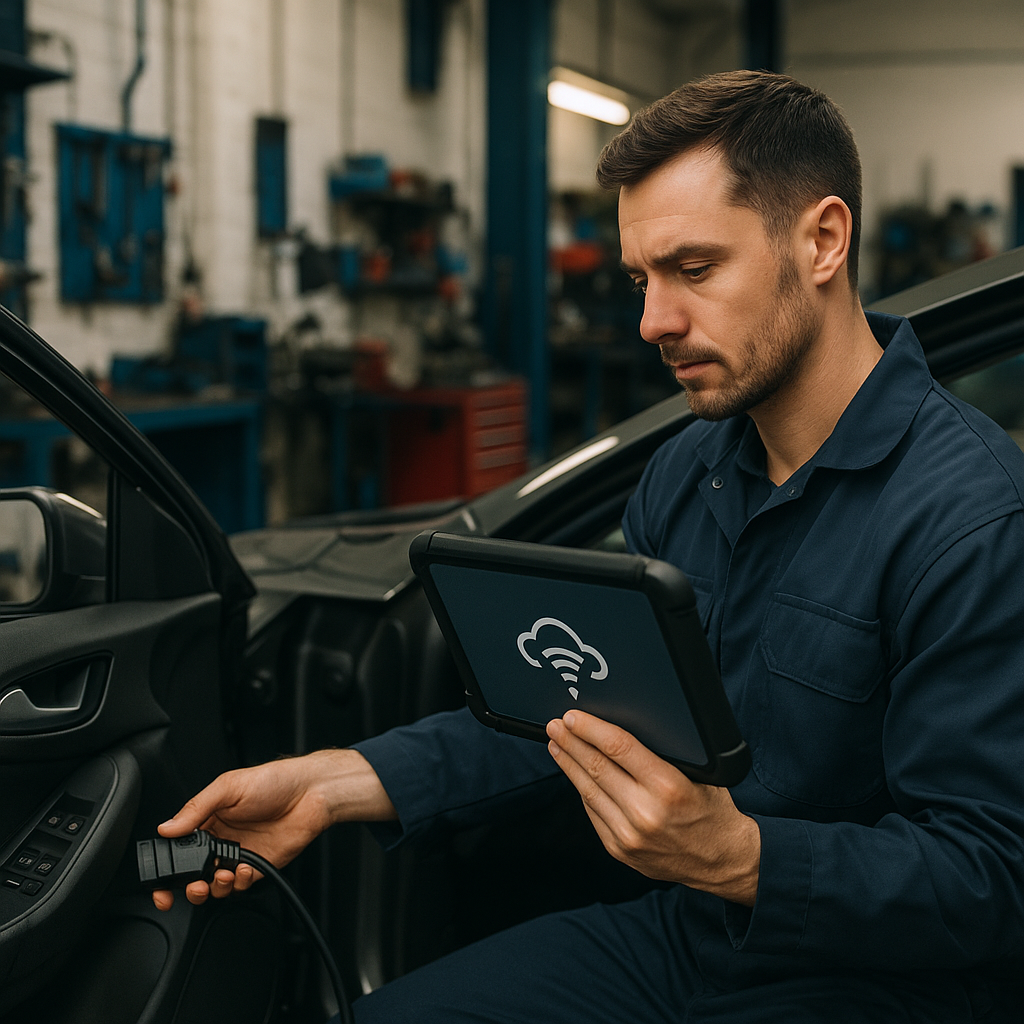
There was a time when fault-finding in a garage came down to experience, intuition, and a decent OBD scanner. A good mechanic could hear a misfire, feel a vibration, and pinpoint the culprit before the car was even on the ramp. That instinct still matters. But something significant is happening alongside it. AI vehicle diagnostics garages are investing in is starting to change the conversation about how faults get found, logged, and resolved.
This isn’t a distant trend. Tools with genuine AI capability are already in use across independent garages, franchise dealerships, and fast-fit centres throughout the UK. And they’re not just flashy additions to a workshop’s tech stack. They’re actively affecting how quickly a job gets diagnosed, how service advisors explain problems to customers, and how confident younger technicians feel tackling complex fault trees on unfamiliar vehicles.
What AI Diagnostics Actually Does in a Modern Workshop
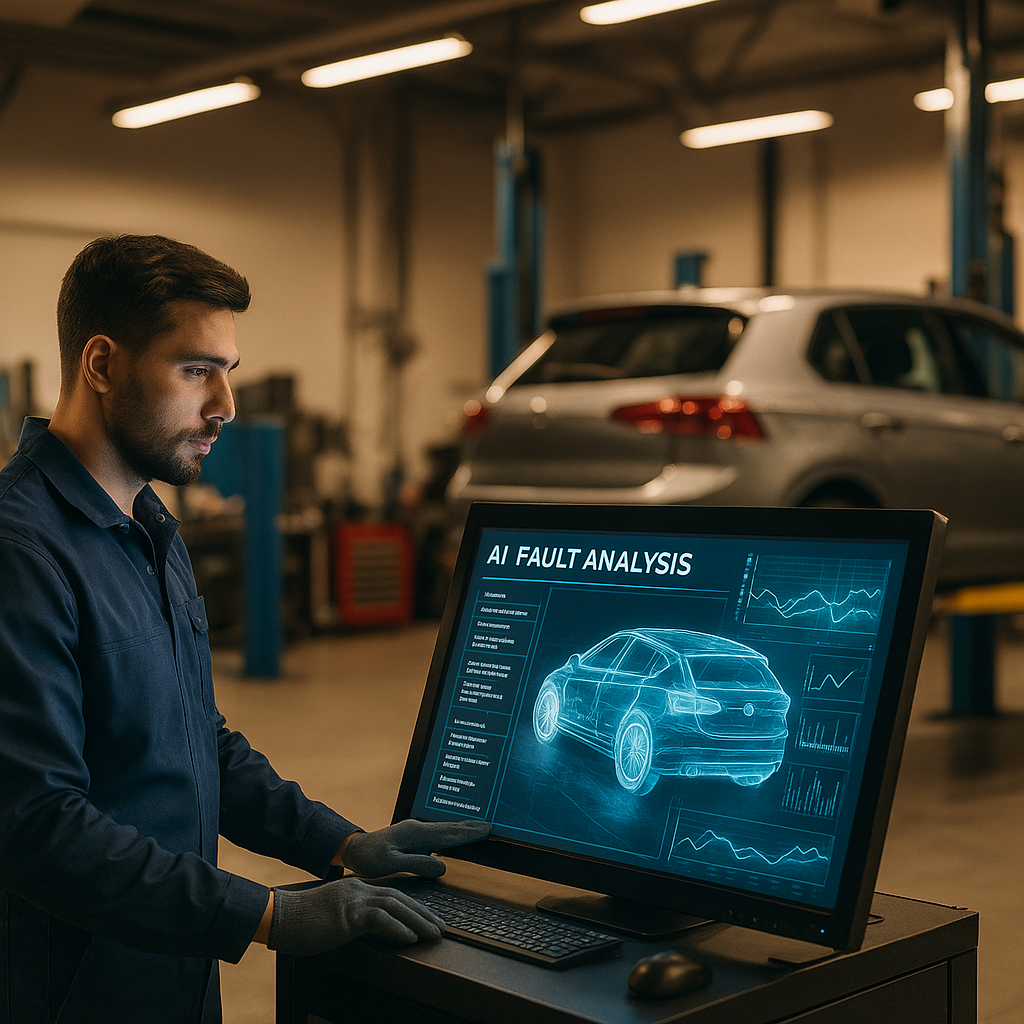
To be clear about what we’re talking about here: AI in diagnostics isn’t a robot mechanic. It’s software that layers machine learning and pattern recognition on top of the raw fault code data your scanner already pulls. The difference is what happens next.
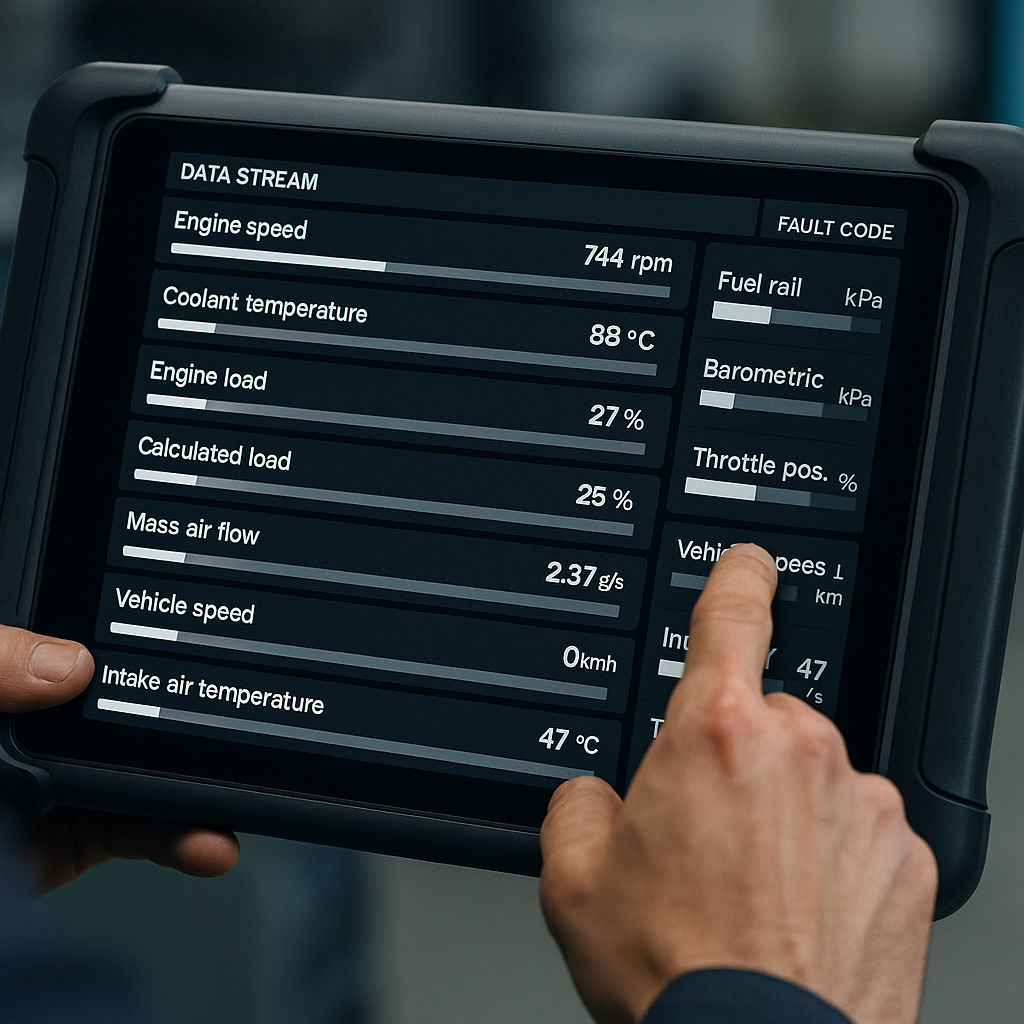
Traditional diagnostic tools give you a DTC (diagnostic trouble code) and leave the rest to the technician. An AI-enhanced system takes that code, cross-references it with live data streams from the vehicle, consults a database of millions of previously recorded repair outcomes across the same model and variant, and returns a ranked list of probable causes. Some systems will also flag what the least invasive and most cost-effective repair path looks like based on historical data from similar cases.
Platforms like Hella Gutmann’s mega macs series and Bosch’s ESI[tronic] already incorporate elements of this, and the AI layer is getting more capable with every software update. In some tools, the system learns from your own workshop’s repair history over time, meaning the longer you use it, the more tailored the guidance becomes to your specific customer base and vehicle mix.
How It Affects Workflow on the Shop Floor
The practical impact on day-to-day workflow is real, and it varies depending on who’s using the tool.
For experienced technicians, AI diagnostics is mainly a time-saver and a safety net. Rather than working through a fault tree manually, a seasoned mechanic can check whether the AI’s suggested cause matches their own read of the vehicle. Often it does. When it doesn’t, that discrepancy itself is useful information worth investigating. The speed gain on routine diagnostics can be significant. On a busy Monday morning with six cars queued for inspection, shaving twenty minutes off each initial diagnosis adds up.
For less experienced technicians, the impact is even more pronounced. A third-year apprentice working on an unfamiliar ADAS-heavy SUV would previously have needed significant input from a senior colleague. With AI-assisted diagnostic software guiding them through probable fault paths and flagging safety-critical considerations, they can work more independently without the risk of misdiagnosis. That’s genuinely useful for garages that are stretched on senior tech headcount.
What It Means for Service Advisors
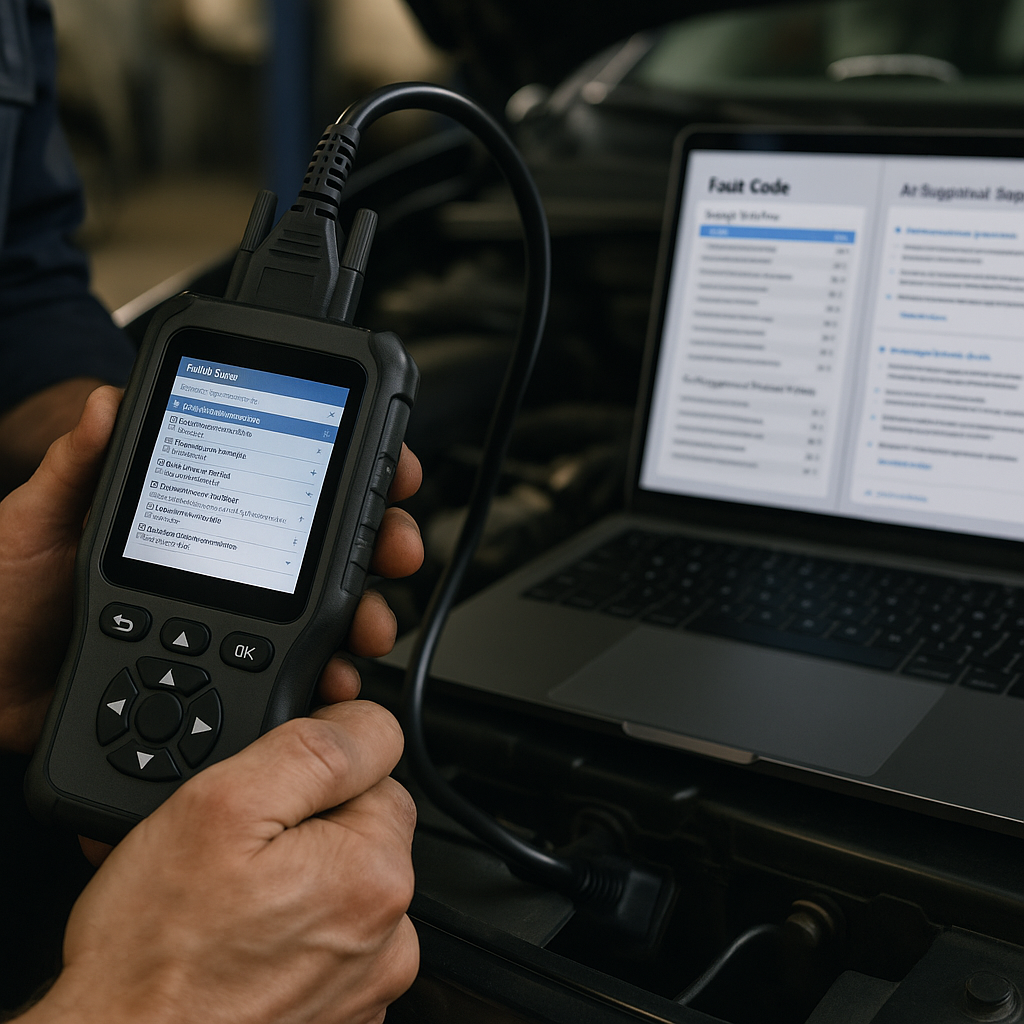
One underappreciated angle of AI vehicle diagnostics garages are adopting is the effect on the front-of-house team. Service advisors have always had to translate complex mechanical findings into plain language for customers. That’s a skill that takes years to develop properly.
Several newer diagnostic platforms now generate plain-English summaries of the identified fault and the recommended repair, structured for customer communication. The service advisor can present the diagnosis with more confidence, using consistent and accurate language rather than relying on a rushed verbal summary from the workshop. Customers respond well to it. When someone can see a clearly explained fault alongside supporting data, they’re more likely to authorise the repair without hesitation.
There’s also a compliance dimension. With warranty claims and insurance-backed repairs, having a documented AI-assisted diagnostic trail can strengthen a garage’s position if a repair is later disputed. The RAC and other motoring bodies have noted that customer complaints about garages frequently stem from miscommunication around diagnosis rather than the repair work itself. Better documentation helps close that gap.
The Limits of AI Diagnostics Right Now
It’s worth being straight about what these tools can’t yet do. AI diagnostics is only as good as the data it’s trained on. For common vehicles with large repair datasets, the guidance is impressively accurate. For low-volume or newly released models, the historical data simply isn’t there yet, and the AI’s suggestions can be vague or over-cautious.
Intermittent faults are another weak spot. A noise that only appears at 70mph on the motorway, or an electrical gremlin that disappears when the car is cold, still requires traditional diagnostic skill. The AI can narrow the field, but it can’t replicate what an experienced tech picks up through a test drive. Physical inspection remains irreplaceable.
Cost is also a genuine consideration. Subscription-based AI diagnostic software typically runs from around £80 to £250 per month depending on the platform and vehicle coverage. For a busy main dealer that’s easy to justify. For a small independent with two ramps, it requires a clear return-on-investment calculation before committing.
Where This Is All Heading
The trajectory is fairly obvious. As vehicles become more software-defined, the diagnostic process increasingly resembles software debugging rather than mechanical fault-finding. AI is suited to that kind of pattern-matching work in a way that purely manual methods aren’t. According to the Society of Motor Manufacturers and Traders (SMMT), the UK’s new car parc is shifting steadily toward hybrid and fully electric vehicles, both of which carry far more complex electronic architectures than their predecessors. The need for intelligent diagnostic assistance isn’t going away.
Garages that treat AI diagnostic tools as a threat to skilled technicians are reading the situation wrong. The mechanics who are going to thrive in the next decade are the ones who learn to work alongside these tools rather than around them. The skill set evolves. Pattern recognition and physical intuition remain valuable. But knowing how to interrogate an AI diagnostic output, question it when appropriate, and act on it decisively? That’s becoming part of the job.
AI vehicle diagnostics garages are adopting right now is still maturing, but the direction of travel is clear. Faster, more accurate fault-finding, better customer communication, and a more structured workflow for technicians at every experience level. The shops that get ahead of this will have a real competitive edge. Those that wait for the technology to fully arrive before paying attention may find the gap harder to close than they expected.
Frequently Asked Questions
What is AI vehicle diagnostics and how does it differ from standard OBD scanning?
Standard OBD scanning reads diagnostic trouble codes from the vehicle’s ECU and presents them to the technician. AI vehicle diagnostics goes further by cross-referencing those codes with large datasets of historical repair outcomes to suggest probable causes and recommended repair paths. It effectively adds a layer of intelligent interpretation to the raw fault data.
Which garages are using AI diagnostic software in the UK?
Both franchise dealerships and independent garages are adopting AI-assisted tools, with platforms from Bosch, Hella Gutmann, and Snap-on among the most widely used. Uptake is faster in larger workshop groups and main dealers, though independent garages are increasingly evaluating subscriptions as the software becomes more affordable.
How much does AI diagnostic software cost for a UK garage?
Subscription costs typically range from around £80 to £250 per month, depending on the platform, the level of vehicle coverage included, and whether software updates are bundled in. Some providers offer tiered packages suited to smaller independents rather than large dealer groups.
Does AI diagnostic software replace the need for an experienced mechanic?
No. AI diagnostics assists and accelerates fault-finding but cannot replicate the physical inspection, test drive assessment, or contextual judgement that an experienced technician brings. It is most accurately described as a decision-support tool that helps both junior and senior technicians work more efficiently.
Can AI diagnostics handle intermittent faults on modern vehicles?
Intermittent faults remain one of the more challenging areas for AI diagnostic tools, since they often lack the consistent fault code data that the software relies on for pattern matching. In these cases, the AI can help narrow down likely causes but skilled hands-on investigation is still the most reliable approach.